
 Google Calendar
  Outlook Calendar
  Google Meet
  Microsoft Teams
  Zoom Meetings
 Calendar Sync With Webhooks: Complete Architecture Guide for Real-Time Integration
Learn how calendar sync with webhooks delivers real-time event notifications through event-driven architecture. Technical guide with implementation patterns.
Your calendar integration just failed to sync for the third time today. A critical meeting was missed because your polling-based system checked for updates 10 minutes too late. Meanwhile, competitors using webhook-based calendar sync are delivering instant notifications the moment events change.
Calendar sync with webhooks represents the evolution from inefficient polling to event-driven architecture. Instead of repeatedly asking "has anything changed?" every few minutes, webhooks enable calendar systems to notify your application instantly when events are created, updated, or deleted. This architectural shift reduces server load by up to 98.5% while delivering real-time synchronization that modern applications demand.
- How webhook-based calendar sync architecture works
- Technical flow from event trigger to notification delivery
- Google Calendar and Microsoft Graph webhook implementations
- Security, reliability, and scaling patterns for production systems
- When to use webhooks vs polling for calendar synchronization
What Is Calendar Sync With Webhooks
Calendar sync with webhooks is an event-driven synchronization method where calendar providers push notifications to your application immediately when calendar events change. Unlike traditional polling approaches that repeatedly request updates at fixed intervals, webhooks operate on a push model where the calendar service acts as the publisher and your application serves as the subscriber.
When you establish a webhook subscription with a calendar provider like Google Calendar or Microsoft Outlook, you register a secure HTTPS endpoint URL. The calendar service monitors the subscribed resources and sends HTTP POST requests to your endpoint whenever relevant changes occur. Your application processes these notifications and fetches the updated event details, maintaining real-time synchronization without continuous polling.
This architecture delivers substantial performance improvements. Research from Zapier analyzing millions of poll requests shows that polling creates approximately 66 times more server load than webhooks because over 98.5% of polling requests return no new data. Webhook-based calendar sync eliminates this waste by transmitting data only when actual changes occur, making it 100% efficient for event-driven updates.
For a comprehensive look at implementing bidirectional calendar sync, see our complete guide that covers two-way synchronization patterns.
- Real-Time Updates: Notifications arrive within 1 to 3 minutes of event changes, compared to polling delays of 5 to 60 minutes (learn more about [real-time calendar synchronization](/blog/real-time-calendar-synchronization-explained-2025))
- Reduced Server Load: 98.5% fewer API calls compared to polling-based synchronization
- Lower Bandwidth: Data transfers only when changes occur, not on fixed schedules
- Scalability: Event-driven architecture scales efficiently as user bases grow
- Cost Efficiency: Fewer API calls mean lower infrastructure and rate limit costs
How Does Calendar Sync With Webhooks Work
The webhook-based calendar synchronization flow involves five distinct stages, each handling specific responsibilities in the event notification pipeline.
Stage 1: Webhook Subscription Registration
Your application initiates the relationship by creating a webhook subscription with the calendar provider. This registration process requires several key components.
For Google Calendar, you create what Google calls a Channel by sending a POST request to the Calendar API watch endpoint. You must provide a unique channel identifier (typically a UUID), your HTTPS callback URL where notifications will be delivered, and optionally a verification token for request validation. Google responds with a channel resource that includes an expiration timestamp, usually set approximately one week from creation.
Microsoft Graph uses a similar subscription model but with different terminology. You create a subscription resource specifying the calendar resource to monitor (such as /me/events for the user's default calendar), your notification URL, and the subscription duration (maximum six months for calendar resources). Microsoft Graph supports filtering capabilities that allow you to specify exactly which event types trigger notifications.
Both providers require your webhook endpoint to use HTTPS with a valid SSL certificate. This security requirement ensures that calendar event data remains encrypted during transmission and that only authorized endpoints receive notifications.
Stage 2: Initial Synchronization
After successfully registering your webhook subscription, you perform an initial full synchronization to establish baseline state. This crucial step captures all existing calendar events before webhook notifications begin.
The Google Calendar API provides the syncToken parameter specifically for this purpose. Your initial sync request returns all current events plus a sync token that represents the state of the calendar at that moment. You store this token and use it in subsequent API calls to retrieve only events that changed since that baseline.
Microsoft Graph offers a similar delta query mechanism using the deltaLink parameter. Your initial sync returns current events and a delta link URL. Subsequent requests to this URL return only the changes that occurred since the last query, maintaining efficient incremental synchronization.
This initial sync also lets you populate your local database or cache with event data before real-time updates begin. For organizations using calendars for remote team coordination, this baseline synchronization ensures all team members see consistent schedule data. Platforms like CalendHub.com handle this synchronization automatically, establishing baseline state across multiple calendar providers without requiring manual implementation.
Stage 3: Event Detection and Trigger
The calendar provider continuously monitors subscribed resources for changes. When a user creates, updates, or deletes a calendar event, the provider's internal systems detect the modification and identify all active webhook subscriptions watching that resource.
This detection happens in real-time within the provider's infrastructure. Google Calendar uses internal event buses and change detection systems that track modifications across their distributed calendar storage. When an event changes, these systems immediately identify relevant channels and queue notification deliveries.
Microsoft Graph employs a similar architecture with their change notification service. This service maintains subscription metadata and monitors Microsoft 365 resources including calendars, email, and files. When calendar events change, the notification service constructs webhook payloads and initiates delivery to registered endpoints.
The provider performs this monitoring continuously without your application making any requests. This inversion of control represents the fundamental architectural difference between webhooks and polling.
Stage 4: Notification Delivery
Once an event change is detected, the calendar provider sends an HTTP POST request to your registered webhook endpoint. The structure and content of this notification vary between providers but follow consistent patterns.
Google Calendar notifications are intentionally minimal. The POST request includes headers identifying the channel (using the X-Goog-Channel-Id and X-Goog-Resource-Id headers) and a state indicator (X-Goog-Resource-State) showing whether the notification is a sync message, an exists message, or represents an update. Critically, Google does not include details about what changed in the notification itself. Your application must call the Calendar API using your stored sync token to retrieve actual event modifications.
Microsoft Graph provides richer notifications with multiple content types. Basic notifications include only the resource identifier, similar to Google's approach. Rich notifications can include the actual changed resource data in the notification payload, eliminating the need for an immediate follow-up API call. You configure which notification type you want when creating the subscription.
Your webhook endpoint must respond quickly to notification requests. Google Calendar expects responses within three seconds, while Microsoft Graph allows five seconds. If your endpoint fails to respond within these timeframes, the provider considers the delivery failed and may retry or eventually suspend the subscription.
Stage 5: Event Processing and Incremental Sync
When your webhook endpoint receives a notification, it performs several important operations to maintain synchronization state.
First, your endpoint validates the notification authenticity. This typically involves checking signature headers, verifying the channel or subscription identifier matches your records, and potentially validating custom tokens you provided during registration.
Next, you retrieve the actual changes. For Google Calendar, this means calling the Events API with your stored sync token. The API returns only events that changed since that token was issued, along with a new sync token representing the updated state. For Microsoft Graph, you call the delta link URL to retrieve changes since your last query.
The change response includes deleted events marked with a specific status. Google Calendar sets the status field to cancelled for deleted events, while Microsoft Graph includes events with removal indicators. Your application must handle these deletions by removing the corresponding events from your local storage.
After processing changes, you update your stored sync token or delta link. This ensures the next webhook notification triggers retrieval of only newer changes, maintaining efficient incremental synchronization.
Platforms like CalendHub.com automate this entire processing pipeline, handling webhook validation, change retrieval, conflict resolution, and state management across multiple calendar providers through a unified architecture.
Google Calendar Webhook Architecture
Google Calendar implements webhook notifications through a system called Push Notifications or Channels. Understanding this specific architecture helps you design robust integrations with Google's calendar services.
Google Channel Lifecycle
A Google Channel represents an active webhook subscription with a defined lifecycle. When you create a channel, Google returns several important properties that govern its behavior.
The id property contains the unique identifier you provided during creation. You'll receive this identifier in webhook notification headers, allowing you to match incoming requests to the correct subscription in your system.
The resourceId uniquely identifies the Google-side resource being watched. This differs from your channel ID and represents Google's internal identifier for the watch operation. You need this resource ID to stop or renew the channel later.
The expiration timestamp indicates when Google will automatically terminate the channel. Google typically sets this approximately one week (604,800,000 milliseconds) from creation for calendar resources. Your application must renew channels before expiration to maintain continuous synchronization. There is currently no automatic renewal mechanism, so you must implement renewal logic yourself.
When a channel expires or is explicitly stopped, Google ceases sending notifications. Your application should track expiration timestamps and proactively renew channels at least 24 hours before expiration to prevent synchronization gaps.
Notification Types and Headers
Google Calendar webhook notifications arrive as HTTP POST requests with minimal payloads but rich header information.
The X-Goog-Resource-State header indicates the notification type. When you first create a channel, Google sends a sync notification to verify your endpoint is accessible. During active monitoring, you receive notifications with state exists when calendar resources change. If a watched resource is deleted, you receive a not_exists notification indicating the resource no longer exists.
The X-Goog-Channel-Id header contains your channel identifier, while X-Goog-Resource-Id contains Google's resource identifier. The X-Goog-Channel-Token header echoes any verification token you provided during channel creation, allowing you to validate that notifications originated from your legitimate subscription.
The X-Goog-Channel-Expiration header includes the channel's expiration timestamp in RFC 3339 format, helping you track when renewal becomes necessary.
Importantly, Google Calendar notifications do not include information about what changed. The request body may be empty or contain minimal data. Your application must call the Calendar API with your stored sync token to retrieve actual event modifications.
Incremental Sync With Sync Tokens
Google Calendar's sync token mechanism enables efficient incremental synchronization that complements webhook notifications perfectly.
When you perform any Events list operation, you can include the syncToken parameter with a previously retrieved token. Instead of returning all events, the API returns only events that changed since that token was issued. This includes new events, updated events, and deleted events (marked with status: 'cancelled').
The API response includes a new nextSyncToken property that represents the calendar state after these changes. You store this new token and use it for your next sync operation, creating a continuous chain of incremental updates.
When your webhook endpoint receives a notification, you immediately call the Events list API with your current sync token. This retrieves the specific changes that triggered the notification. After processing these changes, you replace your stored token with the new token from the response.
This pattern ensures you never miss events even if webhook notifications occasionally fail. If notifications stop temporarily, your next successful sync call will retrieve all changes that accumulated since your last token, maintaining data consistency.
Limitations and Considerations
Google Calendar's webhook system has several important limitations you must handle in production implementations.
Some calendar resources do not support webhook notifications. Globally shared calendars like "Public holidays in the US" will raise exceptions if you attempt to create channels for them. Your application must catch these exceptions and fall back to periodic polling for unsupported resources.
Google enforces rate limits on both channel creation and API calls. While exact limits vary by quota allocation, you should implement exponential backoff when encountering rate limit errors and reuse channels across multiple users when architecturally feasible.
Notification delivery is not guaranteed. Network failures, temporary endpoint unavailability, or Google service issues may prevent notifications from reaching your webhook endpoint. You should implement a complementary periodic sync process that runs less frequently (such as every 30 minutes) to catch any events missed by webhook failures.
Google Calendar webhooks work best when combined with robust state management, error handling, and fallback mechanisms that ensure calendar synchronization remains reliable even when individual components experience temporary failures.
Microsoft Graph Calendar Webhook Architecture
Microsoft Graph provides calendar webhook functionality through its broader change notifications system, which monitors resources across Microsoft 365 services including Outlook calendars, email, OneDrive files, and Teams channels.
Subscription Management
Microsoft Graph subscriptions offer more configuration options than Google Channels but follow similar conceptual patterns.
When you create a subscription, you specify the resource property indicating what to monitor. For calendar webhooks, common resources include /me/events for the authenticated user's default calendar, /users/{id}/events for a specific user's calendar, or /groups/{id}/events for group calendars.
The changeType property determines which event types trigger notifications. You can subscribe to created, updated, and deleted changes individually or combine them with comma separation like created,updated,deleted to receive all modification types.
The notificationUrl property contains your HTTPS webhook endpoint. Microsoft Graph validates this URL during subscription creation by sending a validation request that your endpoint must respond to correctly. This validation ensures you control the specified endpoint before Microsoft begins sending calendar data to it.
The expirationDateTime property sets when the subscription automatically expires. For calendar resources, Microsoft Graph allows subscription lifetimes up to 4230 minutes (approximately three days) for subscriptions without resource data and up to 60 minutes for subscriptions that include resource data in notifications.
Unlike Google Calendar, Microsoft Graph provides a renewal mechanism through the PATCH operation. You can extend a subscription's lifetime before it expires by updating its expiration timestamp, allowing continuous monitoring without creating new subscriptions.
Rich Notifications vs Basic Notifications
Microsoft Graph offers two notification payload types that provide different tradeoffs between data richness and implementation complexity.
Basic notifications include minimal information about the change. The notification payload contains the subscription identifier, change type (created, updated, or deleted), the resource identifier, and tenant information. Your application must make a follow-up Microsoft Graph API call to retrieve the actual event data.
Rich notifications include the full resource data directly in the notification payload. When an event is created or updated, the notification contains the complete event object with all properties including title, start time, end time, attendees, location, and custom properties. This eliminates the need for an immediate follow-up API call, reducing latency and API consumption.
However, rich notifications have important limitations. They require shorter subscription lifetimes (maximum 60 minutes instead of three days) and include larger payload sizes that may impact network performance. You must also ensure your webhook endpoint can process and validate the included resource data securely.
Need better calendar management? CalendHub unifies all your calendars with smart scheduling and video conferencing.
For most calendar synchronization scenarios, basic notifications with delta queries provide the optimal balance. Your webhook endpoint receives notification of changes, then retrieves actual event modifications through the delta query API endpoint, which efficiently returns only the specific changes that occurred.
Delta Queries for Incremental Sync
Microsoft Graph's delta query functionality provides efficient incremental synchronization similar to Google Calendar's sync tokens but with additional capabilities.
When you first call a calendar events endpoint with the delta function (such as /me/calendar/events/delta), Microsoft Graph returns all current events plus a @odata.deltaLink property in the response. This delta link contains an encoded token representing the calendar state at that moment.
Store this delta link URL and use it for subsequent synchronization requests. When you call the stored delta link, Microsoft Graph returns only events that changed since the previous query. New events appear as complete objects, updated events include only the changed properties (depending on your query parameters), and deleted events appear with an @removed property indicating removal.
The delta query response includes a new delta link representing the updated state. You replace your stored link with this new one, maintaining a continuous synchronization chain.
When your webhook endpoint receives a change notification, you immediately call your stored delta link to retrieve the specific changes that triggered the notification. This pattern ensures efficient data transfer while maintaining real-time responsiveness.
Delta queries handle edge cases that webhooks alone cannot address. If your webhook endpoint experiences downtime, the next delta query call retrieves all changes that accumulated during the outage, preventing data loss.
Validation and Security
Microsoft Graph implements several security mechanisms to protect webhook endpoints and calendar data.
During subscription creation, Microsoft Graph sends a validation request to your notification URL. This request includes a validationToken query parameter. Your endpoint must extract this token and return it in the response body with a 200 status code within 10 seconds. This validation proves you control the endpoint before Microsoft begins sending potentially sensitive calendar data.
For ongoing notifications, Microsoft Graph includes a clientState property in each request if you provided one during subscription creation. This optional value acts as a shared secret that helps you verify notifications originated from your legitimate subscription. Your webhook handler should validate this value matches your records before processing the notification.
Microsoft Graph supports certificate-based authentication for enhanced security. You can configure your application to use client certificates that Microsoft Graph validates during each webhook delivery, ensuring end-to-end encrypted and authenticated communication.
The platform also enforces strict quota limits. Each mailbox supports a maximum of 1,000 active subscriptions across all applications for Outlook resources. When designing multi-tenant applications, you must carefully manage subscription creation to avoid exceeding these limits, potentially by aggregating multiple users under shared subscriptions when architecturally feasible.
Platforms like CalendHub.com handle these security requirements automatically, managing validation responses, client state verification, certificate authentication, and subscription quota management across thousands of users without requiring manual implementation.
Webhook Security and Reliability Patterns
Production calendar sync implementations must address security threats and reliability challenges that extend beyond basic webhook setup.
Authentication and Verification
Every webhook notification arriving at your endpoint requires verification to prevent unauthorized access and data injection attacks.
Implement signature validation by computing an HMAC hash of the request payload using a shared secret key. Google Calendar provides the optional channel token for this purpose, while Microsoft Graph offers the client state property. Your webhook handler computes the expected signature and compares it to the value in the request, rejecting mismatched requests immediately.
Validate the source IP address when possible. Google publishes IP ranges for their services, allowing you to configure firewall rules that reject webhook requests from unauthorized sources. Microsoft Graph notifications originate from published Azure datacenter ranges that you can similarly whitelist.
Check request timestamps to prevent replay attacks. Include timestamp validation in your webhook handler that rejects requests older than a reasonable threshold (such as five minutes). This prevents attackers from capturing and replaying legitimate webhook notifications to trigger duplicate processing.
Store subscription metadata securely. Your database should track which channels or subscriptions are legitimate, their associated tokens or secrets, and their expiration timestamps. Every incoming webhook notification must match an active, unexpired subscription in your records before processing.
Idempotent Processing
Webhook deliveries may occur multiple times for the same event change due to network retries, provider-side duplicates, or processing failures. Your application must handle duplicate notifications without creating inconsistent data.
Implement idempotency by tracking processed notification identifiers. When your webhook endpoint receives a notification, generate a unique identifier from the notification's properties (such as combining the subscription ID, resource ID, and change timestamp). Before processing the notification, check if you've already processed this identifier. If so, return success immediately without duplicate processing.
Use database transactions to ensure atomic updates. When processing calendar event changes, wrap all related database operations in a transaction that either completes fully or rolls back entirely. This prevents partial updates that could corrupt synchronization state.
Store event version numbers or update timestamps. When you retrieve changed events from the calendar API, record each event's version identifier or last-modified timestamp. If you receive another notification for the same event, compare version numbers to determine if the newer version contains actual changes requiring processing.
Design your sync logic to produce the same result regardless of how many times it executes. If processing a webhook notification multiple times yields the same database state as processing it once, duplicate deliveries become harmless rather than catastrophic.
Retry Logic and Exponential Backoff
Your webhook endpoint must implement sophisticated retry strategies to handle transient failures without overwhelming either your infrastructure or the calendar provider's systems.
When your endpoint receives a webhook notification but fails to process it successfully, return an appropriate HTTP error status (typically 500 or 503). Calendar providers interpret these responses as temporary failures and automatically retry delivery.
Implement exponential backoff for your own API calls to calendar providers. When retrieving event changes after a webhook notification, you may encounter rate limits or temporary service unavailability. Your code should wait before retrying, with wait times increasing exponentially (such as 1 second, 2 seconds, 4 seconds, 8 seconds) up to a maximum threshold.
Add jitter to retry intervals to prevent thundering herd problems. Multiple webhook notifications arriving simultaneously might all retry at identical intervals, creating synchronized spikes that overwhelm your systems. Adding random jitter (such as plus or minus 20% of the wait time) distributes retry attempts temporally.
Define clear retry thresholds. After a certain number of failed processing attempts (commonly between 5 and 10), move the failed notification to a dead letter queue for manual inspection rather than retrying indefinitely. This prevents a single problematic notification from blocking your entire webhook processing pipeline.
Log all retry attempts with detailed context. Your monitoring systems should alert when retry rates exceed normal thresholds, indicating potential issues with your webhook processing infrastructure, the calendar provider's APIs, or network connectivity.
Dead Letter Queues
Dead letter queues capture webhook notifications that cannot be processed successfully after exhausting retry attempts, providing a safety net that prevents data loss.
When a notification fails repeatedly, move it to a separate storage system (such as a database table, message queue, or object storage bucket) along with comprehensive diagnostic information. Record the notification payload, all error messages encountered during processing attempts, timestamps of each attempt, and the subscription metadata associated with the notification.
Implement monitoring and alerting for dead letter queue accumulation. If notifications begin accumulating in your dead letter queue, this indicates a systemic problem requiring investigation. Your operations team should receive alerts when dead letter queue size exceeds acceptable thresholds.
Provide tooling for dead letter queue processing. Create administrative interfaces that allow manual inspection of failed notifications, re-triggering of processing after fixing underlying issues, and bulk operations for handling accumulated failures after extended outages.
Consider automatic recovery attempts for dead letter queue items. A background job might periodically attempt to reprocess old failed notifications, as the underlying issues may have resolved. Implement rate limiting for these recovery attempts to avoid overwhelming your systems during restart after extended failures.
Use dead letter queue analysis to improve system reliability. Failed notifications often reveal edge cases, data quality issues, or architectural weaknesses. Regular review of dead letter queue contents provides valuable feedback for system improvements.
Monitoring and Observability
Production webhook systems require comprehensive monitoring to detect and diagnose issues before they impact users.
Track webhook delivery latency from event occurrence to final processing completion. This end-to-end metric reveals whether your calendar synchronization meets real-time requirements. Set alerts for latency percentiles (such as p95 or p99) exceeding acceptable thresholds.
Monitor webhook endpoint availability and response times. Calendar providers will suspend subscriptions if your endpoint consistently fails to respond within required timeframes (three seconds for Google Calendar, five seconds for Microsoft Graph). Your monitoring should alert if response times approach these limits.
Measure API call volumes and rate limit consumption. Track how many Calendar API calls your webhook processing generates and how close you are to quota limits. This helps prevent rate limit errors that could interrupt synchronization.
Log subscription lifecycle events. Record when subscriptions are created, renewed, expire, or are suspended. Gaps in subscription coverage directly translate to missed calendar events, making subscription state monitoring critical.
Implement distributed tracing across your webhook processing pipeline. As notifications flow from provider delivery through your webhook endpoint, queue systems, sync processors, and database updates, distributed tracing provides visibility into where latency or failures occur.
Create dashboards visualizing webhook system health. Display metrics like notification processing rate, error rates by type, subscription count and expiration forecast, API quota consumption, and queue depths. These dashboards should make system health immediately apparent to on-call engineers.
Platforms like CalendHub.com provide built-in monitoring, alerting, and operational dashboards for webhook-based calendar synchronization, eliminating the need to build and maintain these complex observability systems yourself.
When To Use Webhooks vs Polling for Calendar Sync
The choice between webhook-based and polling-based calendar synchronization depends on several technical and business factors that determine which architecture best serves your specific requirements.
Use Webhooks When You Need Real-Time Updates
Webhook-based calendar sync excels in scenarios where immediate notification of calendar changes provides business value or competitive advantage.
Applications that coordinate time-sensitive operations benefit most from webhooks. Scheduling platforms that need to immediately block time slots when meetings are booked, team coordination tools that update availability within seconds of calendar changes, and automated workflows that trigger business processes based on calendar events all require the real-time responsiveness that webhooks provide. When evaluating the best bidirectional calendar sync tools, webhook support is a critical feature to assess.
Customer-facing scheduling experiences dramatically improve with webhook-based sync. When someone books a meeting through your application, webhook-driven synchronization ensures their external calendar updates within seconds rather than waiting for the next polling cycle. This immediate feedback builds user confidence in your platform's reliability.
High-volume calendar integrations gain efficiency advantages from webhooks. If your application serves thousands or millions of users, the 66x reduction in server load compared to polling translates to substantial infrastructure cost savings and better scalability.
Webhook-based sync enables sophisticated conflict detection. By receiving immediate notification when calendars change, your application can detect scheduling conflicts within seconds and proactively alert users or suggest alternatives before conflicts become problems.
Use Polling When Webhooks Create Complexity
Some scenarios favor polling-based synchronization despite webhooks' efficiency advantages.
Applications with lenient latency requirements may find polling simpler to implement. If your users find it acceptable for calendar updates to appear within 15 to 30 minutes, polling at these intervals provides adequate synchronization without the infrastructure complexity of webhook endpoint hosting, validation, retry logic, and subscription management.
Polling avoids webhook firewall and network challenges. Organizations with strict network security policies may block incoming webhook notifications or require complex firewall configurations. Polling-based sync works in any network environment since your application initiates all connections outbound to calendar providers.
Small-scale applications with limited user bases might prefer polling's simplicity. The infrastructure and operational overhead of webhook endpoints, queue systems, and retry mechanisms may exceed the value when serving dozens rather than thousands of users.
Calendar providers that don't support webhooks require polling regardless of architectural preferences. Some calendar systems, niche providers, or specific calendar resources (like Google's public holiday calendars) don't offer webhook notifications, forcing fallback to polling-based synchronization.
Hybrid Approaches
Many production calendar sync implementations combine webhooks and polling to balance efficiency with reliability.
Implement webhooks for primary synchronization with periodic polling as a safety net. Configure webhooks to deliver immediate updates during normal operation, but run a background polling job every 30 to 60 minutes that retrieves any changes missed due to webhook delivery failures, subscription expirations, or provider-side issues.
Use webhooks for active users and polling for dormant users. Users actively engaging with your application benefit from real-time webhook-based sync, while users who haven't logged in recently can receive less frequent polling-based updates, optimizing resource allocation.
Start with polling for faster initial development, then migrate to webhooks for production scale. This approach lets you launch calendar integration quickly, then optimize performance and cost as your user base grows and real-time synchronization becomes more valuable.
Platforms like CalendHub.com implement hybrid synchronization strategies automatically, using webhooks when available and seamlessly falling back to intelligent polling for resources that don't support real-time notifications, all through a unified API that abstracts these implementation details.
Building Production-Ready Webhook Calendar Sync
Implementing calendar sync with webhooks for production environments requires architectural decisions and engineering practices that extend beyond basic webhook setup.
Infrastructure Architecture
Design your webhook infrastructure to handle high volumes of concurrent notifications without performance degradation.
Deploy your webhook endpoint behind a load balancer that distributes incoming notifications across multiple application servers. Calendar providers send notifications immediately when events change, potentially creating traffic spikes when many users modify calendars simultaneously. Horizontal scaling behind load balancers ensures your endpoint responds within required timeframes even during peak loads.
Separate webhook receipt from event processing using message queues. Your webhook endpoint should immediately acknowledge notification receipt by returning HTTP 200, then enqueue the notification for asynchronous processing. This pattern prevents slow downstream operations (like calling calendar APIs or database writes) from causing webhook timeout failures.
Implement queue-based processing with dedicated worker pools. Separate workers consume notifications from your queue, retrieve event changes from calendar providers, and update your database. This architectural separation allows independent scaling of webhook receivers and event processors.
Use database connection pooling and caching to optimize API response times. Your webhook endpoint needs to query subscription metadata and write acknowledgment logs within milliseconds. Connection pools and caching layers prevent database operations from introducing latency that could exceed provider timeout requirements.
State Management
Maintain comprehensive synchronization state to ensure data consistency across webhook deliveries, API responses, and potential failures.
Store sync tokens or delta links securely and update them transactionally. When your event processor retrieves changes using a sync token, it must atomically update both the event data and the new sync token in a single database transaction. If either operation fails, both should roll back to prevent state corruption.
Track subscription metadata including channel identifiers, resource identifiers, expiration timestamps, verification tokens, and associated user or tenant identifiers. Your webhook handler validates incoming notifications against this metadata to ensure they correspond to legitimate, unexpired subscriptions.
Implement optimistic concurrency control for event updates. Multiple webhook notifications might arrive nearly simultaneously for related calendar changes. Use version numbers or timestamps to detect concurrent modifications and resolve conflicts according to last-write-wins or other conflict resolution strategies.
Maintain audit logs of all synchronization operations. Record when webhooks are received, when API calls retrieve changes, what event modifications are applied, and when errors occur. These logs prove invaluable for diagnosing synchronization issues and ensuring compliance with data handling requirements.
Error Handling Strategies
Production webhook systems encounter numerous error conditions that require thoughtful handling to maintain reliability.
Distinguish between retriable and permanent errors. Transient failures like network timeouts, rate limits, or temporary service unavailability should trigger retry logic with exponential backoff. Permanent failures like invalid authentication, deleted resources, or malformed data should move to dead letter queues without retries that waste resources.
Implement circuit breakers for calendar provider APIs. If a provider's API experiences an outage, circuit breakers prevent your application from making thousands of doomed API calls during webhook processing. After detecting consecutive failures, the circuit breaker temporarily stops calling the problematic API and periodically tests for recovery.
Handle subscription expiration gracefully. Monitor upcoming subscription expirations and proactively renew them before they lapse. If renewal fails due to revoked permissions or deleted resources, degrade gracefully by logging the issue, alerting administrators, and falling back to periodic polling if appropriate.
Provide clear error messages and recovery instructions to users. When calendar synchronization fails due to revoked permissions, expired credentials, or provider-side issues, your application should notify affected users with actionable guidance for resolving the problem.
Testing and Quality Assurance
Comprehensive testing ensures your webhook implementation handles both normal operations and edge cases reliably.
Create automated tests that simulate webhook deliveries. Mock calendar provider notification requests with various payloads including created events, updated events, deleted events, sync notifications, and validation requests. Verify your webhook handler responds correctly within required timeframes.
Test subscription lifecycle scenarios including creation, renewal, expiration, and deletion. Ensure your application properly tracks subscription state and maintains synchronization across these lifecycle transitions.
Implement chaos engineering practices to verify resilience. Deliberately inject failures like network timeouts, database unavailability, or malformed webhooks into your test environment. Verify your application handles these failures gracefully with appropriate retries, fallbacks, and error notifications.
Use load testing to validate performance under realistic traffic volumes. Simulate webhook notification rates matching your expected user base to identify bottlenecks in webhook receipt, queue processing, or event synchronization before they impact production users.
Platforms like CalendHub.com handle all these production considerations automatically, providing enterprise-grade webhook infrastructure, state management, error handling, monitoring, and testing without requiring custom implementation.
CalendHub's Webhook-Based Calendar Sync Architecture
CalendHub.com implements production-ready calendar sync with webhooks across Google Calendar, Microsoft Outlook, and other calendar providers through a unified, managed architecture that eliminates implementation complexity.
When you connect a calendar to CalendHub, the platform automatically establishes webhook subscriptions with the appropriate provider, handling authentication, validation, and subscription configuration. CalendHub's infrastructure manages subscription renewals before expiration, ensuring continuous real-time synchronization without manual intervention.
- Automatic Setup: Webhook subscriptions established instantly during calendar connection without code
- Unified API: Same integration code works across Google Calendar, Microsoft Outlook, and other providers
- Managed Infrastructure: Enterprise-grade webhook endpoints, retry logic, and dead letter queues included
- Intelligent Fallback: Automatic polling for resources that don't support webhooks
- Built-in Monitoring: Operational dashboards show webhook health and synchronization status
The platform receives webhook notifications from calendar providers and processes them through a highly available, queue-based architecture. When notifications indicate calendar changes, CalendHub retrieves the specific event modifications using incremental sync APIs, updates your synchronized calendar data, and makes the changes available through CalendHub's API within seconds.
CalendHub handles all the production concerns discussed in this guide including webhook validation, idempotent processing, exponential backoff, dead letter queues, and comprehensive monitoring. Your application simply connects calendars and reads synchronized event data through a clean API, while CalendHub manages the complex webhook infrastructure underneath.
For applications requiring real-time calendar synchronization without the engineering investment of building and operating production webhook systems, CalendHub provides a compelling alternative that delivers webhook performance through a managed platform.
Conclusion
Calendar sync with webhooks represents the modern standard for real-time calendar integration, delivering immediate event notifications through event-driven architecture that dramatically outperforms traditional polling approaches. According to Microsoft Graph API documentation, webhook-based change notifications provide the most efficient method for staying synchronized with calendar data. By understanding webhook subscription mechanics, notification processing flows, incremental synchronization patterns, and production reliability requirements, you can implement calendar integrations that provide instant updates while minimizing server load and API consumption.
Google Calendar and Microsoft Graph offer robust webhook implementations with different architectural patterns and capabilities. Google's Channel system provides minimalistic notifications with sync token-based incremental updates, while Microsoft Graph offers rich notifications and delta queries for flexible synchronization strategies. Both require careful attention to security, subscription management, and error handling to achieve production reliability.
The choice between webhook-based and polling-based calendar sync depends on your latency requirements, scale, infrastructure capabilities, and tolerance for implementation complexity. Webhooks excel when real-time updates provide business value and your application serves significant user volumes, while polling remains viable for smaller applications with lenient synchronization requirements or network environments that complicate webhook delivery.
For most modern applications, hybrid approaches combining webhooks for primary synchronization with periodic polling as a safety net provide the optimal balance of performance, reliability, and implementation complexity. Platforms like CalendHub.com take this further by providing fully managed webhook infrastructure that delivers real-time synchronization across multiple calendar providers through a unified API, eliminating the need to build and maintain complex webhook systems yourself.
Ready to implement webhook-based calendar synchronization without the infrastructure complexity? Explore how CalendHub.com delivers instant calendar sync across all major providers through managed webhook architecture that scales automatically as your application grows.
Ready to Simplify Your Schedule?
Join thousands of professionals who have unified their calendars and reclaimed their time with CalendHub's intelligent scheduling platform.
Related Articles
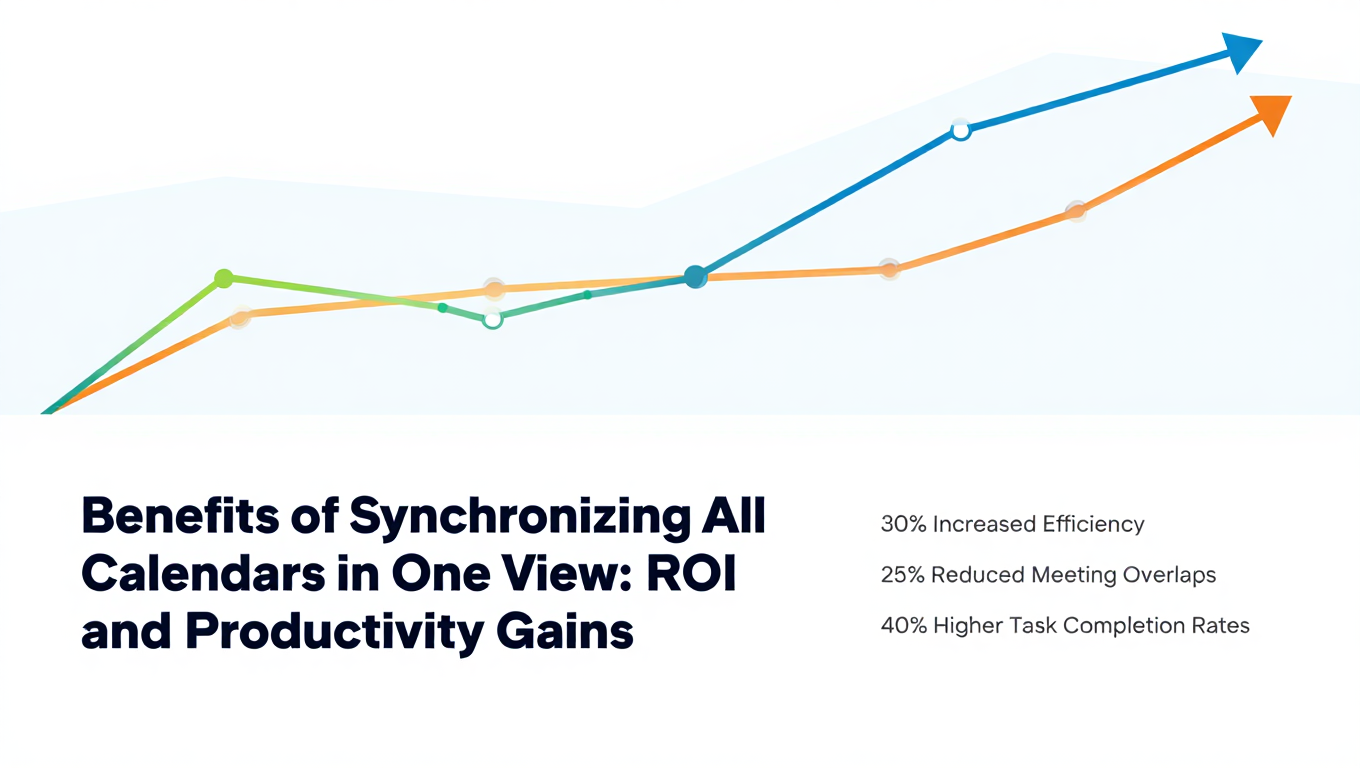
Benefits of Synchronizing All Calendars in One View: ROI and Productivity Gains
Discover the benefits of synchronizing all calendars in one view. See ROI data, productivity gains, reduced double bookings, and real-world business impact in 2025.
Best Bidirectional Calendar Sync Tools: 2025 Comparison Guide
Compare the best bidirectional calendar sync tools in 2025. Discover which platforms offer true two-way synchronization and which only provide one-way sync.
Best Two Way Calendar Sync Software: 2025 Expert Rankings & Comparison
Compare the top two-way calendar sync software tools. We tested 12 platforms for bidirectional sync speed, reliability, and field coverage to find which actually work.