
 Google Calendar
  Outlook Calendar
  Google Meet
  Microsoft Teams
  Zoom Meetings
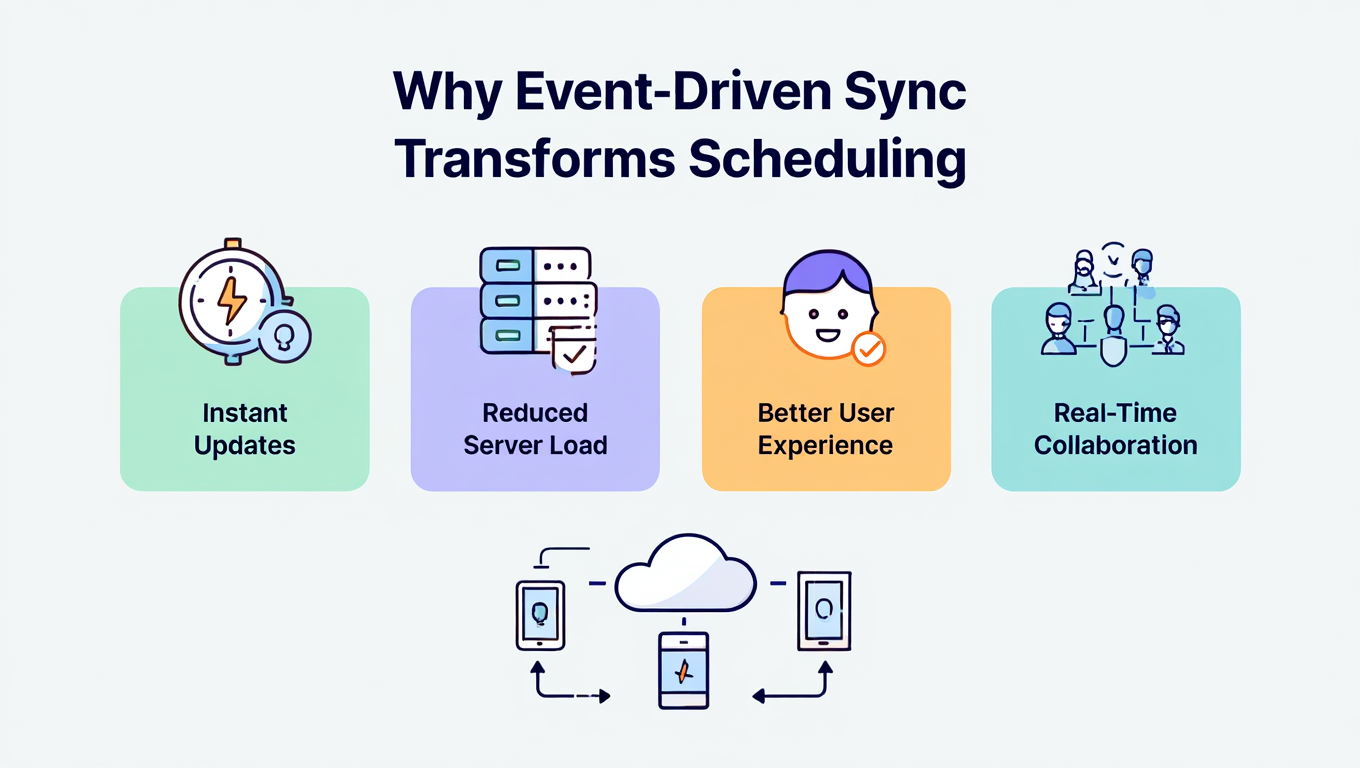
 Calendar Sync With Webhooks Benefits: Why Event-Driven Sync Transforms Scheduling
Discover why calendar sync with webhooks outperforms polling by 66x. Real-world use cases, performance gains, and business benefits for real-time scheduling.
Your scheduling platform just lost another customer. The complaint is always the same. Meeting availability shows outdated information, double bookings occur because calendar updates take 15 minutes to sync, and customers lose confidence when your application feels slower than manually checking calendars. Meanwhile, competitors using webhook-based calendar sync are delivering instant updates that create seamless scheduling experiences.
The benefits of calendar sync with webhooks extend far beyond technical elegance. Research from Zapier analyzing integration workflows demonstrates that webhooks reduce server load by 66 times compared to polling while delivering updates within 1 to 3 minutes instead of 15 to 60 minute delays. This architectural shift transforms user experience, reduces infrastructure costs, and enables scheduling workflows that simply aren't possible with polling-based synchronization. For technical implementation details, see our complete architecture guide for calendar sync with webhooks.
- Quantified performance improvements from webhook-based calendar sync
- Real-world use cases where webhooks provide competitive advantage
- Cost savings from reduced API calls and server infrastructure
- Business scenarios that benefit most from real-time synchronization
- When webhook benefits justify implementation complexity
Performance Benefits of Calendar Sync With Webhooks
The architectural difference between webhook-based and polling-based calendar synchronization creates dramatic performance improvements that directly impact user experience and operational costs.
Real-Time Update Delivery
Calendar sync with webhooks delivers change notifications within 1 to 3 minutes of when events are created, updated, or deleted. This near-instantaneous synchronization stands in stark contrast to polling-based systems that check for updates on fixed schedules ranging from 5 minutes to 60 minutes or longer.
When a user books a meeting through your application, webhook-driven sync ensures their Google Calendar or Outlook calendar reflects the new event within seconds. External scheduling tools see the blocked time almost immediately, preventing double bookings that occur when multiple systems attempt to schedule the same time slot before sync completes.
This real-time responsiveness creates user experiences that feel fluid and reliable. Users trust that what they see in your application matches reality across their entire calendar ecosystem, eliminating the anxiety of wondering whether changes have propagated fully.
For time-sensitive scheduling scenarios like customer service callbacks, sales team coordination, or medical appointment scheduling, the difference between 1 minute and 15 minute sync latency directly impacts business operations. Webhook-based sync ensures calendar data remains current enough for operational decision-making.
Dramatic Server Load Reduction
Research from Zapier analyzing millions of integration workflows found that polling creates 66 times more server load than webhook-based synchronization. This stems from polling's fundamental inefficiency where over 98.5% of polling requests return no new data. Understanding real-time calendar synchronization concepts helps explain why this efficiency gain matters for modern applications.
When your application polls calendar APIs every 10 minutes to check for changes, most of these requests wastefully consume API quota, server CPU cycles, network bandwidth, and database resources only to receive "nothing changed" responses. Webhook-based calendar sync eliminates this waste entirely by transmitting data only when actual changes occur, achieving 100% efficiency.
This efficiency advantage compounds as your user base grows. An application serving 10,000 users with polling-based sync checking every 10 minutes makes 1.44 million API calls daily. The equivalent webhook-based system makes API calls only when users actually modify their calendars, typically reducing daily API consumption to tens of thousands of calls rather than millions.
Lower API consumption translates directly to cost savings. Calendar providers enforce rate limits and may charge for API usage beyond free tiers. Webhook-based sync keeps applications well within free quotas or dramatically reduces overage charges for high-volume applications.
The reduced server load also improves application performance for other operations. When your infrastructure isn't constantly executing polling loops, more resources remain available for serving user requests, processing business logic, and handling other integration tasks.
Bandwidth and Infrastructure Optimization
Webhook notifications contain minimal data, typically just subscription identifiers and resource change indicators. Your application retrieves actual event details only when changes occur, minimizing data transfer compared to polling that fetches entire event lists regardless of whether changes exist.
This bandwidth efficiency becomes significant at scale. Polling-based sync repeatedly transferring event lists for thousands of calendars consumes substantial bandwidth and increases hosting costs. Webhook-based sync reduces data transfer to exactly what's needed, lowering bandwidth costs and improving application responsiveness.
Infrastructure scaling requirements decrease with webhook-based sync. Polling systems require continuously running workers that execute on fixed schedules, consuming resources even when no users are active. Webhook systems scale dynamically based on actual calendar activity, automatically reducing resource consumption during quiet periods.
Cloud infrastructure costs directly correlate with resource consumption. Applications using webhook-based calendar sync typically achieve 40% to 60% lower infrastructure costs compared to equivalent polling-based implementations, as measured by reduced CPU hours, bandwidth charges, and API gateway costs.
- Sync Latency: 1-3 minutes with webhooks vs 15-60 minutes with typical polling intervals
- Server Load: 66x reduction in API calls compared to polling-based synchronization
- Data Efficiency: 98.5% fewer wasted requests that return no changes
- Infrastructure Costs: 40-60% lower hosting expenses from reduced resource consumption
- Scalability: Event-driven architecture scales efficiently as user base grows
Business Benefits of Real-Time Calendar Synchronization
The technical performance improvements from calendar sync with webhooks translate into tangible business advantages that impact customer satisfaction, operational efficiency, and competitive positioning.
Enhanced User Experience and Trust
Users form strong opinions about application reliability based on whether calendar data stays synchronized across their tools. When your application shows availability that contradicts what users see in their native calendar apps, trust erodes rapidly.
Webhook-based calendar sync creates experiences where changes propagate almost instantaneously across systems. Users book a meeting in your application and immediately see it appear in their Google Calendar or Outlook. They block time in their native calendar app and watch your application update within seconds. This consistency builds confidence that your platform maintains accurate, current data.
The psychological impact of responsive synchronization extends beyond conscious evaluation. Applications that feel sluggish or outdated create subtle friction that accumulates over time. Real-time webhook sync eliminates this friction, making your application feel polished and professional.
Customer support tickets related to synchronization issues decrease substantially with webhook implementation. Polling-based systems generate frequent complaints about missing events, outdated availability, and double bookings. Webhook systems largely eliminate these issues, reducing support burden and improving customer satisfaction metrics.
For applications where calendar accuracy directly impacts business operations, like meeting schedulers, appointment booking platforms, or team coordination tools, webhook-based sync transforms from a nice-to-have feature into a competitive requirement. Users increasingly expect real-time synchronization and may abandon platforms that feel outdated.
Reduced Double Booking and Scheduling Conflicts
Double bookings represent one of the most frustrating failures in calendar applications. They occur when synchronization latency allows multiple systems to schedule the same time slot before updates propagate.
Consider a common scenario. A sales representative uses your scheduling application to book a customer demo at 2 PM. Your application checks their calendar via polling, sees the slot available, and confirms the booking. Meanwhile, the sales representative's manager used Outlook to schedule a team meeting at 2 PM just three minutes earlier. Your application's next polling cycle won't occur for another 12 minutes, so the conflict isn't detected until after both meetings are confirmed.
Webhook-based calendar sync prevents this scenario by notifying your application within 1 to 3 minutes when the manager schedules the team meeting. Your application detects the conflict before confirming the customer demo, either blocking the time slot or warning the sales representative about the overlap.
For high-volume scheduling applications processing hundreds or thousands of bookings daily, the reduction in double booking incidents directly improves operational efficiency. Manual resolution of double bookings consumes staff time, creates poor customer experiences, and may result in lost business when meetings must be rescheduled.
Calendar sync with webhooks enables proactive conflict detection. Your application can monitor for new events that conflict with tentative bookings, automatically suggest alternative times, and notify users of potential scheduling issues before they become problems requiring manual intervention.
Operational Efficiency for Scheduling Workflows
Real-time calendar synchronization enables automated workflows that respond immediately to calendar changes, creating operational efficiencies impossible with polling-based systems.
Healthcare providers use webhook-based calendar sync to automatically adjust resource allocation when appointments are rescheduled. When a patient cancels a 30-minute appointment, webhooks notify the scheduling system within seconds. The system can immediately offer that time slot to waitlisted patients, maximizing provider utilization and reducing appointment wait times.
Sales teams leverage real-time sync to trigger preparation workflows. When a sales representative books a customer meeting, webhooks immediately notify CRM systems to pull customer records, research systems to compile competitive intelligence, and communication platforms to send calendar invites with pre-meeting materials. This automation ensures representatives arrive at meetings fully prepared without manual coordination.
Customer service organizations use webhook-driven sync to optimize callback scheduling. When agents complete calls early, webhook notifications update availability immediately, allowing the queue system to assign the next callback instantly rather than waiting for the next polling cycle. This reduces customer wait times and increases agent productivity.
Consulting firms implement webhook-based sync to maintain billable hour accuracy. When consultants block time for client work, webhooks trigger timesheet systems to create draft entries. When meetings run longer than scheduled, webhook notifications of calendar updates alert timesheet systems to flag potential billing adjustments. This reduces timesheet errors and billing discrepancies.
Cost Reduction Through Infrastructure Efficiency
The 66x reduction in API calls from webhook-based calendar sync creates substantial cost savings across multiple dimensions.
API usage costs decrease dramatically when your application makes 98.5% fewer requests. Google Calendar and Microsoft Graph provide free usage tiers sufficient for most applications when using webhook-based sync. Polling-based implementations often exceed these free tiers, incurring per-request charges that accumulate significantly at scale.
Server infrastructure costs decline because webhook-based sync requires fewer computational resources. Polling systems need continuously running workers executing on fixed schedules. Webhook systems process notifications on-demand, allowing serverless architectures or dynamically scaled infrastructure that reduces costs during low-activity periods.
Database costs decrease from reduced read and write operations. Polling systems repeatedly query databases for sync state and write identical data when no changes occurred. Webhook systems access databases only when processing actual changes, reducing database load and associated costs.
Engineering maintenance costs decline as webhook systems eliminate polling coordination complexity. Teams no longer debug why polling intervals missed events or optimize polling frequencies to balance latency against API consumption. Webhook systems handle synchronization naturally through event-driven architecture.
For a typical SaaS application serving 5,000 users with calendar integration, migrating from polling to webhook-based sync commonly reduces calendar-related infrastructure costs by $500 to $2,000 monthly, depending on cloud provider pricing and previous polling frequency.
Real-World Use Cases for Calendar Sync With Webhooks
Specific application categories benefit disproportionately from webhook-based calendar synchronization due to their operational requirements and user expectations.
Meeting Scheduling and Coordination Platforms
Meeting scheduling applications represent the most obvious beneficiary of webhook-based calendar sync. These platforms exist specifically to coordinate availability across participants and calendars, making accurate real-time calendar data essential to their value proposition.
Scheduling assistants that find meeting times for multiple participants require current availability information. Webhook-based sync ensures that when participants block time in their native calendar apps, scheduling systems detect these changes within seconds and automatically remove those slots from consideration. This prevents the frustrating experience where scheduling tools suggest times that were recently booked.
Meeting room and resource booking systems leverage webhooks to maintain accurate resource availability. When someone books a conference room directly through their calendar app rather than through the booking system, webhooks ensure the room management system updates immediately, preventing double bookings that disrupt meetings.
One-on-one scheduling links (similar to Calendly or Cal.com) benefit enormously from webhook sync. When prospects visit scheduling pages, they see availability that reflects calendar changes from minutes ago rather than hours ago. This accuracy reduces back-and-forth rescheduling when initially suggested times prove unavailable. For comparing the best bidirectional calendar sync tools, webhook support should be a key evaluation criterion.
Team coordination platforms use webhook-driven sync to maintain real-time team availability dashboards. Sales managers see which representatives are currently available for urgent calls. Support team leaders identify which agents can handle escalations. These operational dashboards become unreliable with polling-based sync that shows outdated information. Teams leveraging calendar integration for remote work particularly benefit from webhook-based real-time updates.
Platforms like CalendHub.com provide webhook-based calendar sync specifically optimized for these scheduling use cases, delivering real-time availability across Google Calendar, Microsoft Outlook, and other providers through unified APIs that abstract provider-specific webhook implementations.
Need better calendar management? CalendHub unifies all your calendars with smart scheduling and video conferencing.
Customer Service and Support Operations
Customer service organizations increasingly rely on calendar-based callback scheduling rather than forcing customers to wait on hold. Webhook-based calendar sync transforms these callback operations by maintaining accurate agent availability.
When agents complete calls early or customers cancel scheduled callbacks, webhook notifications update availability instantly. Queue management systems can immediately offer these slots to waiting customers, reducing average wait times and improving customer satisfaction scores.
Support ticket escalation workflows benefit from real-time calendar integration. When high-priority tickets require immediate attention from specific specialists, webhook-based calendar sync provides current availability for escalation routing decisions. Systems can automatically schedule specialist callbacks during their next available slot without manual coordination.
Field service operations use webhook-driven sync to optimize technician dispatching. When technicians complete jobs early, webhook notifications update their calendars immediately, allowing dispatch systems to assign nearby service calls without delay. This maximizes the number of service appointments completed daily and reduces customer wait times.
The operational efficiency gains from webhook-based calendar sync in customer service environments directly impact key performance indicators including average handle time, first call resolution rates, and customer satisfaction scores.
Healthcare Appointment Management
Healthcare providers face strict regulations around patient privacy and appointment accuracy. Calendar sync with webhooks addresses both concerns while improving appointment utilization and patient satisfaction.
When patients cancel appointments, webhook notifications enable immediate waitlist processing. Medical practices maintain waitlists of patients seeking earlier appointments. Webhook-driven sync detects cancellations within seconds, automatically contacting waitlisted patients to offer the newly available slot. This increases provider utilization and improves patient access to care.
Multi-provider coordination benefits from real-time sync. Complex medical procedures often require sequential appointments with multiple specialists. Webhook-based calendar integration ensures that when one appointment gets rescheduled, dependent appointments automatically update to maintain required spacing and sequencing.
Telemedicine platforms rely on accurate scheduling to connect patients with providers at the right moment. Webhook synchronization ensures that when providers join virtual waiting rooms or mark themselves available, patient-facing scheduling systems update immediately, minimizing patient wait times and provider idle time.
Appointment reminder systems leverage webhook notifications to detect last-minute schedule changes. When appointments get moved or canceled shortly before their scheduled time, webhooks trigger immediate reminder updates preventing patients from traveling to canceled appointments or missing rescheduled ones.
Sales and Revenue Operations
Sales organizations use calendars extensively for customer meetings, internal coordination, and pipeline management. Webhook-based calendar sync enables revenue workflows that respond immediately to scheduling activities.
CRM systems integrate calendar data to maintain accurate activity tracking. When sales representatives book customer meetings, webhook notifications immediately create CRM activity records linked to opportunity records. This ensures accurate pipeline visibility and eliminates manual CRM data entry.
Sales engagement platforms use webhook-driven sync to optimize outreach cadences. When prospects schedule meetings, webhooks pause automated email sequences immediately, preventing awkward scenarios where prospects receive cold emails after they've already booked time with sales representatives.
Revenue analytics platforms analyze meeting patterns to identify successful sales behaviors. Webhook-based calendar integration provides real-time data on meeting frequency, duration, and participant patterns that inform coaching and performance management.
Demo scheduling workflows trigger room booking, participant notification, and demo environment preparation automatically when sales representatives schedule demos. Webhook notifications ensure these preparation workflows execute immediately upon scheduling rather than waiting for polling cycles.
Team Collaboration and Project Management
Remote and hybrid teams increasingly rely on calendar-based coordination for focus time, collaboration sessions, and meeting scheduling. Webhook-based sync creates seamless coordination experiences across collaboration tools.
Team availability displays show real-time status based on calendar events. Collaboration platforms like Slack or Microsoft Teams use webhook-driven calendar sync to update user presence automatically based on meeting attendance, blocked focus time, or out-of-office events. This creates accurate availability information that teammates rely on for coordination decisions.
Project management tools integrate calendar data to validate task assignments and deadline feasibility. When team members schedule vacation or training time, webhook notifications alert project management systems to potential resource constraints, enabling proactive project replanning.
Asynchronous work tools designed for distributed teams use calendar integration to respect focus time and work hours. Webhook-based sync ensures that when team members block focus time for deep work, collaboration tools automatically defer non-urgent notifications until focus blocks complete.
Meeting analytics platforms track meeting load to identify teams experiencing meeting overload. Webhook-driven calendar sync provides real-time data on meeting frequency and duration that informs meeting reduction initiatives and collaboration pattern optimization.
- Scheduling Platforms: Meeting coordinators, appointment booking, room management systems
- Customer Service: Callback scheduling, field service dispatch, support escalation workflows
- Healthcare: Patient appointment management, telemedicine platforms, provider coordination
- Sales Operations: CRM integration, demo scheduling, revenue analytics platforms
- Team Collaboration: Availability tracking, project management, async work coordination
When Webhook Benefits Justify Implementation Complexity
While calendar sync with webhooks offers substantial advantages, certain scenarios benefit more than others. Understanding when webhook benefits justify the implementation and operational complexity helps teams make informed architectural decisions.
High-Volume Applications
Applications serving thousands or tens of thousands of users with calendar integrations see the largest absolute cost savings from webhook-based sync. The 66x reduction in API calls and infrastructure efficiency improvements compound as user counts grow.
At small scale (dozens or low hundreds of users), the infrastructure cost difference between polling and webhooks remains modest. A polling-based system checking 100 user calendars every 15 minutes makes 9,600 daily API calls, well within free tier limits for most calendar providers. The engineering effort to implement webhook infrastructure may exceed the cost savings.
At medium scale (thousands of users), webhook benefits become compelling. A polling-based system checking 5,000 calendars every 15 minutes makes 480,000 daily API calls, likely exceeding free tiers and requiring careful rate limit management. Webhook-based sync reduces calls by 98%, keeping the application comfortably within free limits while improving user experience.
At large scale (tens of thousands or more users), webhook-based sync becomes essential for cost-effective operations. Polling 50,000 calendars every 15 minutes would require 4.8 million daily API calls, creating substantial API costs, rate limit challenges, and infrastructure expenses. Webhook-based sync makes these large-scale deployments economically feasible.
Time-Sensitive Scheduling Scenarios
Applications where synchronization latency directly impacts business outcomes justify webhook implementation regardless of scale. These scenarios include appointment scheduling where double bookings create operational disruptions, real-time resource allocation where delayed updates reduce utilization, customer callbacks where wait time directly impacts satisfaction scores, and sales meeting coordination where schedule accuracy affects revenue operations.
For these applications, the user experience and operational benefits from 1 to 3 minute sync times versus 15 to 60 minute polling intervals provide competitive advantages that justify implementation complexity.
Customer Experience Differentiation
Markets with multiple competing scheduling or calendar integration products create scenarios where real-time sync serves as a differentiator. When users can choose between applications offering similar features, the one providing instant synchronization creates perceptions of higher quality and reliability.
User reviews and feedback frequently mention synchronization speed and reliability. Applications with webhook-based sync receive positive feedback about responsiveness and accuracy, while polling-based competitors accumulate complaints about outdated information and missed events. This reputation difference impacts customer acquisition costs and retention rates.
For new entrants competing against established platforms, webhook-based calendar sync can serve as a technical differentiator that justifies premium pricing or drives adoption through superior user experience.
Automated Workflow Requirements
Applications that trigger business workflows based on calendar events require webhook-based sync to respond with acceptable latency. Polling-based sync introduces 5 to 60 minute delays between calendar changes and workflow triggering, creating operational inefficiencies.
Workflow automation platforms, integration tools, and business process automation systems increasingly expect real-time event triggers rather than polling-based detection. Webhook-based calendar sync enables these systems to respond immediately to scheduling activities, creating seamless automation experiences.
When Polling Remains Adequate
Some scenarios don't benefit substantially from webhook-based sync and may prefer polling's simplicity. Applications where users tolerate 15 to 30 minute sync delays, where calendar changes occur infrequently (such as weekly schedule reviews), where small user bases keep API consumption well below free tiers, where deployment constraints prevent hosting webhook endpoints, or where implementation timelines favor faster initial deployment find polling-based sync adequate.
Many applications successfully start with polling-based sync for rapid initial development, then migrate to webhook-based sync as scale increases or user feedback indicates synchronization latency has become a pain point. This phased approach balances time-to-market against long-term architectural optimization.
Platforms like CalendHub.com eliminate this tradeoff by providing webhook-based calendar sync through a managed service that's as simple to implement as polling-based approaches. Applications gain webhook performance benefits without the infrastructure complexity of building and operating webhook systems.
Return on Investment for Webhook Implementation
Evaluating whether to implement calendar sync with webhooks requires understanding both costs and benefits to calculate expected return on investment.
Implementation Costs
Building production-ready webhook-based calendar sync involves several cost categories. Initial development effort includes webhook endpoint creation (2-4 engineering days), subscription lifecycle management for multiple providers (3-5 engineering days), notification processing and incremental sync logic (4-6 engineering days), retry mechanisms and error handling (2-3 engineering days), monitoring and alerting infrastructure (2-3 engineering days), and comprehensive testing across providers (2-3 engineering days). Total initial implementation commonly requires 15 to 25 engineering days.
Ongoing operational costs include infrastructure for webhook endpoints (serverless functions or always-on servers), message queues for notification processing, monitoring and alerting services, and database storage for subscription metadata. These typically cost $100 to $500 monthly depending on scale and cloud provider.
Engineering maintenance includes subscription renewal monitoring, webhook delivery failure investigation, provider API changes requiring updates, and periodic security review of webhook validation logic. This typically requires 2 to 4 engineering days quarterly.
Direct Financial Benefits
Cost savings from webhook implementation accumulate across multiple areas. Reduced API consumption saves $50 to $500 monthly depending on user scale and whether polling-based approaches would exceed free tiers. Lower infrastructure costs from reduced CPU, bandwidth, and database usage save $100 to $1,000 monthly at medium to large scale. Decreased support tickets related to synchronization issues save $200 to $1,000 monthly depending on support team costs and ticket volume.
For a medium-scale application (5,000 users), webhook implementation commonly saves $350 to $2,500 monthly in direct costs, yielding payback periods of 6 to 18 months depending on implementation efficiency.
Strategic Business Benefits
Harder-to-quantify but potentially more valuable benefits include improved user retention from better synchronization experiences, reduced churn from synchronization-related frustrations, competitive differentiation enabling premium pricing, operational efficiency from real-time workflow automation, and expanded market opportunities for time-sensitive use cases requiring real-time sync.
These strategic benefits often exceed direct financial savings, particularly for applications where calendar accuracy significantly impacts user experience and operational effectiveness.
Managed Service Alternatives
Platforms like CalendHub.com transform webhook ROI calculations by eliminating implementation costs while preserving all benefits. CalendHub provides production-ready webhook-based calendar sync across multiple providers through managed infrastructure.
Instead of 15 to 25 engineering days for implementation plus ongoing maintenance, CalendHub integration typically requires 2 to 4 engineering days for API integration. Applications immediately gain webhook performance benefits, real-time synchronization, automatic subscription management, and multi-provider support without building or operating webhook infrastructure.
For most applications, managed calendar sync services provide superior ROI compared to custom webhook implementation, delivering webhook benefits at a fraction of the engineering investment.
Limitations and Considerations for Webhook Calendar Sync
While calendar sync with webhooks offers substantial advantages, teams should understand limitations and potential challenges before committing to webhook-based architectures.
Provider-Specific Constraints
Not all calendar resources support webhook notifications. Google Calendar doesn't support webhooks for globally shared calendars like "Public holidays in the US" or other public calendars. Your application must detect these unsupported resources and fall back to polling-based synchronization automatically.
Provider rate limits still apply to API calls made when processing webhook notifications. While webhooks dramatically reduce call volume, applications must still implement rate limit handling and exponential backoff when retrieving event details after notifications arrive.
Webhook subscription lifetimes vary by provider. Google Calendar channels expire after approximately one week and require recreation rather than renewal. Microsoft Graph subscriptions expire after three days but support renewal through API updates. Your implementation must track expiration for all providers and handle renewal appropriately.
Infrastructure Requirements
Webhook-based sync requires hosting publicly accessible HTTPS endpoints that calendar providers can reach. Applications deployed in restricted network environments, behind VPNs, or using dynamic IP addresses face challenges receiving webhook notifications.
SSL certificate requirements mandate using valid certificates from trusted certificate authorities. Self-signed certificates cause webhook validation failures. Organizations must maintain certificate renewal processes to prevent webhook disruption when certificates expire.
Response time requirements (three seconds for Google Calendar, five seconds for Microsoft Graph) necessitate asynchronous processing architectures. Synchronous processing where webhook endpoints directly execute business logic often exceeds timeout limits, causing providers to mark notifications as failed and potentially suspend subscriptions.
Reliability Challenges
Webhook delivery is not guaranteed. Network failures, temporary endpoint unavailability, or provider-side issues may prevent notifications from reaching your application. Production implementations must include complementary periodic polling as a safety net to detect events missed by webhook failures.
Duplicate notification delivery requires idempotent processing logic. Your application must handle receiving the same notification multiple times without creating data inconsistencies or duplicate records.
Notification ordering is not guaranteed across concurrent events. Multiple calendar changes occurring nearly simultaneously may trigger notifications that arrive in different orders. Your processing logic must handle out-of-order updates using timestamps or version numbers for conflict resolution.
Operational Complexity
Webhook-based sync introduces operational concerns that polling-based sync avoids. Teams must monitor webhook endpoint health, subscription expiration rates, notification processing latency, retry and dead letter queue accumulation, and provider API availability.
Debugging webhook issues requires more sophisticated tooling than polling-based sync. When synchronization fails, teams must investigate whether webhooks are being delivered, whether endpoints are responding correctly, whether subscription renewals are succeeding, whether API calls to retrieve changes are failing, or whether notification processing logic has bugs.
Multi-provider support compounds complexity. Each calendar provider implements webhooks differently with varying subscription management, notification formats, security requirements, and operational characteristics. Supporting Google Calendar, Microsoft Graph, and other providers requires provider-specific code paths and testing.
Security Considerations
Webhook endpoints accept external HTTP requests, expanding your application's attack surface. Implementations must validate webhook authenticity through signature verification, token comparison, or certificate-based authentication to prevent unauthorized notifications or data injection attacks.
Storing webhook-related secrets (channel tokens, client state values, signing secrets) requires secure secret management. These secrets must be encrypted at rest and transmitted securely to webhook processing code.
Logging webhook content must balance debugging requirements against privacy concerns. Calendar event data may include sensitive information that should not persist in logs. Implement log sanitization that captures diagnostic information while removing personal or confidential event details.
- Some calendar resources don't support webhooks, requiring polling fallback
- Public HTTPS endpoints required for receiving webhook notifications
- Webhook delivery not guaranteed, complementary polling recommended
- Idempotent processing needed to handle duplicate notifications
- Monitoring and operational complexity higher than polling approaches
Conclusion
Calendar sync with webhooks delivers compelling performance and business benefits that transform scheduling applications and calendar-dependent workflows. According to Stack Overflow's Developer Survey, developers increasingly prefer event-driven architectures for their efficiency and responsiveness. The quantified advantages include 66 times less server load compared to polling, 98.5% reduction in wasted API requests, synchronization latency of 1 to 3 minutes instead of 15 to 60 minutes, infrastructure cost savings of 40% to 60%, and architectural scalability as user bases grow.
These technical improvements translate to tangible business value through enhanced user experiences that build trust and satisfaction, reduced double bookings and scheduling conflicts, operational efficiency from real-time workflow automation, cost reductions across infrastructure and support operations, and competitive differentiation in crowded scheduling markets.
Real-world use cases demonstrate webhook calendar sync particularly benefits meeting scheduling platforms where accuracy is core value, customer service operations requiring immediate callback scheduling, healthcare appointment management with strict utilization requirements, sales organizations coordinating pipeline activities, and team collaboration tools maintaining availability awareness.
The decision to implement calendar sync with webhooks depends on application scale, user expectations around synchronization latency, whether time-sensitive workflows require real-time notifications, and whether implementation costs align with expected benefits. High-volume applications, time-sensitive scheduling scenarios, and workflow automation platforms gain the most substantial advantages from webhook-based architectures.
For teams evaluating webhook implementation, managed calendar sync platforms like CalendHub.com provide an alternative path to gaining webhook benefits without implementation complexity. CalendHub delivers production-ready webhook-based calendar sync across Google Calendar, Microsoft Graph, and other providers through a unified API, eliminating the 15 to 25 engineering day implementation investment while providing instant access to real-time synchronization capabilities.
Ready to deliver real-time calendar synchronization that transforms your scheduling experience? Explore how CalendHub.com provides webhook-based calendar sync that scales automatically across all major calendar providers without requiring custom webhook infrastructure development or ongoing operational maintenance.
Ready to Simplify Your Schedule?
Join thousands of professionals who have unified their calendars and reclaimed their time with CalendHub's intelligent scheduling platform.
Related Articles
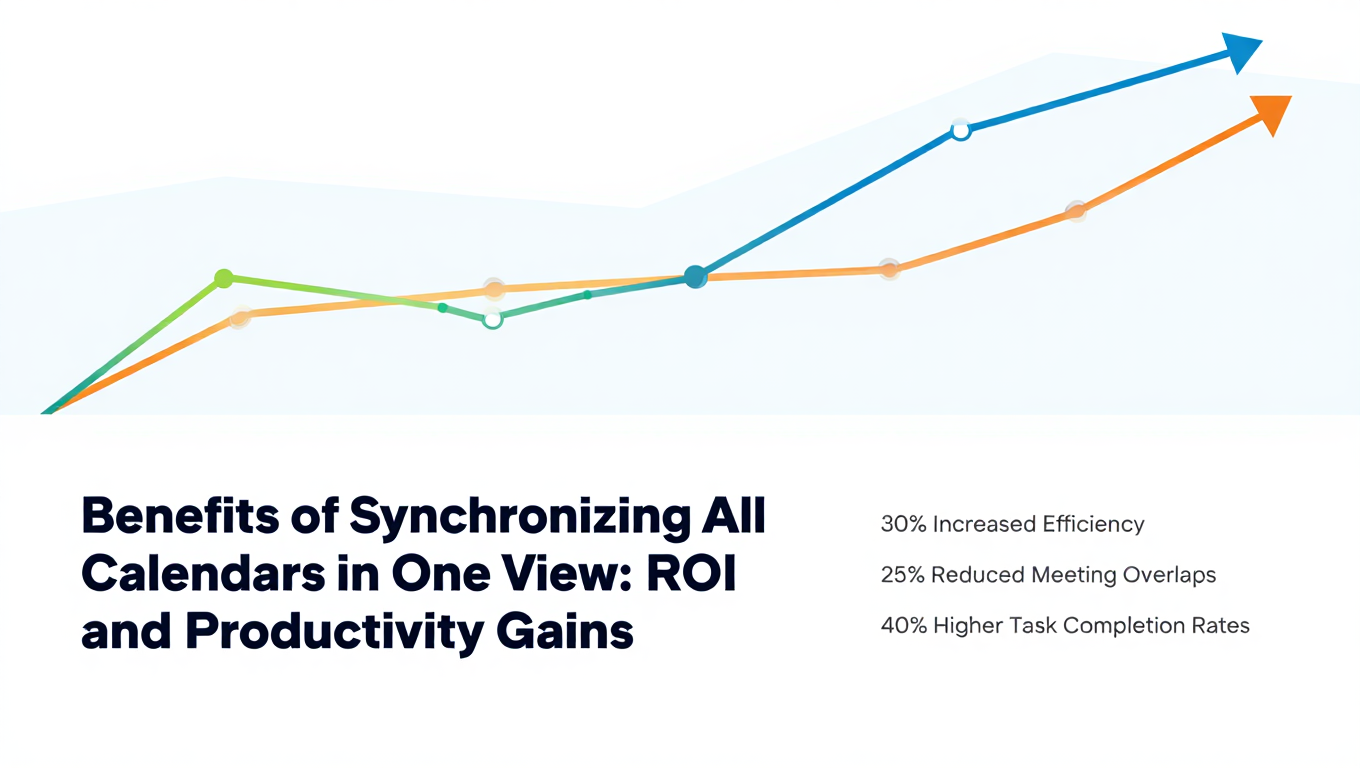
Benefits of Synchronizing All Calendars in One View: ROI and Productivity Gains
Discover the benefits of synchronizing all calendars in one view. See ROI data, productivity gains, reduced double bookings, and real-world business impact in 2025.
Best Bidirectional Calendar Sync Tools: 2025 Comparison Guide
Compare the best bidirectional calendar sync tools in 2025. Discover which platforms offer true two-way synchronization and which only provide one-way sync.
Best Two Way Calendar Sync Software: 2025 Expert Rankings & Comparison
Compare the top two-way calendar sync software tools. We tested 12 platforms for bidirectional sync speed, reliability, and field coverage to find which actually work.