
 Google Calendar
  Outlook Calendar
  Google Meet
  Microsoft Teams
  Zoom Meetings
 Calendly 6 Calendar Limit: Why Workarounds Fail and What Actually Works
Calendly workarounds for the 6-calendar limit add complexity without solving the problem. Discover why temporary fixes fail and what permanent solution works.
You discovered Calendly's 6 calendar limit. You searched for workarounds. You found forum posts suggesting calendar aggregation services, manual syncing strategies, and creative account setups. You implemented one or more of these workarounds.
Then you discovered something frustrating. The workarounds create new problems while failing to solve the original issue.
The calendar aggregation service sometimes lags, creating double bookings. The manual syncing requires constant attention you don't have time for. The multiple account setup confuses clients and violates terms of service. You spend more time managing the workaround than you spent dealing with the original problem.
Every Calendly 6 calendar limit workaround shares common failure patterns. They add technical complexity to an already complex problem. They require ongoing manual maintenance. They introduce new failure points. They waste professional time on administrative tasks. Most critically, they don't actually solve the problem that your scheduling tool cannot handle your scheduling needs.
Understanding the Calendly 6 Calendar Limit
Before evaluating workarounds versus real solutions, understanding the specific limitation clarifies why temporary fixes fail. Calendly restricts every user to connecting a maximum of 6 calendars regardless of plan tier or payment amount.
Calendly Calendar Connection Limits:
This restriction stems from how Calendly built their platform architecture. Each calendar connection requires API calls to external calendar services. More connections mean more API requests, increased infrastructure costs, and greater technical complexity. Calendly chose to cap connections at 6 rather than engineer a solution supporting unlimited calendars.
The problem is that professional scheduling needs do not conform to arbitrary technical limitations. A consultant managing five client calendars plus personal commitments needs 6 calendars minimum. Add a side project, board position, or family shared calendar and you immediately exceed the limit.
The Most Common Calendly 6 Calendar Limit Workarounds
Professionals facing the Calendly 6 calendar limit typically try several workarounds before seeking permanent solutions. Understanding why these workarounds fail helps clarify what actually works.
Workaround 1: Calendar Aggregation Services
How It Works: Third-party services like OneCal, CalendarBridge, or SyncThemCalendars sync multiple source calendars into a single master calendar. You connect the master calendar to Calendly, staying within the 6 calendar limit while theoretically checking all source calendars.
Why People Try It: Calendar aggregation seems like an elegant solution. You maintain separate calendars for organizational purposes while presenting a unified view to scheduling tools.
Why It Fails:
Sync Delays Create Double Bookings Calendar aggregation requires synchronization between services. This sync process introduces delays ranging from minutes to hours. Someone books a meeting on one calendar. The aggregation service has not synced that event to the master calendar yet. Calendly shows that time as available. Another meeting gets booked. Double booking occurs.
Additional Failure Points Each aggregation service represents a potential failure point. API connection issues, service outages, rate limiting problems, or sync errors disrupt calendar availability. Your scheduling reliability now depends on multiple services instead of one.
Ongoing Subscription Costs Most calendar aggregation services charge monthly fees. These costs add to your existing Calendly subscription. You are paying more money for a workaround instead of a solution.
Sync Conflict Management When the aggregation service encounters conflicts between source calendars, resolution requires manual intervention. You must log into the aggregation service, identify conflicts, and resolve them manually. This defeats the purpose of automated scheduling.
Privacy and Security Concerns Calendar aggregation requires granting third-party services access to all your calendars. This expands your security surface area and creates additional privacy considerations.
A marketing consultant implemented a calendar aggregation service to manage 8 calendars within Calendly's 6 calendar limit. In the first month, she experienced 3 double bookings caused by sync delays between the aggregation service and Calendly. The time spent fixing these conflicts and apologizing to clients exceeded the time she would have spent manually checking calendars. She abandoned the workaround after six weeks.
Workaround 2: Manual Calendar Consolidation
How It Works: Users manually copy events from multiple calendars into fewer calendars that fit within Calendly's 6 calendar limit. You might maintain 10 actual calendars but manually consolidate them into 6 calendars connected to Calendly.
Why People Try It: Manual consolidation appears straightforward. No third-party services. No additional costs. Complete control over the process.
Why It Fails:
Unsustainable Time Investment Manual consolidation requires constant attention. Each new event on any source calendar must be manually copied to the appropriate destination calendar. For active professionals, this can mean dozens of manual copies per week. The time investment quickly becomes unsustainable.
Human Error Guarantee Manual processes guarantee errors. You forget to copy an event. You copy it to the wrong calendar. You update an event in one place but not another. These errors create the double bookings you were trying to prevent.
No Systematic Solution Manual consolidation does not scale. As your professional activities expand, the manual workload increases proportionally. You cannot grow your practice without increasing administrative burden.
Lack of Automation Calendar management should be invisible infrastructure. Manual consolidation makes it a recurring administrative task requiring active attention.
Event Update Complexity When an event changes, you must remember to update it in multiple locations. Reschedule a meeting and you need to update both the source calendar and the consolidated calendar. Miss one location and your availability information becomes inaccurate.
Workaround 3: Strategic Calendar Exclusion
How It Works: Choose the 6 "most important" calendars to connect to Calendly. Accept that events on excluded calendars will not participate in conflict checking. Manually check excluded calendars before accepting meeting requests.
Why People Try It: Strategic exclusion seems like a pragmatic compromise. Connect your most active calendars to Calendly. Manually verify less frequent calendars.
Why It Fails:
Double Booking Guarantee Excluding calendars from automated conflict checking guarantees eventual double bookings. The question is not whether double bookings will occur but when and how frequently.
Manual Verification Overhead Every scheduling request requires manual checking against excluded calendars. This eliminates the primary benefit of automated scheduling tools. You are paying for automation while performing manual tasks.
Cognitive Load Increase You must remember which calendars are connected and which are excluded. This cognitive overhead persists throughout every scheduling interaction. Mental energy that should go to professional work goes to calendar management instead.
Scheduling Anxiety Strategic exclusion creates persistent low-level anxiety. Every accepted meeting carries uncertainty about whether it conflicts with something on an excluded calendar. This anxiety does not go away.
Professional Risk When double bookings occur on excluded calendars, they damage professional reputation. Clients, colleagues, and partners experience the scheduling conflict even though you tried to manage it through exclusion strategy.
Scalability Problem As your professional responsibilities grow, deciding which calendars to exclude becomes increasingly difficult. Every calendar represents real commitments. Excluding any calendar creates real double booking risk.
Research shows the average knowledge worker spends nearly five hours per week coordinating calendars and schedules. Strategic calendar exclusion increases this time investment rather than decreasing it. You add manual verification tasks on top of regular scheduling activities. The time cost of this workaround often exceeds the cost of proper scheduling solutions.
Workaround 4: Multiple Calendly Accounts
How It Works: Create separate Calendly accounts for different professional roles or client relationships. Each account connects to 6 calendars, allowing you to theoretically manage 12, 18, or more calendars by distributing them across accounts.
Why People Try It: Multiple accounts appear to bypass the per-account calendar limit while maintaining Calendly's features for each professional role.
Why It Fails:
Terms of Service Violations Calendly's terms of service typically prohibit individual users from maintaining multiple accounts to circumvent plan limitations. This workaround creates compliance risk.
Account Management Overhead Multiple accounts mean multiple logins, multiple booking pages, multiple settings to maintain, and multiple subscription fees to manage. The administrative complexity increases exponentially.
Client Confusion Clients receive different booking links depending on which account you use. This fragments your professional presence and creates confusion about how to schedule with you.
No Unified Conflict Checking Multiple Calendly accounts do not check availability across accounts. Account A does not know about meetings scheduled through Account B. The calendar limit problem remains unsolved across accounts.
Split Reporting and Analytics Your scheduling data fragments across multiple accounts. You cannot see unified analytics about your overall scheduling patterns.
Maintenance Burden Updates to availability settings, booking page designs, or integration configurations must be replicated across all accounts manually.
Workaround 5: Upgrading to Higher Calendly Tiers
How It Works: Upgrade from Professional to Teams or Enterprise hoping higher-tier plans remove or increase the calendar connection limit.
Why People Try It: Higher tiers typically provide more features. It seems logical that more expensive plans would support more calendar connections.
Why It Fails:
The Limit Persists The 6 calendar limit applies to every Calendly plan including Enterprise. Paying more money does not remove this restriction. You get additional team features but the same calendar connection limit.
Need better calendar management? CalendHub unifies all your calendars with smart scheduling and video conferencing.
Increased Cost Without Solving the Problem Upgrading to Teams increases your per-user cost from $12 to $16 monthly. Enterprise pricing runs even higher. These increased costs provide no additional calendar capacity.
Wrong Solution to the Problem The calendar limit stems from architectural decisions in how Calendly built their platform. Plan upgrades address different use cases like team scheduling and advanced integrations. They do not address the fundamental calendar connection limit.
Wasted Resources Money spent on higher-tier plans could be invested in scheduling platforms built without calendar restrictions. You pay more while the core problem remains unsolved.
Why All Workarounds Share Common Failure Patterns
Understanding failure patterns across Calendly 6 calendar limit workarounds clarifies why temporary fixes do not work and what characteristics define real solutions.
Workarounds Add Complexity Instead of Reducing It Every workaround introduces additional steps, services, manual processes, or account management overhead. Scheduling should simplify calendar management. Workarounds make it more complex.
Workarounds Require Ongoing Maintenance Calendar aggregation services need monitoring. Manual consolidation requires constant updating. Multiple accounts need management. Strategic exclusion requires persistent manual checking. Real solutions eliminate maintenance rather than creating it.
Workarounds Create New Failure Points Each workaround introduces opportunities for errors. Sync delays, forgotten manual copies, missed excluded calendars, account management mistakes. These failure points create the scheduling conflicts you were trying to prevent.
Workarounds Do Not Scale Temporary fixes that barely work with 7 or 8 calendars completely break down with 10 or 15 calendars. Your professional life should be able to grow without your scheduling infrastructure collapsing.
Workarounds Waste Professional Time Time spent managing workarounds is time not spent on actual work. At professional billing rates of $75 to $200 per hour, even one hour per week managing calendar workarounds costs thousands of dollars annually.
Workarounds Do Not Solve the Root Problem The fundamental issue is that your scheduling platform cannot handle your actual scheduling needs. Workarounds accommodate this limitation rather than eliminating it.
Consider a professional billing at $100 per hour who spends 3 hours per week managing calendar workarounds including manual checks, sync monitoring, duplicate event creation, and conflict resolution. That is $300 weekly or $15,600 annually spent on administrative overhead created by inadequate scheduling tools. Proper solutions eliminate this cost entirely.
What Actually Works for the Calendly 6 Calendar Limit
Real solutions for the Calendly 6 calendar limit share common characteristics that distinguish them from temporary workarounds. Understanding these characteristics helps identify tools built for your actual needs.
Characteristic 1: Native Unlimited Calendar Support Real solutions eliminate calendar connection limits entirely. The platform architecture supports connecting 7, 10, 15, 20, or more calendars without workarounds. Unlimited calendar connections are not premium features requiring upgrades. They are standard functionality.
Characteristic 2: Simultaneous Real-Time Conflict Detection The platform checks availability across all connected calendars simultaneously when someone attempts to book a meeting. No sync delays. No aggregation services. Instant conflict detection across every calendar.
Characteristic 3: Zero Manual Intervention Required After initial calendar connections, the system operates automatically. No manual syncing. No ongoing maintenance. No regular verification tasks. Calendar management becomes invisible infrastructure.
Characteristic 4: Single Unified Interface All calendar connections, availability settings, and booking configurations manage through one interface. No multiple accounts. No separate services. One platform handles everything.
Characteristic 5: Scales Effortlessly Adding new calendars requires simply connecting them through the standard interface. No architectural limits prevent growth. Your scheduling infrastructure scales with your professional expansion.
Characteristic 6: Professional Feature Completeness Real solutions provide all standard scheduling features including customizable booking pages, automated reminders, timezone handling, video conferencing integration, and buffer time management.
Characteristic 7: Competitive Pricing Solutions cost comparably to Calendly while providing superior calendar capacity. You should not pay premium prices for basic functionality like adequate calendar connections.
CalendHub as the Direct Solution
CalendHub represents the permanent Calendly 6 calendar limit solution rather than another temporary workaround. The platform was specifically built to eliminate calendar connection restrictions while maintaining professional scheduling features. For details on Calendly alternatives with unlimited calendars or why CalendHub is better than Calendly, explore our comparison guides.
Unlimited Calendar Connections CalendHub supports connecting unlimited calendars. Connect your work calendar, personal calendar, multiple client calendars, project-specific calendars, board position calendars, side project calendars, and family shared calendars. No limits. No workarounds needed.
Instant Conflict Detection When someone visits your CalendHub booking page, the system checks availability across every connected calendar in real time. Conflict detection happens simultaneously across all calendars, preventing double bookings automatically.
Simple Setup Process Connect calendars using standard OAuth authentication. The process takes minutes per calendar. No aggregation services to configure. No manual syncing to establish. No complex workarounds to implement.
Professional Scheduling Features CalendHub includes customizable booking pages, automated email reminders, intelligent timezone detection, configurable buffer times, meeting type customization, video conferencing integration, and mobile access. Everything you expect from modern scheduling software.
Straightforward Migration Switching from Calendly to CalendHub takes 30-45 minutes for most professionals. Create your account, connect all your calendars, configure availability preferences, design your booking page, and update your scheduling links. The migration process is simpler than implementing most workarounds.
No Ongoing Maintenance After initial setup, CalendHub operates automatically. No workarounds to maintain. No sync services to monitor. No manual verification tasks. Your scheduling infrastructure works invisibly while you focus on actual work.
- Solves the Root Problem: Eliminates calendar limits entirely instead of working around them
- Reduces Complexity: Simpler than any multi-service workaround
- Scales Effortlessly: Add unlimited calendars as your needs grow
- Saves Time: Eliminates hours of weekly manual calendar management
- Protects Reputation: Prevents double bookings through comprehensive conflict detection
- Competitive Pricing: Costs comparably to Calendly while providing unlimited capacity
Comparing Workarounds to Real Solutions
Direct comparison between workarounds and proper solutions clarifies the value difference. Here is how various approaches stack up against key criteria.
Calendar Management Comparison:
The time investment reveals the true cost. Workarounds requiring ongoing weekly maintenance consume professional time worth far more than scheduling tool subscription costs.
Reliability Comparison:
Reliability differences become critical when double bookings damage professional relationships. Workarounds trade scheduling reliability for avoiding platform switching.
Professional Impact Comparison:
Workarounds affect professional operations beyond scheduling mechanics. Consider the broader impacts.
Calendar Aggregation Impact: Sync delays create double bookings. Third-party service dependency introduces outage risk. Additional subscription costs reduce profitability. Technical troubleshooting pulls focus from professional work.
Manual Consolidation Impact: Constant manual work creates cognitive overhead. Human errors damage professional reputation. Time investment scales with activity level. No path to sustainable growth.
Strategic Exclusion Impact: Persistent scheduling anxiety affects daily operations. Manual verification takes time from billable work. Double bookings on excluded calendars harm client relationships. Mental overhead never goes away.
Multiple Accounts Impact: Client confusion damages professional brand. Account management requires ongoing attention. Terms of service violations create legal risk. No unified view of scheduling data.
Upgrade to Higher Calendly Tiers Impact: Increased costs without solving the core problem. Wasted resources that could fund proper solutions. Continued reliance on workarounds. Problem persists indefinitely.
CalendHub Impact: Eliminates scheduling overhead entirely. Protects professional reputation through reliable conflict detection. Scales effortlessly with practice growth. Returns time to billable activities.
Making the Right Choice for Your Situation
Choosing between workarounds and permanent solutions requires honest assessment of your specific situation. Consider these factors.
Assess Your Calendar Complexity Count every calendar you need for comprehensive conflict checking. Work calendars, personal calendars, client-specific calendars, project calendars, organizational calendars, family shared calendars. If the total exceeds 6, you need more than Calendly provides.
Calculate Your Time Investment Track time spent on calendar management for two weeks. Include manual checking, workaround maintenance, duplicate event creation, conflict resolution, and schedule verification. Multiply those hours by your professional billing rate.
Evaluate Double Booking Frequency How often do double bookings occur with your current setup? Each double booking costs time fixing the conflict plus potential damage to professional relationships. What is the cumulative impact?
Consider Growth Trajectory Where will your practice be in 6 months or a year? New clients, new projects, new board positions, and new ventures all add calendars. Will your current workarounds scale or break?
Analyze Total Cost of Ownership Add up all costs related to calendar management. Calendly subscription, aggregation service fees, time spent on manual processes, opportunity cost of administrative overhead. Compare this to comprehensive solutions.
Determine Risk Tolerance How much scheduling reliability matters in your professional context? Client-facing consultants cannot afford double bookings. Internal coordinators might have more flexibility. Your risk tolerance should guide tool selection.
Choose workarounds if:
- You temporarily need 7-8 calendars and expect this to decrease soon
- You have extensive Calendly integrations that would be costly to replicate
- You schedule infrequently enough that manual checking is sustainable
- You operate in very low double booking risk scenarios
Choose a permanent solution like CalendHub if:
- You need more than 6 calendars indefinitely
- You spend significant time managing calendar workarounds
- Double bookings damage professional relationships in your context
- Your practice is growing and calendar needs will increase
- You value time efficiency and reliable automation
- You want scheduling infrastructure that scales with your success
Implementing the Permanent Solution
Moving from workarounds to permanent solutions requires a transition plan. Here is how to make the switch efficiently.
Step 1: Document Current Calendar Setup List every calendar you currently manage. Note which calendars connect to Calendly and which are excluded. Identify all locations where you share booking links.
Step 2: Create CalendHub Account Visit CalendHub.com and set up your account. The process takes less than five minutes. You can use the same email address you use for Calendly.
Step 3: Connect All Calendars Use CalendHub's calendar connection interface to add every calendar you need. Include all calendars, not just the six you could connect to Calendly. Connect work, personal, client, project, organizational, and family calendars.
Step 4: Configure Availability Settings Set your working hours, buffer times between meetings, and scheduling preferences. CalendHub checks all connected calendars against these availability rules.
Step 5: Create Booking Pages Design your scheduling pages with appropriate branding, meeting types, and booking options. CalendHub provides customization similar to Calendly with additional flexibility.
Step 6: Test Thoroughly Before going live, test your CalendHub setup thoroughly. Book test meetings. Verify that conflict detection works across all calendars. Confirm that confirmations and reminders send correctly.
Step 7: Update Booking Links Replace Calendly links with CalendHub links everywhere you share them. Email signatures, website contact pages, social media profiles, email templates, and any other locations.
Step 8: Notify Regular Contacts Send brief updates to frequent contacts about your new scheduling link. Most people will notice no difference in the booking experience.
Step 9: Run Parallel Systems Briefly If you prefer cautious transitions, run both Calendly and CalendHub for 1-2 weeks. This allows verification that CalendHub handles your needs before fully shutting down Calendly.
Step 10: Cancel Calendly Subscription Once you have verified that CalendHub meets all your requirements, cancel your Calendly subscription. Remove or disable any workaround services you were using.
Step 11: Remove Workaround Infrastructure Disconnect calendar aggregation services. Stop manual consolidation processes. Eliminate strategic exclusion practices. Clean up multiple account setups. Remove the administrative overhead you were managing. For a complete transition plan, see how to migrate from Calendly to unlimited calendars.
Step 12: Monitor and Optimize Watch your scheduling patterns for the first few weeks with CalendHub. Optimize availability settings. Adjust booking page designs. Fine-tune meeting types. Take advantage of unlimited calendar capacity.
- Account Setup: 5 minutes
- Connect All Calendars: 10-15 minutes (depending on quantity)
- Configure Settings: 10 minutes
- Create Booking Pages: 15 minutes
- Testing: 15 minutes
- Update Links: 15 minutes
- Total Active Time: 60-75 minutes
Most professionals complete migration in one focused session. The time investment is less than one week of workaround maintenance.
Long-Term Benefits of Proper Solutions
Choosing permanent solutions over workarounds creates benefits that compound over time. Understanding these long-term advantages clarifies the strategic value of making the right choice.
Cumulative Time Savings Eliminating 3 hours of weekly calendar management saves 156 hours annually. At professional rates of $75-150 per hour, this represents $11,700-23,400 in annual value. These savings compound year after year.
Reduced Cognitive Load Calendar management operating invisibly returns mental energy to professional work. The cognitive overhead of managing workarounds disappears. This mental clarity improves overall professional performance.
Reputation Protection Consistent prevention of double bookings protects professional reputation over time. Clients, colleagues, and partners experience reliable scheduling. This reliability builds trust and strengthens professional relationships.
Scalability Foundation Unlimited calendar infrastructure scales effortlessly as your practice grows. New opportunities do not require calendar management strategy changes. Your scheduling infrastructure grows with your success.
Professional Development Enablement When calendar management is not a constraint, you can accept more diverse professional opportunities. Board positions, consulting engagements, speaking opportunities, and side projects all become easier to manage.
Stress Reduction Eliminating scheduling anxiety improves daily professional experience. You trust your scheduling system completely. This reduces background stress and improves work quality.
Competitive Advantage While competitors struggle with scheduling logistics, you present seamless availability management. This operational excellence differentiates your professional practice.
The Real Choice Between Workarounds and Solutions
The Calendly 6 calendar limit creates a clear choice. Implement workarounds that add complexity, require maintenance, introduce failure points, and consume professional time. Or switch to platforms built without arbitrary limitations.
Workarounds appear cheaper initially but carry hidden costs in time investment, reduced reliability, and constrained scalability. Proper solutions like CalendHub eliminate these costs entirely while providing unlimited calendar capacity and professional features.
The temporary convenience of staying with familiar tools costs more than the brief effort required to switch to better solutions. Every week you spend managing workarounds is a week of wasted professional time and unnecessary scheduling risk.
Stop implementing workarounds. Choose solutions that eliminate the problem entirely.
Ready to Simplify Your Schedule?
Join thousands of professionals who have unified their calendars and reclaimed their time with CalendHub's intelligent scheduling platform.
Related Articles
Best Apps to View All Calendars in One Place (2025 Review)
Compare the top apps for viewing all calendars in one place. Detailed reviews of features, limits, and pricing to help you choose the right solution.
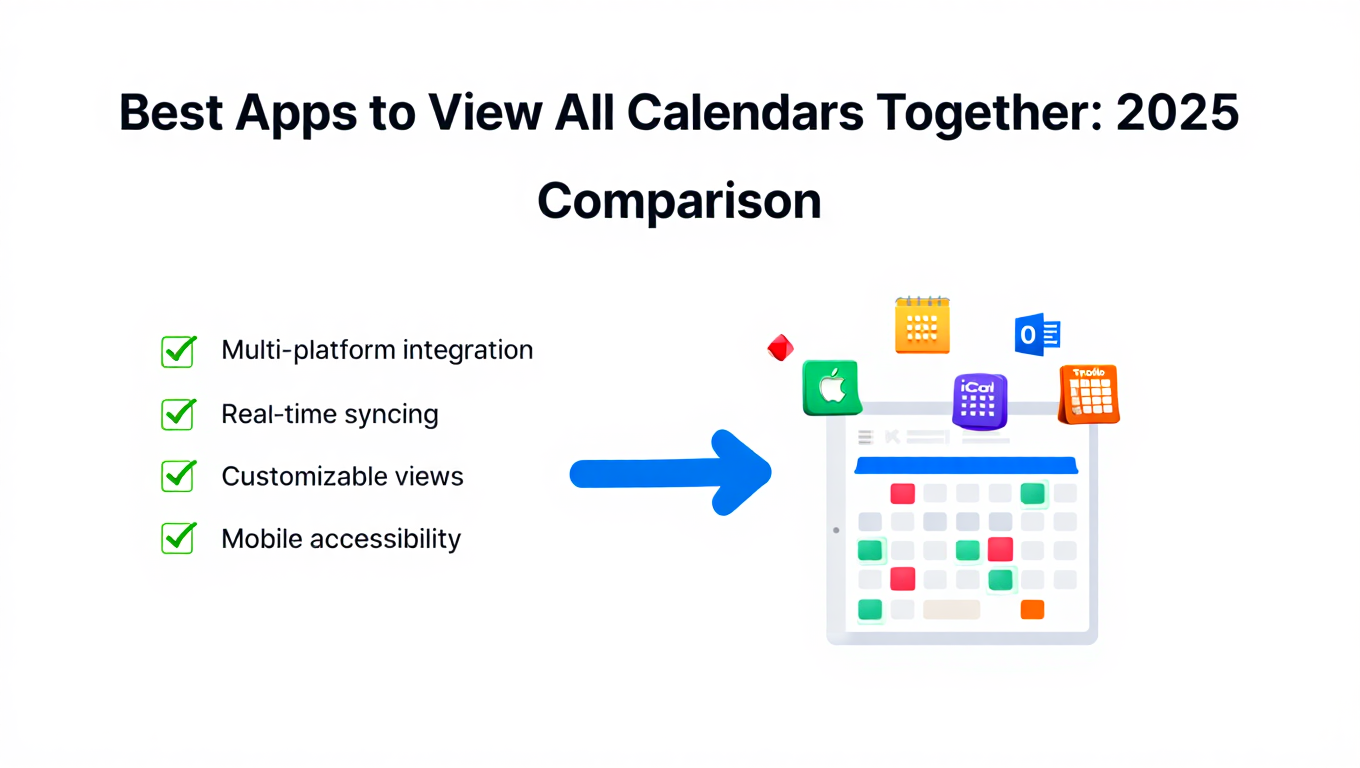
Best Apps to View All Calendars Together: 2025 Comparison
Compare the best apps and tools to view all calendars together. Detailed analysis of features, limits, pricing, and which solution fits your needs.
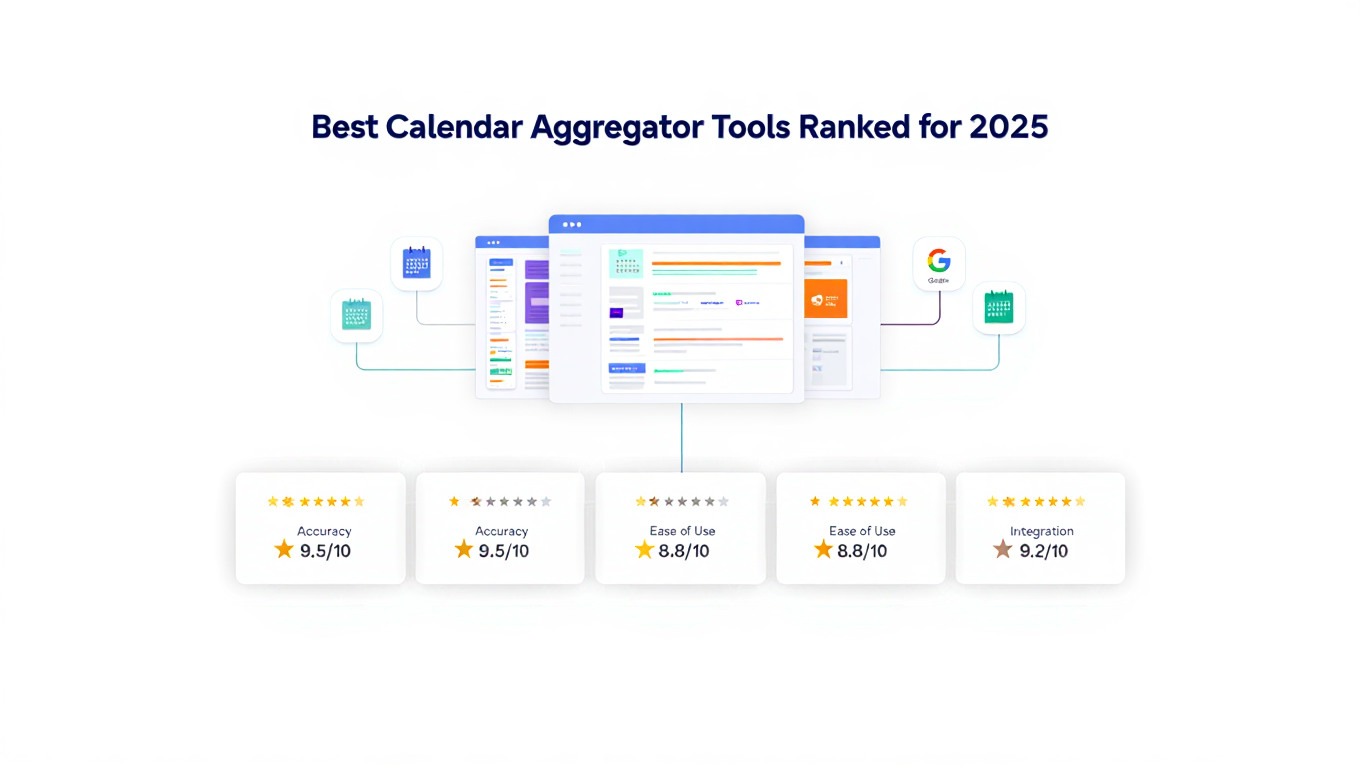
Best Calendar Aggregator Tools Ranked for 2025
Compare the top calendar aggregator tools in 2025. See which platforms offer unlimited connections, real-time sync, and true aggregation for professionals.