
 Google Calendar
  Outlook Calendar
  Google Meet
  Microsoft Teams
  Zoom Meetings
 IT Manager Calendar Management: Complete Guide for 2025
Master IT manager calendar management across change windows, vendor meetings, incident response, and team 1-on-1s. Unify 6-12 calendars.
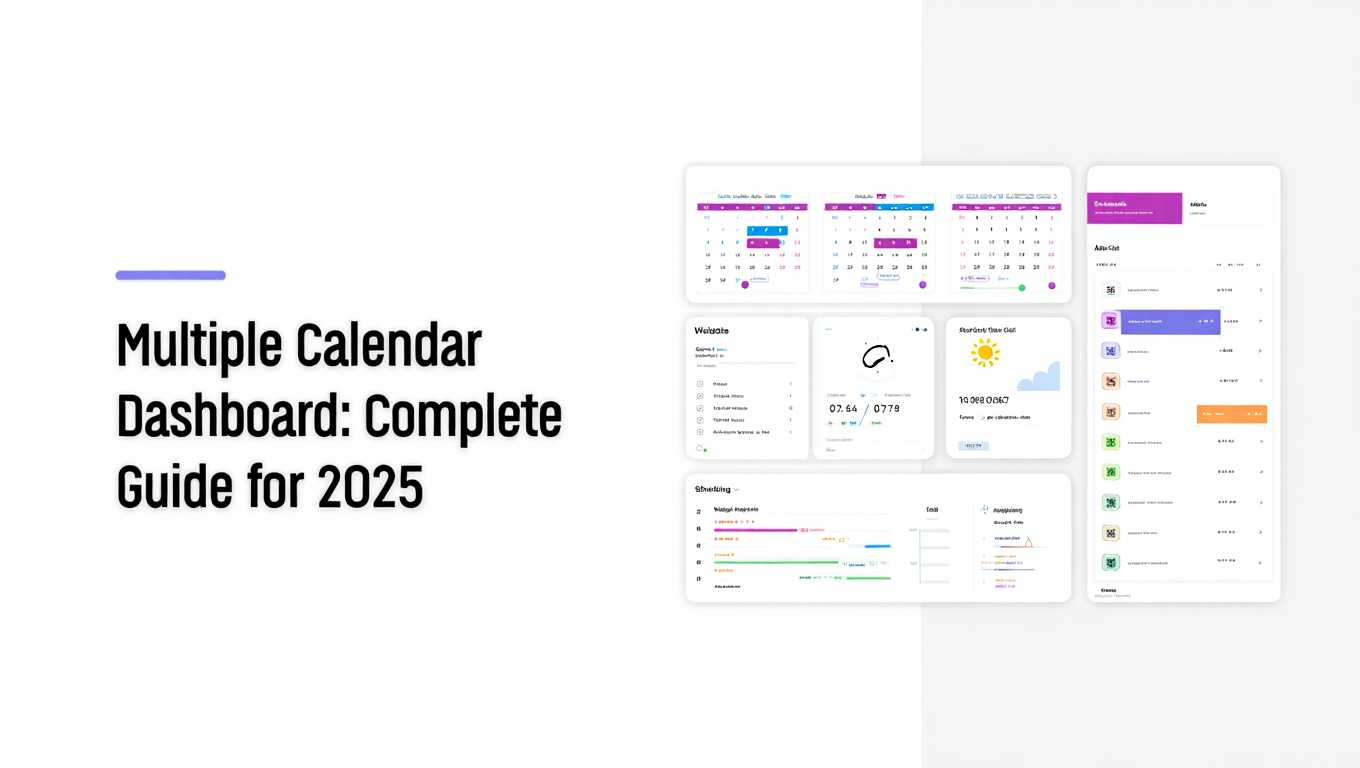
It's 2 PM on a Tuesday and your calendar looks like a game of Tetris that you're losing. You've got a CAB (Change Advisory Board) meeting in 10 minutes to approve Friday's server migration window. At 3 PM, there's a vendor demo for the new endpoint security platform. Your DevOps lead pinged you about a production incident that might need an emergency change, and three of your direct reports have 1-on-1s scheduled this afternoon that you've already rescheduled twice. You flip between your Outlook calendar, the shared IT ops calendar, the change management system's timeline, and the project board, trying to figure out what you can actually keep.
IT managers operate in one of the most calendar-dense environments in any organization. With 6 to 12 calendars spanning change management schedules, vendor relationships, incident response, team management, project timelines, and cross-departmental meetings, your scheduling complexity rivals that of a C-suite executive. Except you rarely have an executive assistant to help manage it.
- Why IT managers face uniquely demanding calendar management challenges
- The scheduling problems that create risk in change management and incident response
- Practical steps to unify your operational, vendor, and team calendars
- How CalendHub helps IT managers maintain visibility across every scheduling layer
Why IT Manager Calendar Management Is Uniquely Challenging
IT management sits at the intersection of technical operations, people management, vendor relationships, and strategic planning. Each of these domains generates its own scheduling demands, and they all compete for the same working hours.
The technical side alone is demanding. Change management windows are carefully scheduled to minimize production impact. Incident response happens on no schedule at all. Patching cycles, deployment windows, and maintenance periods all need dedicated calendar slots that can't be moved without approval processes.
On top of the technical calendar, you're managing a team. Weekly 1-on-1s with 5 to 10 direct reports, team meetings, hiring interviews, performance reviews, and career development conversations all require protected time. These people-management obligations are the first thing that gets sacrificed when operational fires break out, but they're also the most important thing you do as a manager.
Then there are the vendor meetings. Software renewals, hardware procurement, demo presentations, contract negotiations, and support escalation calls. Each vendor wants face time, and each conversation has a deadline tied to a budget cycle or a contract expiration.
Finally, you're expected to participate in cross-departmental planning, leadership meetings, and strategic initiatives. All of this happening simultaneously across different calendar systems that don't talk to each other. Your personal Outlook calendar, the shared IT operations calendar, the change management system, the project management tool, and the vendor meeting tracking all exist as separate islands of scheduling information.
Common Calendar Problems IT Managers Face
Change Management Window Conflicts
Change management windows are sacred in IT. They're approved through formal processes, communicated to stakeholders, and scheduled during low-impact hours. But when your personal calendar doesn't show the change management system's scheduled windows, you might book a vendor meeting or a team outing right on top of a critical deployment.
Even worse, when emergency changes need to be scheduled, you need to instantly understand what else is happening during the proposed window. Is anyone on PTO? Is there another change already approved? Is there a vendor meeting you'd need to cancel? Without a unified calendar, answering these questions requires checking multiple systems, which takes time you don't have during an incident.
Vendor Meeting Overload
IT managers at mid-size companies typically manage relationships with 15 to 25 vendors. Each vendor wants quarterly business reviews, renewal discussions, product roadmap updates, and escalation calls. These meetings accumulate quickly and can consume entire days if not managed carefully.
The problem compounds when vendor meetings are scheduled through different channels. Some use Calendly links. Others send Outlook invites. A few coordinate through email threads. Each of these ends up on a different calendar or gets lost in your inbox entirely.
Incident Response Disruption
You can't schedule an outage. When production systems go down, everything else on your calendar becomes secondary. But after the incident is resolved, you need to reschedule everything that got displaced. Without a clear view of what you missed and what's still pending, the aftermath of an incident creates a scheduling backlog that can take days to sort out.
Need better calendar management? CalendHub unifies all your calendars with smart scheduling and video conferencing.
If you're looking for strategies to manage this many calendars, check out this guide on the best way to manage 5-plus calendars.
Team 1-on-1 Erosion
Every IT management book says the same thing. Don't cancel your 1-on-1s. But when you're juggling change windows, vendor demos, and incident response, those 1-on-1s are the easiest thing to push. The problem is that pushing them sends a message to your team that they're not a priority. Over time, this erodes trust and makes retention harder.
The root cause is usually calendar fragmentation. Your 1-on-1s are on your personal calendar, but the change management window that conflicts is on the ops calendar. You don't see the conflict until someone walks into your office for their 1-on-1 and you're on a bridge call.
How to Solve IT Manager Calendar Chaos
Step 1. Map Your Complete Calendar Landscape
Document every calendar and scheduling system you interact with. For most IT managers, this includes your personal Outlook or Google calendar, a shared IT team calendar, the change management system's schedule, a project management tool with timeline views, vendor meeting scheduling platforms, a PTO and coverage calendar, and potentially an on-call rotation schedule.
The typical IT manager interacts with 8 to 12 scheduling systems. That number is not sustainable without a unification strategy.
Step 2. Bring All Calendars Into One View
The single most impactful change you can make is consolidating all of these systems into one dashboard. CalendHub.com lets you connect unlimited calendars from different platforms into a single, real-time view. When you can see your 1-on-1s, your change windows, your vendor meetings, and your team's PTO all in one place, conflicts become visible before they become problems.
Step 3. Establish Calendar Hierarchy
Not all calendar events are equal. Create a clear priority system. Change management windows and incident response take top priority. Team 1-on-1s get second priority because they're essential for retention. Vendor meetings get third priority because they can usually be rescheduled. Internal administrative meetings get the lowest priority.
When conflicts arise, use this hierarchy to make quick decisions about what moves and what stays. Document the hierarchy so your team understands it too.
Step 4. Protect People Management Time
Block your 1-on-1 slots as recurring, high-priority events on your unified calendar. When a vendor tries to schedule during one of these slots, your calendar shows you as unavailable. This simple step prevents the gradual erosion of people management time that plagues most IT managers.
Step 5. Create an Incident Response Calendar Protocol
Establish a process for what happens to your calendar when an incident occurs. Designate someone on your team to send reschedule notifications for your non-critical meetings during an active incident. After resolution, review your unified calendar to identify what needs to be rebooked and handle it systematically rather than chaotically.
For more on unifying complex calendar environments, see this complete guide to unified calendar views.
IT managers who unify their calendars report fewer missed change windows, more consistent 1-on-1 schedules, and significantly faster post-incident calendar recovery. The average time saved on scheduling logistics is 6 to 10 hours per week, which is time reinvested in strategic initiatives and team development.
Why CalendHub Works for IT Managers
IT managers need a calendar tool that handles enterprise-level complexity. CalendHub.com is built for exactly this kind of multi-layered scheduling environment.
Unlimited calendar connections mean you can sync every operational calendar, every vendor scheduling tool, every team member's schedule, and your personal commitments without hitting a ceiling. When you're managing 10 or more calendars, arbitrary limits are not an option.
Real-time two-way sync ensures that when a change window is approved in one system, it's reflected across your entire calendar ecosystem immediately. No delay. No manual replication. No risk of a conflict hiding in a system you forgot to check.
Complete visibility gives you the operational awareness that IT management demands. Change windows, team schedules, vendor meetings, and personal commitments all appear in a single dashboard. You can make scheduling decisions in seconds instead of minutes.
If you manage a large team, you'll also benefit from exploring the best tools for managing multiple work calendars.
Run Your IT Department, Not Your Calendar
IT managers are responsible for keeping systems running, teams productive, and vendors accountable. That's a big enough job without adding "full-time calendar coordinator" to your title.
Unify your calendars with CalendHub.com, establish clear scheduling priorities, and build a system that protects what matters most. Your change windows will run on schedule. Your team will get the 1-on-1 time they deserve. And you'll finally have the bandwidth to focus on the strategic work that makes your department excellent.
Ready to Simplify Your Schedule?
Join thousands of professionals who have unified their calendars and reclaimed their time with CalendHub's intelligent scheduling platform.
Related Articles

Accountant Calendar Management: Complete Guide for 2025
Master accountant calendar management to survive tax season, track client deadlines, and balance multiple engagements without burnout.

Agency Owner Calendar Management: Complete Guide for 2025
Juggle client meetings, team standups, biz dev, and project timelines as an agency owner. Your complete calendar management guide.
Business Coach Calendar Management: Complete Guide for 2025
Streamline executive client scheduling, mastermind groups, and speaker coordination. The business coach calendar management guide.