
 Google Calendar
  Outlook Calendar
  Google Meet
  Microsoft Teams
  Zoom Meetings
 Management Consultant Calendar Management: Complete Guide for 2025
Master management consultant calendar management across client engagements, travel, and firm meetings. Unify 8-15 calendars effectively.
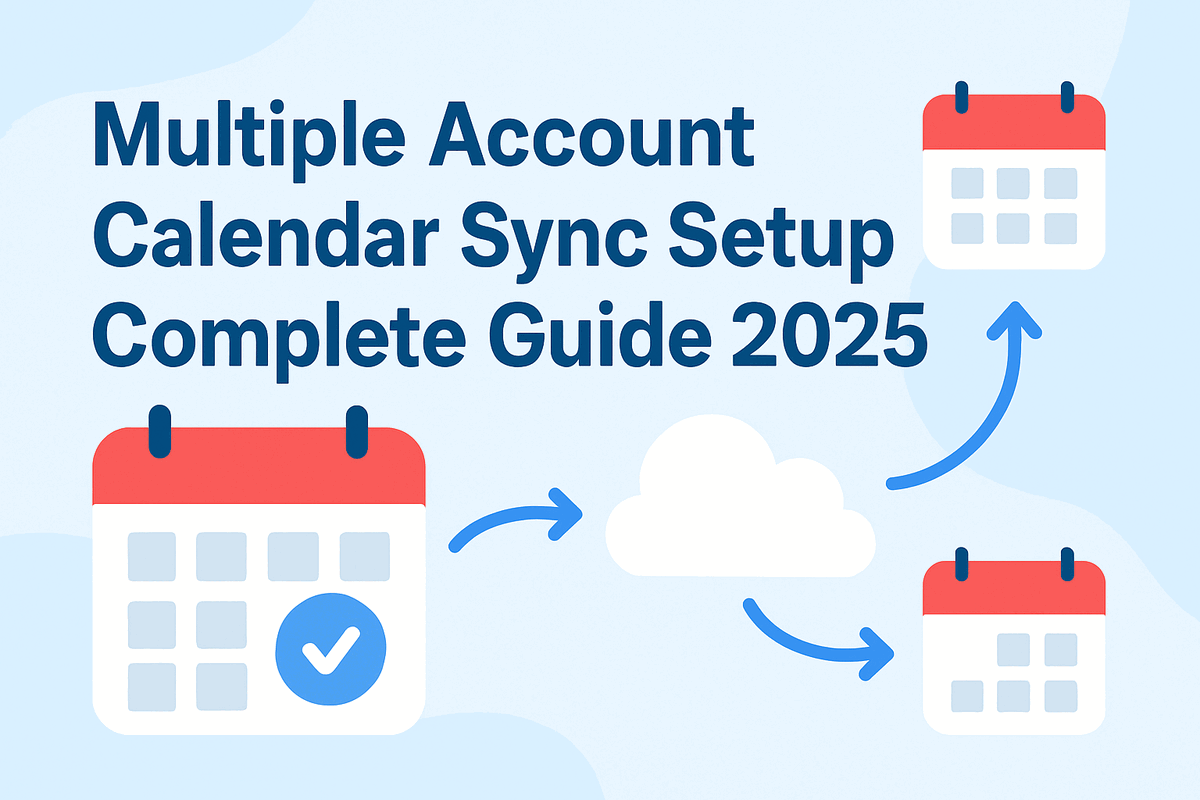
You're sitting in the airport lounge reviewing a deck for tomorrow's client presentation in Chicago. Your phone lights up with a meeting invite from a second client's project lead in Boston, requesting a working session next Tuesday. Before you can check your availability, your firm's practice leader messages you about a proposal review that overlaps with the Boston meeting. You open your laptop and stare at a tangle of calendar accounts. Your firm's Outlook calendar, Client A's Google Workspace guest access, Client B's Microsoft Teams calendar, your personal calendar, and a shared travel logistics spreadsheet. None of them show you a complete picture of your week.
Management consultants operate in what might be the most calendar-fragmented professional environment in existence. With 8 to 15 calendars spanning multiple client organizations, your own consulting firm's internal systems, travel logistics, and personal commitments, scheduling isn't just complicated. It's a daily survival exercise. And when every hour of your time is billed at hundreds of dollars, a single scheduling mistake has an outsized financial impact.
- Why management consultants face the most extreme calendar management challenges of any profession
- The scheduling problems that threaten client relationships and utilization rates
- A practical system to unify client, firm, travel, and personal calendars
- How CalendHub helps consultants maintain control across every engagement
Why Management Consultant Calendar Management Is Uniquely Challenging
Management consulting is built on a model that makes calendar management inherently difficult. You work inside client organizations that have their own calendar systems, their own meeting cultures, and their own scheduling tools. At the same time, you remain connected to your consulting firm's internal calendar for practice meetings, proposal work, mentoring, and business development. And layered on top of both is the travel that connects these different worlds.
A consultant working on two active client engagements might be operating across four to six different calendar environments just for work. Client A uses Google Workspace. Client B runs on Microsoft 365. Your firm has its own Outlook environment. Each client engagement has a shared project calendar. And there might be a separate calendar for the steering committee or executive sponsor meetings.
Now add travel. Flights, hotels, car services, and client site arrival times all need to be tracked. Plus your personal life. Family commitments, medical appointments, and the personal time that keeps you functioning at this pace.
The result is a scheduling landscape of 8 to 15 calendars that no single tool was designed to manage. And because consulting runs on utilization rates, every unscheduled hour costs your firm revenue, and every scheduling conflict risks damaging a client relationship.
Common Calendar Problems Management Consultants Face
Engagements Across Multiple Client Organizations
The fundamental challenge is that each client gives you access to their calendar system, not yours. You're a guest in their environment. This means your availability as seen by Client A is completely invisible to Client B. When Client A's VP of Operations books your Wednesday afternoon, Client B's project lead doesn't know you're unavailable. The conflict doesn't surface until you manually cross-check, and by then both meetings might be confirmed.
This problem scales directly with the number of active engagements. A senior consultant juggling three clients is operating in three separate calendar ecosystems, each of which believes it has your full attention. Managing this without a unified view requires constant manual vigilance that isn't sustainable.
Travel Scheduling Complexity
Consultants who travel to client sites face a layered scheduling challenge. The flight needs to land before the meeting starts. The hotel needs to be booked for the right nights. Ground transportation needs to connect the airport to the client site with a buffer. And all of this needs to be synchronized with meeting schedules at both the destination and the origin.
A single scheduling mistake in the travel chain can cascade through your entire week. A delayed flight that causes a missed client meeting doesn't just affect one appointment. It affects your credibility with that client and ripples into every subsequent meeting that was planned around your presence on site.
For strategies on managing this level of calendar complexity, see this guide on consolidating multiple calendars.
Internal Firm Meeting Obligations
Consulting firms have their own demanding meeting culture. Practice area meetings, proposal reviews, case team staffing discussions, mentoring sessions with junior consultants, partner meetings, and business development calls all compete for the time that's not allocated to client work.
Need better calendar management? CalendHub unifies all your calendars with smart scheduling and video conferencing.
The tension between billable client time and firm obligations is a defining feature of consultant life. Without a unified calendar that shows both client and firm commitments together, one side inevitably gets neglected. Junior consultants tend to skip firm meetings for client work. Senior consultants sometimes let client responsiveness slip because firm politics demand their attention.
Utilization Rate Pressure and Calendar Optimization
Management consulting firms track utilization rates obsessively. Every hour of your day is categorized as billable client work, internal investment, or available capacity. Your calendar is the primary record of how your time is allocated, and gaps in your calendar represent lost revenue.
This creates pressure to optimize every hour, which in turn makes calendar management even more critical. An open slot on Tuesday afternoon isn't just free time. It's a utilization gap that needs to be filled with client work, proposal development, or business development activities. But you can't optimize time you can't see, and when your time is spread across 10 or more calendar systems, blind spots are everywhere.
Confidentiality Between Client Engagements
Management consultants often work with competing clients or clients in the same industry. Calendar management in this context requires information barriers. Client A shouldn't see what you're doing for Client B. But you need to see both calendars to avoid conflicts. This creates a need for a unified view that respects confidentiality boundaries, something that most native calendar sharing features don't handle well.
How to Solve Management Consultant Calendar Chaos
Step 1. Inventory Your Complete Calendar Ecosystem
List every calendar system you touch across all engagements, your firm, and your personal life. For most management consultants, this includes your firm's Outlook calendar, each client's calendar system where you're a guest, shared project calendars for each engagement, travel itinerary calendars, proposal and BD tracking calendars, and your personal calendar.
A working consultant with two active engagements and a healthy pipeline typically operates across 10 to 15 scheduling systems. That's the reality you need to solve for.
Step 2. Centralize With a Unified Calendar Platform
The only sustainable solution is a tool that pulls all of these systems into a single view without requiring you to share sensitive information between clients. CalendHub.com lets you connect unlimited calendars from different providers and view them all in one dashboard. Your firm calendar, your client calendars, your travel itinerary, and your personal schedule all appear together. No cross-contamination between client environments.
Step 3. Create Engagement-Specific Color Coding
Assign a distinct color to each client engagement, your firm's internal calendar, travel, and personal time. When you look at your week, you should immediately see the proportion of time allocated to each client and to your firm. This visual system helps you maintain balanced utilization and spot weeks where one client is consuming a disproportionate share of your time.
Step 4. Build Travel Buffers Into Your Calendar
Never schedule a meeting within two hours of a flight landing. Block your travel days on your unified calendar with generous buffers before and after transit. When these blocks appear across all your client calendars through sync, neither client can book you during your travel windows.
Step 5. Protect Firm and Personal Time
Block recurring slots for firm obligations and personal commitments with the same rigor you'd protect client meetings. Your weekly practice meeting, your mentoring sessions, and your personal boundaries all deserve calendar protection. When they appear on your unified calendar alongside client commitments, they won't get accidentally overwritten.
For more on preventing this kind of scheduling conflict, see this guide on preventing double bookings across multiple calendars.
Management consultants who unify their calendars report zero cross-client scheduling conflicts, better utilization tracking, and dramatically less time spent on manual calendar coordination. The typical time saved is 8 to 12 hours per week, which at consulting billing rates represents significant recovered revenue.
Why CalendHub Works for Management Consultants
Management consultants need a calendar tool that handles enterprise-grade complexity while maintaining strict boundaries between client environments. CalendHub.com delivers on the specific needs of the consulting profession.
Unlimited calendar connections mean you can sync every client calendar, every firm system, every travel tool, and your personal schedule without caps. When you're operating across 10 to 15 calendars, a tool that limits you to 6 connections is useless.
Real-time two-way sync ensures that when Client A books your Tuesday morning, Client B's calendar immediately reflects your unavailability. This automatic cross-calendar blocking eliminates the manual vigilance that burns hours every week.
Unified visibility with separation gives you the single dashboard you need to manage your complex professional life. You can see everything in one view while maintaining appropriate boundaries between client environments. No sensitive information leaks between engagements.
For additional strategies on managing high-volume calendar environments, explore the best way to manage 5-plus calendars.
Bill More Hours by Wasting Fewer on Scheduling
In management consulting, time is literally money. Every hour you spend reconciling calendar conflicts across client systems is an hour you can't bill. Every scheduling mistake that causes a missed meeting damages a client relationship that took months to build. And every gap in your calendar that goes unfilled because you couldn't see it is revenue that walks out the door.
Unify your calendars with CalendHub.com and build a scheduling system that matches the complexity of your career. You've mastered the art of managing client organizations. Now it's time to master the management of your own time.
Ready to Simplify Your Schedule?
Join thousands of professionals who have unified their calendars and reclaimed their time with CalendHub's intelligent scheduling platform.
Related Articles

Accountant Calendar Management: Complete Guide for 2025
Master accountant calendar management to survive tax season, track client deadlines, and balance multiple engagements without burnout.
Agency Owner Calendar Management: Complete Guide for 2025
Juggle client meetings, team standups, biz dev, and project timelines as an agency owner. Your complete calendar management guide.
Business Coach Calendar Management: Complete Guide for 2025
Streamline executive client scheduling, mastermind groups, and speaker coordination. The business coach calendar management guide.