
 Google Calendar
  Outlook Calendar
  Google Meet
  Microsoft Teams
  Zoom Meetings
 Real-Time Calendar Synchronization: Critical Business Benefits for 2025
Real-time calendar sync prevents double bookings, saves 5+ hours weekly, and improves team coordination. Discover why sub-minute sync matters for business operations.

Your sales team books a discovery call with a major prospect at 2:00 PM. Your CEO accepted a board meeting at the same time 10 minutes earlier, but the calendar sync delay means the sales scheduler sees that time slot as available. Both meetings get confirmed. Someone has to cancel on the prospect. This scenario costs businesses thousands in lost opportunities every month, all because calendar sync takes 15 minutes instead of 60 seconds.
The business case for real-time calendar synchronization extends far beyond avoiding embarrassment. Sync delays create quantifiable costs through double bookings, wasted coordination time, missed revenue opportunities, and degraded team productivity. Organizations treating calendar infrastructure as trivial IT decision are overlooking significant operational efficiency gains.
According to 2024 workplace productivity research, professionals lose an average of 5.3 hours per week to calendar-related inefficiencies, much of it stemming from coordination overhead caused by slow calendar sync. Organizations using real-time synchronization under 60 seconds report 20% improvements in booking efficiency and virtual elimination of sync-caused double bookings.
This guide examines the concrete business benefits of real-time calendar synchronization, the hidden costs of slow sync, and how sub-minute synchronization impacts revenue, productivity, and operational efficiency across different organizational contexts.
- Quantifiable business costs of calendar sync delays
- How real-time sync prevents revenue-impacting double bookings
- Productivity improvements from sub-minute calendar synchronization
- Team coordination benefits for remote and distributed organizations
- ROI calculations for upgrading from slow to fast calendar sync
The Hidden Cost of Slow Calendar Sync
Calendar synchronization delays create business costs that rarely appear in obvious budget line items, making them easy to overlook despite their substantial cumulative impact.
Quantifying Double Booking Impact
Double bookings represent the most visible cost of calendar sync delays. When someone books a time slot that someone else just marked as busy but hasn't synced yet, organizations pay for that delay through rescheduling overhead, damaged relationships, and lost opportunities.
For client-facing roles, double bookings directly impact revenue. A consultant who double books a client meeting and must reschedule loses that meeting slot for billable work. If this happens twice monthly, that's 24 billable hours annually lost to rescheduling caused by calendar sync delays.
According to calendar management research from 2025, professionals using calendar systems with 15-minute sync delays experience an average of 2.3 double bookings per month. Real-time synchronization under 60 seconds reduces this to 0.2 double bookings monthly, eliminating 91% of sync-caused conflicts.
Each double booking requires 15 to 30 minutes of rescheduling effort including finding alternative times, notifying participants, sending updated invitations, and managing any cascading schedule impacts. For an organization with 50 employees, moving from slow to real-time sync saves approximately 1,380 hours annually in rescheduling overhead.
The reputational cost of double bookings exceeds the immediate time impact. Canceling on prospects, clients, or partners due to scheduling errors damages professional credibility and relationships. For sales teams, a double booking that forces canceling a qualified prospect meeting can directly cost closed deals.
Medical practices, service businesses, and other appointment-based operations experience even higher double booking costs. A healthcare facility that double books patient appointments creates patient dissatisfaction, reduced throughput, and potential compliance issues. Real-time sync becomes patient care quality infrastructure, not just scheduling convenience.
Lost Productivity from Coordination Overhead
Beyond double bookings, calendar sync delays create continuous productivity drain through coordination overhead that slow sync makes necessary.
When calendars take 15 minutes to sync, professionals develop compensatory behaviors like manually confirming availability before sending meeting invitations, checking multiple calendar views to ensure consistency, and building buffer time around meetings to account for possible sync-caused conflicts.
These workarounds consume time and attention. According to 2024 productivity studies, office workers spend 30 to 45 minutes weekly on calendar coordination overhead, much of it working around calendar sync unreliability rather than accomplishing actual work objectives.
The coordination overhead compounds for executive assistants and schedulers managing calendars for multiple people. With slow sync, they must constantly verify that the availability they see actually reflects current reality, often through direct communication rather than trusting calendar information.
Real-time calendar synchronization eliminates most coordination overhead by making calendar data trustworthy. When changes appear within 60 seconds, you can trust that the availability you see now is actually current, not stale data from 15 minutes ago.
For a 100-person organization where each employee saves 30 minutes weekly through eliminated coordination overhead, annual productivity gain totals 2,600 hours. At average professional hourly costs, this represents substantial value from calendar infrastructure improvement.
Missed Opportunities and Revenue Impact
Calendar sync delays create opportunity costs through missed scheduling windows, delayed responses to time-sensitive requests, and competitive disadvantage against more responsive organizations.
When a prospect requests a meeting and your calendar shows incorrect availability due to sync delays, the back-and-forth iteration to find an actually available time creates response delay. In competitive sales scenarios, the faster-responding vendor often wins the opportunity regardless of product superiority.
Service businesses operating on appointment booking models lose revenue when calendar sync delays enable double bookings that force cancellations. Hotels using centralized real-time reservation systems see 20% increases in online bookings by eliminating the manual management errors that slower systems create.
For high-value professional services like consulting, legal, or financial advisory, every hour matters. Calendar sync delays that cause even one missed billable hour per consultant monthly create significant annual revenue impact. A 50-person consulting firm losing one billable hour monthly per consultant at typical rates sacrifices substantial annual revenue.
The opportunity cost extends beyond individual missed meetings. Organizations with unreliable calendar coordination develop reputations for scheduling difficulties, causing prospects and partners to prefer working with competitors offering smoother coordination experiences.
Real-time calendar synchronization converts calendar infrastructure from operational overhead into competitive advantage. Prospects notice when scheduling with your organization is frictionless versus competitors requiring multiple rounds of back-and-forth to confirm meeting times.
Preventing Double Bookings with Real-Time Sync
Real-time calendar synchronization addresses double booking risk by reducing the vulnerability window from minutes to seconds, fundamentally changing double booking probability.
How Sync Delays Create Double Bookings
Understanding the technical mechanism of sync-caused double bookings clarifies why real-time synchronization prevents them so effectively.
When you mark a calendar time slot as busy, that change must propagate to all systems checking your availability. With 15-minute sync delays, you create a 15-minute window where different systems show conflicting availability information.
During that window, someone checking your calendar sees outdated availability showing that time as free. They book a meeting. Their booking also takes time to sync back to your calendar. By the time both changes propagate, you have two meetings scheduled at the same time.
The probability of double booking during sync windows depends on meeting request frequency. If you receive five meeting requests daily spread across business hours, and each calendar change creates a 15-minute vulnerability window, the probability of someone requesting meetings during those windows is substantial.
Real-time sync under 60 seconds reduces vulnerability windows by 93% compared to 15-minute delays. The probability reduction is roughly proportional. If you experience two double bookings monthly with 15-minute sync, moving to 60-second sync should reduce that to approximately one double booking every seven months.
The math becomes even more compelling for high-volume scheduling scenarios. Executive assistants, recruiters, and sales development representatives managing dozens of meetings weekly experience near-guaranteed double bookings with slow sync, versus rare exceptions with real-time synchronization.
Business Scenarios Requiring Real-Time Sync
Certain business contexts make real-time calendar synchronization essential rather than optional due to double booking consequences.
Medical and healthcare facilities cannot tolerate double bookings that waste patient time and reduce care capacity. A medical practice scheduling 50 patient appointments daily with even 1% double booking rates creates significant operational disruption. Real-time sync becomes patient care infrastructure.
Professional services firms billing by the hour need reliable calendar coordination to maximize billable utilization. Double bookings that force rescheduling reduce billable hours and create client frustration. For consulting firms, real-time sync directly impacts revenue through improved calendar efficiency.
Executive assistants managing calendars for C-suite leaders deal with extremely high scheduling volume and stakes. Double booking the CEO creates cascading impacts affecting board meetings, investor calls, and strategic planning sessions. Sub-minute sync is operational necessity, not luxury.
Sales organizations coordinating prospect meetings across multiple team members need accurate availability visibility. When account executives, sales engineers, and sales management must coordinate on prospect calls, calendar sync delays create scheduling dysfunction that directly impacts pipeline velocity.
Customer success teams scheduling client review meetings, onboarding sessions, and support calls similarly require reliable calendar coordination. Double bookings that force client meeting cancellations damage relationships and retention.
For these scenarios, the cost of occasional double bookings from slow sync far exceeds the investment in real-time synchronization infrastructure. The ROI calculation heavily favors fast sync when double booking business impact is quantified.
Quantifying Double Booking Risk Reduction
Organizations can measure double booking frequency reduction when upgrading from slow to real-time calendar synchronization, providing concrete ROI validation.
Track double booking frequency before implementing real-time sync by documenting how many calendar conflicts require rescheduling monthly. Distinguish sync-caused double bookings from user error or intentional overbooking to isolate the impact of sync delays specifically.
After implementing real-time sync, continue tracking double booking frequency for comparison. Most organizations see 85-95% reduction in sync-caused double bookings within the first month as vulnerability windows shrink from 15 minutes to under 60 seconds.
Calculate time savings from reduced rescheduling overhead by multiplying eliminated double bookings by average rescheduling time per incident. If you eliminate 20 double bookings monthly and each requires 20 minutes to resolve, that's 6.7 hours monthly or 80 hours annually in reclaimed productivity.
Measure revenue impact for client-facing roles by tracking whether double booking reduction correlates with improved close rates, faster deal cycles, or higher client satisfaction scores. Sales and professional services organizations often see measurable business metrics improvement beyond just internal efficiency gains.
For appointment-based businesses, track whether real-time sync enables higher booking density through reduced buffer time. When double booking risk drops to near-zero, you can accept back-to-back bookings confidently rather than maintaining scheduling buffers to accommodate potential conflicts.
The quantification process transforms calendar sync from abstract IT infrastructure into measurable business improvement with documented ROI, making it easier to justify investment in real-time synchronization capabilities.
- 93% reduction in vulnerability windows: 60 seconds versus 15 minutes
- 85-95% fewer sync-caused double bookings: Measured across multiple organizations
- 80+ hours annually saved: Typical rescheduling overhead reduction per 50-person organization
- Near-zero double booking risk: Enables confident back-to-back scheduling
Productivity and Efficiency Improvements
Real-time calendar synchronization creates productivity gains through multiple mechanisms beyond just preventing double bookings.
Reduced Meeting Coordination Time
Coordinating meetings with multiple participants consumes significant professional time. Calendar sync delays multiply coordination cycles as availability information stays stale.
With 15-minute sync delays, proposing a meeting time involves checking calendars that may show outdated availability. You send invitations based on apparently free time slots, only to discover 20 minutes later when sync catches up that someone was actually unavailable. This triggers another coordination round.
According to workplace productivity research, professionals spend an average of 2.5 hours weekly coordinating meetings. For organizations with frequent multi-participant meetings, this coordination overhead represents 6% of total work time.
Real-time calendar synchronization reduces coordination iterations by ensuring availability information stays current. When you check participant availability, you see their actual current schedule within 60 seconds of their latest changes, not data from 15 minutes ago.
The time savings compound with meeting complexity. Coordinating a simple two-person meeting might require one or two rounds regardless of sync speed. Coordinating a five-person cross-functional meeting with slow sync often requires three to five rounds of back-and-forth as various conflicts emerge through delayed sync.
For executive assistants and schedulers coordinating high-volume complex meetings, real-time sync can reduce coordination time by 40-60% through elimination of sync-caused iteration. A scheduler spending 20 hours weekly on meeting coordination might reclaim 8-12 hours through sync performance improvement alone.
Organizations can measure coordination time reduction by tracking scheduling iteration cycles before and after implementing real-time sync. Most see measurable improvement within weeks as sync reliability eliminates the iteration rounds caused by stale availability information.
Improved Calendar Reliability and Trust
Calendar trust impacts workflow efficiency in ways that extend beyond direct coordination time savings. When professionals trust their calendars, they use them more effectively. When sync unreliability undermines trust, workarounds consume additional time and attention.
Slow calendar sync trains users not to trust their calendars. When calendar information frequently proves incorrect after sync catches up, professionals develop verification habits like manually confirming availability through direct messages before trusting calendar data.
These trust-protection behaviors consume time while defeating the calendar's purpose. Instead of the calendar serving as single source of truth for availability, it becomes one input requiring verification against other sources. This reintroduces the coordination complexity that calendars should eliminate.
Real-time synchronization builds calendar trust through reliability. When calendar changes appear within 60 seconds consistently, users learn that their calendar actually reflects reality. This trust enables behavioral changes that improve efficiency.
Trusted calendars enable delegation. Executives can confidently delegate scheduling to assistants knowing their calendar accurately reflects commitments. Team members can book directly against each other's calendars without coordination overhead. Automated scheduling tools can function reliably without constant human oversight.
Organizations with high calendar trust report different work patterns than organizations with low trust. High-trust organizations use shared calendars extensively, implement automated scheduling, and treat calendar data as authoritative. Low-trust organizations maintain redundant scheduling systems, require constant manual verification, and spend significant time on calendar-related communication.
The productivity impact of trust versus distrust compounds across all calendar interactions. Improving sync from 15 minutes to 60 seconds doesn't just make individual sync operations 15x faster, it transforms calendar utility through reliability that enables trust-dependent workflows.
Time Reclaimed from Calendar Workarounds
When calendar sync is unreliable, professionals develop workarounds that consume time and reduce efficiency. Real-time sync eliminates the need for these workarounds, reclaiming the associated time.
Common workarounds for slow calendar sync include maintaining duplicate schedule tracking in spreadsheets or task managers, sending manual availability confirmations before accepting meetings, checking multiple calendar views to verify consistency, and building extra buffer time around meetings to accommodate potential sync-caused conflicts.
Each workaround seems minor individually, consuming perhaps 30 seconds or a minute. Cumulatively across dozens of calendar interactions weekly, workarounds can consume 30-60 minutes of professional time.
For 100-person organizations, eliminating calendar workarounds through real-time sync reliability can reclaim 50-100 hours weekly of productive time currently spent compensating for sync unreliability. Annually, this represents 2,600-5,200 hours of reclaimed productivity.
Beyond time savings, eliminating workarounds reduces cognitive load. Each verification and workaround step requires attention and creates interruption. Professionals working with reliable calendars can trust calendar information without constant verification, freeing attention for actual work.
Organizations can identify calendar workarounds by surveying employees about calendar-related habits and frustrations. Common patterns emerge around manual verification, duplicate tracking, and buffer time that real-time sync directly addresses through improved reliability.
The workaround elimination benefit is often invisible in productivity metrics because the time never shows up as dedicated task. It exists as friction distributed across hundreds of small interactions. Real-time sync eliminates that friction, with the cumulative impact becoming visible through overall productivity improvement.
Team Coordination and Remote Work Benefits
Real-time calendar synchronization becomes increasingly critical as teams become more distributed and rely on asynchronous coordination across time zones.
Enabling Distributed Team Coordination
Remote and distributed teams depend on calendar transparency for coordination. Team members need to know when colleagues are in meetings, available for questions, blocking focus time, or operating in different time zones. Sync delays undermine this visibility.
With slow calendar sync, a teammate's calendar showing them as available might be 15 minutes out of date, meaning they're actually in a meeting that hasn't synced yet. Interrupting someone in a meeting because your calendar showed them free wastes their time and damages work flow.
Need better calendar management? CalendHub unifies all your calendars with smart scheduling and video conferencing.
According to remote work research from 2025, 48% of office workers report losing significant time weekly to coordination overhead finding available time for collaboration. This coordination challenge increases dramatically for distributed teams versus co-located teams.
Real-time calendar synchronization provides distributed teams with visibility approaching what physical proximity provides in traditional offices. When you can see a teammate's calendar update within 60 seconds of their schedule changes, you can coordinate effectively without requiring constant manual status communication.
Distributed teams using real-time sync report higher asynchronous coordination success. Team members can effectively schedule around each other's focus time, respect meeting blocks, and coordinate cross-time-zone collaboration without requiring synchronous communication to confirm availability.
The productivity impact compounds across team size. A five-person co-located team can coordinate through proximity awareness and quick verbal checks. A 50-person distributed team coordinating across multiple time zones cannot function effectively without reliable shared calendar visibility.
Organizations transitioning to remote or hybrid work often underestimate calendar infrastructure importance. The calendar visibility that physical proximity provided implicitly must be explicitly replaced with reliable digital calendar systems for distributed coordination to work effectively.
Asynchronous Work and Calendar Visibility
Asynchronous work depends on shared context that enables coordination without requiring synchronous communication. Calendar visibility provides critical asynchronous coordination infrastructure, but only if sync keeps calendars current.
When team members can see each other's actual current schedules within seconds of changes, they can make autonomous coordination decisions without interrupting colleagues. You can see your manager is in back-to-back meetings all afternoon, so you defer your question until tomorrow when their calendar shows availability.
This asynchronous coordination depends on calendar accuracy. If the schedule you see is 15 minutes out of date, your coordination decisions might be based on incorrect information. Real-time sync ensures calendar-based asynchronous coordination works reliably.
Global teams coordinating across major time zones particularly benefit from real-time calendar visibility. When your Asian colleagues end their workday, their final schedule changes need to sync immediately so European teammates starting their day see accurate availability information.
Organizations embracing asynchronous-first work culture report calendar infrastructure as critical enabler. GitLab, Automattic, and other prominent remote-first companies emphasize reliable calendar sharing as essential remote work infrastructure alongside communication tools and project management systems.
Real-time calendar synchronization enables calendar-dependent asynchronous coordination patterns that slower sync makes unreliable. Teams can confidently schedule meetings against shared availability, coordinate focus time blocks, and plan work sprints using calendar data as authoritative source without requiring synchronous availability confirmation.
Reducing Meeting Interruptions
Real-time calendar synchronization helps teams minimize interruptions by maintaining accurate shared visibility about when colleagues are actually in meetings versus available.
Meeting interruptions damage productivity through context switching and flow disruption. Being pulled out of focused work for a question that could wait reduces both the interrupter's and interrupted person's efficiency.
With accurate real-time calendar visibility, team members can see when colleagues are in meetings and defer non-urgent communications. This respect for meeting time reduces interruptions while maintaining team coordination.
Slow calendar sync undermines this coordination. If calendars take 15 minutes to update, team members checking availability might see someone as free when they're actually in a meeting. The resulting interruptions happen despite good intentions to respect meeting time.
Real-time sync enables reliable meeting protection. When you block focus time or join a call, teammates see that calendar update within 60 seconds. The near-immediate visibility enables them to coordinate around your schedule without interrupting or requiring you to manually communicate your status.
Organizations implementing focus time policies and no-meeting blocks find those policies work better with real-time calendar sync. Protected time actually stays protected when calendar updates propagate immediately rather than requiring 15 minutes for the protection to become visible to others.
The cultural impact extends beyond technical sync performance. Teams using real-time calendars develop norms around respecting calendar blocks because the calendar information reliably reflects reality. This cultural reinforcement improves coordination effectiveness beyond just the sync speed improvement.
- Reliable asynchronous coordination: Calendar visibility approaching co-located team awareness
- Reduced coordination overhead: Autonomous scheduling against shared availability
- Better meeting protection: Changes visible within 60 seconds prevent interruptions
- Cross-timezone collaboration: Accurate availability across global time differences
Industry-Specific Business Benefits
Different industries and business contexts derive specific benefits from real-time calendar synchronization based on their operational patterns and coordination requirements.
Professional Services and Consulting
Consulting firms, law practices, accounting firms, and other professional services organizations bill by the hour, making calendar efficiency directly impact revenue.
Every hour lost to calendar coordination overhead, double booking rescheduling, or schedule gaps from poor coordination represents lost billable opportunity. For professional services, calendar infrastructure is revenue infrastructure.
According to professional services industry research, consultants spend an average of 5-7% of work time on scheduling and calendar coordination. For a 40-hour work week, that's 2-3 hours of non-billable overhead directly related to calendar management.
Real-time calendar synchronization reduces this overhead through faster coordination, fewer double bookings, and better schedule density. Reclaiming even one hour weekly per consultant represents substantial annual revenue increase for professional services firms.
Consultants maintaining multiple client calendars alongside internal project calendars particularly benefit from real-time sync across all calendar sources. Slow sync across multiple calendars compounds coordination complexity exponentially, while fast sync maintains unified visibility.
Client coordination efficiency also improves professional relationships and retention. When scheduling with your consulting firm is smooth versus competitors requiring multiple rounds of back-and-forth, clients perceive higher professionalism and responsiveness.
For professional services firms, the ROI calculation for real-time calendar synchronization is straightforward. Calculate hours reclaimed through coordination efficiency improvement, multiply by billable rates, and compare against calendar infrastructure costs. Most firms see positive ROI within months.
Healthcare and Medical Practices
Healthcare facilities scheduling patient appointments cannot tolerate double bookings that waste patient time and reduce care delivery capacity.
Medical practices typically schedule 30-50 patient appointments daily per provider. Even 1% double booking rates create significant operational disruption requiring appointment rescheduling, patient communication, and schedule gap management.
According to healthcare operations research, staff time spent resolving scheduling conflicts and double bookings represents measurable cost. Real-time calendar synchronization virtually eliminates sync-caused appointment conflicts, directly improving operational efficiency.
Patient satisfaction correlates with scheduling reliability. Double bookings that force patients to reschedule create negative experiences affecting practice reputation and patient retention. Calendar reliability becomes patient care quality infrastructure.
Healthcare facilities with multiple providers, treatment rooms, and specialized equipment need complex calendar coordination. Real-time sync enables reliable multi-resource scheduling that slower systems cannot maintain without significant manual overhead.
Telehealth and remote patient care particularly depend on reliable calendar coordination. When patients book appointments through online portals, real-time sync ensures available time slots actually reflect current provider availability, preventing double bookings from sync delays.
For medical practices, real-time calendar synchronization represents operational risk reduction. The cost of sync-caused appointment conflicts through patient dissatisfaction, operational disruption, and potential compliance issues exceeds the technology investment.
Sales and Business Development
Sales organizations coordinating prospect meetings across multiple team members need fast calendar sync to optimize pipeline velocity and close rates.
Account executives, sales engineers, sales management, and other stakeholders must coordinate on prospect calls. Slow calendar sync creates scheduling friction that delays prospect meetings and extends sales cycles.
According to sales operations research, sales teams spend 10-15% of work time on meeting coordination including scheduling prospect calls, coordinating internal meetings, and managing calendar logistics. This coordination overhead reduces selling time and pipeline capacity.
Real-time calendar synchronization accelerates prospect response time. When prospects request meetings, sales teams with fast sync can confirm times immediately rather than requiring multiple rounds of availability checking. Response speed impacts win rates in competitive sales scenarios.
Double bookings on prospect calls damage credibility and can directly cost deals. Canceling or rescheduling prospect meetings due to calendar conflicts signals disorganization and wastes prospect time. Real-time sync prevents these reputation-damaging incidents.
Sales organizations using scheduling links for prospect self-booking particularly benefit from real-time sync. Available time slots reflect actual current availability within 60 seconds, preventing prospects from booking times that become unavailable during sync delays.
For sales teams, calendar coordination efficiency directly impacts revenue through more prospect meetings, faster response times, shorter sales cycles, and higher close rates. Real-time sync ROI shows up in sales metrics, not just operational efficiency.
Executive Support and Administration
Executive assistants managing calendars for C-suite leaders deal with high scheduling volume, complex coordination, and significant meeting stakes that make real-time sync essential.
Executive calendars change frequently with high-priority meeting requests, shifting strategic priorities, and last-minute schedule adjustments. Sync delays compound coordination complexity exponentially when managing multiple executive calendars.
According to executive support research, assistants managing calendars for multiple executives spend 15-25 hours weekly on scheduling coordination. Real-time sync can reduce this by 40-60% through faster coordination and fewer sync-caused conflicts.
The stakes of executive calendar errors exceed typical double booking costs. Missing a board meeting, investor call, or strategic partner discussion due to calendar problems creates business impact far beyond the immediate scheduling error.
Executive assistants using real-time calendar synchronization report higher confidence in calendar accuracy and reduced verification overhead. When sync takes 60 seconds instead of 15 minutes, they can trust calendar information without constant manual cross-checking.
For organizations where executive time is extremely valuable, calendar infrastructure enabling even 10% more efficient time use delivers substantial value. Real-time sync becomes executive productivity infrastructure worth significant investment.
Calculating ROI for Real-Time Calendar Sync
Organizations evaluating calendar infrastructure investment can calculate return on investment through quantifiable productivity improvements and cost reductions.
Time Savings Quantification
Start ROI calculation by measuring time currently spent on calendar coordination overhead, double booking resolution, and sync-related workarounds.
Survey employees about weekly time spent coordinating meetings, verifying calendar accuracy, resolving scheduling conflicts, and managing calendar-related communication. Common responses range from 30 minutes to 3 hours weekly depending on role.
For a 100-person organization averaging one hour weekly per employee on calendar coordination overhead, that's 5,200 hours annually. If real-time sync eliminates 50% of this overhead through faster coordination and better reliability, that's 2,600 hours reclaimed.
Calculate hourly cost using average fully-loaded employee costs including salary, benefits, and overhead. At typical professional rates, 2,600 reclaimed hours represents substantial annual value.
Add specific double booking costs including rescheduling time, lost billable hours for professional services, and opportunity costs for sales meetings. These direct costs often exceed the general coordination overhead.
Compare total annual benefits against calendar infrastructure costs including software subscriptions, implementation effort, and ongoing maintenance. Most organizations see payback periods under 12 months, often under six months for high-calendar-usage environments.
Revenue Impact Assessment
Beyond cost reduction, real-time calendar synchronization can drive revenue growth through improved customer experience, faster sales cycles, and increased productive capacity.
For sales organizations, measure whether real-time sync correlates with shortened time-to-first-meeting for new prospects, increased prospect meeting volume, or improved close rates. Even small improvements in these metrics create substantial revenue impact.
Professional services firms can track whether calendar efficiency improvements enable higher billable utilization rates. Reclaiming coordination time as billable hours directly increases revenue without requiring additional hiring.
Customer-facing businesses can measure whether reduced scheduling friction affects customer satisfaction scores, retention rates, or referral rates. Smooth scheduling experiences create positive brand impressions that impact business development.
Appointment-based businesses can assess whether real-time sync enables higher booking density through reduced buffer time and eliminated double booking gaps. More appointments per day directly increases revenue capacity.
These revenue impacts often exceed cost reduction benefits but require more careful measurement to attribute specifically to calendar infrastructure improvements versus other business factors.
Cost Avoidance Valuation
Real-time calendar synchronization prevents costs that organizations would otherwise incur through calendar unreliability.
Prevented double bookings represent cost avoidance through eliminated rescheduling overhead, preserved client relationships, and avoided lost opportunities. Calculate historical double booking frequency and associated costs to quantify avoidance value.
Reduced IT support overhead from calendar sync issues represents ongoing cost avoidance. Organizations with unreliable calendar sync generate helpdesk tickets, support requests, and IT troubleshooting effort that real-time sync eliminates.
Prevented productivity loss from calendar-related frustration and work disruption represents soft cost avoidance that's harder to quantify but still valuable. Employee morale and engagement improve when calendar infrastructure works reliably.
Avoided opportunity costs from scheduling delays in competitive scenarios represent high-value cost avoidance for sales and business development contexts. Being able to confirm prospect meetings immediately versus competitors requiring hours of coordination creates competitive advantage.
Cost avoidance benefits should be included in ROI calculations alongside direct cost reduction and revenue impact to capture full calendar synchronization value.
- Time Savings: Coordination overhead reduction x employee hourly cost
- Double Booking Prevention: Eliminated incidents x rescheduling cost
- Revenue Impact: Increased billable hours, faster sales cycles, higher booking density
- Cost Avoidance: Prevented IT support, reduced opportunity costs
- Compare against: Software costs, implementation effort, ongoing maintenance
Implementation Considerations
Organizations upgrading from slow to real-time calendar synchronization should consider specific implementation factors affecting success.
Selecting Real-Time Sync Solutions
Not all calendar tools claiming "real-time sync" actually deliver sub-minute performance. Evaluation requires verifying technical architecture and actual measured speeds.
Ask vendors specifically about sync architecture, whether they use webhooks versus polling, and what actual measured sync latency is. Real-time systems will provide concrete numbers like "typically 30-60 seconds" rather than vague claims.
Test sync performance during trial periods by creating, modifying, and deleting events while measuring propagation time across all connected calendars. Test during both low-traffic and peak business hours.
Verify consistent cross-platform sync speeds. Some tools sync quickly between certain platforms but slowly for others, creating inconsistent performance that vendor specifications may not disclose.
CalendHub.com delivers verified sub-60-second real-time calendar synchronization across Google Calendar, Outlook, and other major platforms through webhook-based architecture, providing the performance that business benefits require.
Change Management and Adoption
Real-time calendar synchronization enables new workflows and behaviors that require change management for full benefit realization.
Train employees on calendar best practices enabled by real-time sync, including trusting calendar data rather than manual verification, scheduling directly against shared calendars, and maintaining calendar accuracy knowing changes propagate immediately.
Update scheduling policies and practices to leverage real-time sync capabilities. Organizations can implement tighter scheduling, reduce buffer time, and increase calendar-based delegation with confidence that sync reliability supports these practices.
Communicate sync performance improvements to address historical frustrations and build trust in new system reliability. Employees trained to distrust calendars by previous unreliable systems need explicit communication that the new infrastructure warrants trust.
Monitor adoption metrics including calendar usage patterns, double booking frequency reduction, and coordination overhead changes to verify that behavior changes capture real-time sync benefits.
Integration with Existing Systems
Real-time calendar synchronization should integrate with existing productivity tools and workflows rather than requiring wholesale system replacement.
Verify that real-time sync solutions integrate with your current calendar platforms without requiring migration. The best solutions work with your existing Google Calendar, Outlook, or other systems while providing unified fast sync across them.
Check integration with scheduling tools, meeting assistants, CRM systems, and other calendar-dependent applications. Real-time sync benefits extend through all systems that rely on calendar data.
Consider data security and compliance requirements when implementing calendar sync infrastructure, especially for healthcare, financial services, and other regulated industries with calendar data privacy requirements.
Plan for ongoing maintenance including webhook subscription renewal, API quota monitoring, and performance tracking to sustain real-time sync reliability over time.
Future Business Impact of Real-Time Calendars
Calendar synchronization is evolving from isolated scheduling tool to central coordination infrastructure for professional work, with real-time performance becoming baseline expectation.
Calendar as Business Operating System
Organizations increasingly treat calendars as core business operating systems coordinating work across people, projects, and processes. This shift elevates calendar infrastructure from IT utility to strategic capability.
Calendar data feeds meeting transcription, project planning, resource allocation, time tracking, and numerous other business systems. Real-time sync ensures all these dependent systems operate on current calendar information rather than stale data.
As AI assistants and automation tools become more sophisticated, they depend on accurate calendar data for context and coordination. Real-time sync enables AI-powered scheduling, meeting preparation, and workflow optimization that delayed sync undermines.
The calendar is becoming the coordination layer for distributed work, serving the organizational function that physical proximity provided in traditional offices. Real-time sync makes this digital coordination layer reliable enough to support business operations.
Organizations building calendar-dependent workflows and automation should treat real-time synchronization as foundational infrastructure requirement, not optional enhancement.
Competitive Advantage from Calendar Excellence
Organizations with superior calendar infrastructure gain competitive advantages through faster coordination, better client experiences, and higher operational efficiency.
Companies known for smooth scheduling experiences earn positive reputation among prospects, clients, and recruiting candidates. Calendar excellence becomes brand differentiator in crowded markets.
Internal productivity advantages from real-time sync compound over time through cultural norms around calendar trust, delegation, and automated coordination that slow-sync organizations cannot develop.
As calendar infrastructure importance increases, organizations maintaining slow polling-based sync will face growing competitive disadvantage against competitors leveraging real-time coordination infrastructure.
Forward-thinking organizations are investing in calendar infrastructure now to build operational capabilities that will become industry baseline within 5 years, gaining early-mover advantages through superior coordination efficiency.
Integration Ecosystem Expansion
Real-time calendar synchronization will enable expanding ecosystem of calendar-dependent features and integrations currently limited by sync delays.
Meeting intelligence tools providing real-time briefings require current calendar data about upcoming meetings. Focus time protection and notification management need instant calendar updates to function effectively.
Resource allocation and capacity planning depend on accurate calendar data about team commitments. Project management integration needs real-time calendar sync to maintain alignment between calendar commitments and task assignments.
As calendar sync becomes faster and more reliable, developers will build increasingly sophisticated calendar-dependent features that weren't viable with 15-minute sync delays. This ecosystem expansion will further increase calendar infrastructure strategic importance.
Organizations using real-time sync position themselves to leverage these emerging calendar-dependent capabilities as they become available, while organizations on slow sync architectures will lag in adopting next-generation coordination tools.
Final Thoughts on Real-Time Sync Business Value
Real-time calendar synchronization delivers quantifiable business value through prevented double bookings, reduced coordination overhead, improved team productivity, and better customer experiences. The performance difference between 60-second and 15-minute sync creates measurable operational and revenue impact.
Organizations currently using slow polling-based calendar sync are accepting unnecessary costs through double booking incidents, calendar coordination overhead, and missed opportunities that real-time synchronization prevents. These costs compound across employees, creating substantial annual impact.
The business case for real-time sync strengthens as teams become more distributed, scheduling volume increases, and calendar coordination becomes more critical to business operations. Calendar infrastructure that might have seemed adequate for co-located teams proves inadequate for distributed remote work.
Calculating ROI for calendar infrastructure improvements requires quantifying currently invisible costs like coordination overhead, calendar workarounds, and double booking impacts. Most organizations underestimate calendar inefficiency costs because they're distributed across hundreds of small interactions rather than concentrated in obvious budget line items.
For sales organizations, professional services firms, healthcare facilities, and other calendar-intensive businesses, real-time synchronization isn't optional enhancement. It's operational infrastructure that directly impacts revenue, client satisfaction, and competitive positioning.
As calendar infrastructure evolves from scheduling utility to coordination platform, real-time synchronization becomes foundational requirement for calendar reliability. Organizations treating calendar sync as trivial IT decision overlook significant business value accessible through infrastructure investment.
Whether you're evaluating calendar tools for organizational deployment, calculating ROI for calendar infrastructure improvements, or trying to understand why your team struggles with calendar coordination, real-time synchronization represents the performance threshold where calendars transition from operational overhead to productivity enabler. The question isn't whether your organization benefits from real-time sync, but how much value you're currently leaving on the table by accepting sync delays that better infrastructure eliminates.
Ready to Simplify Your Schedule?
Join thousands of professionals who have unified their calendars and reclaimed their time with CalendHub's intelligent scheduling platform.
Related Articles
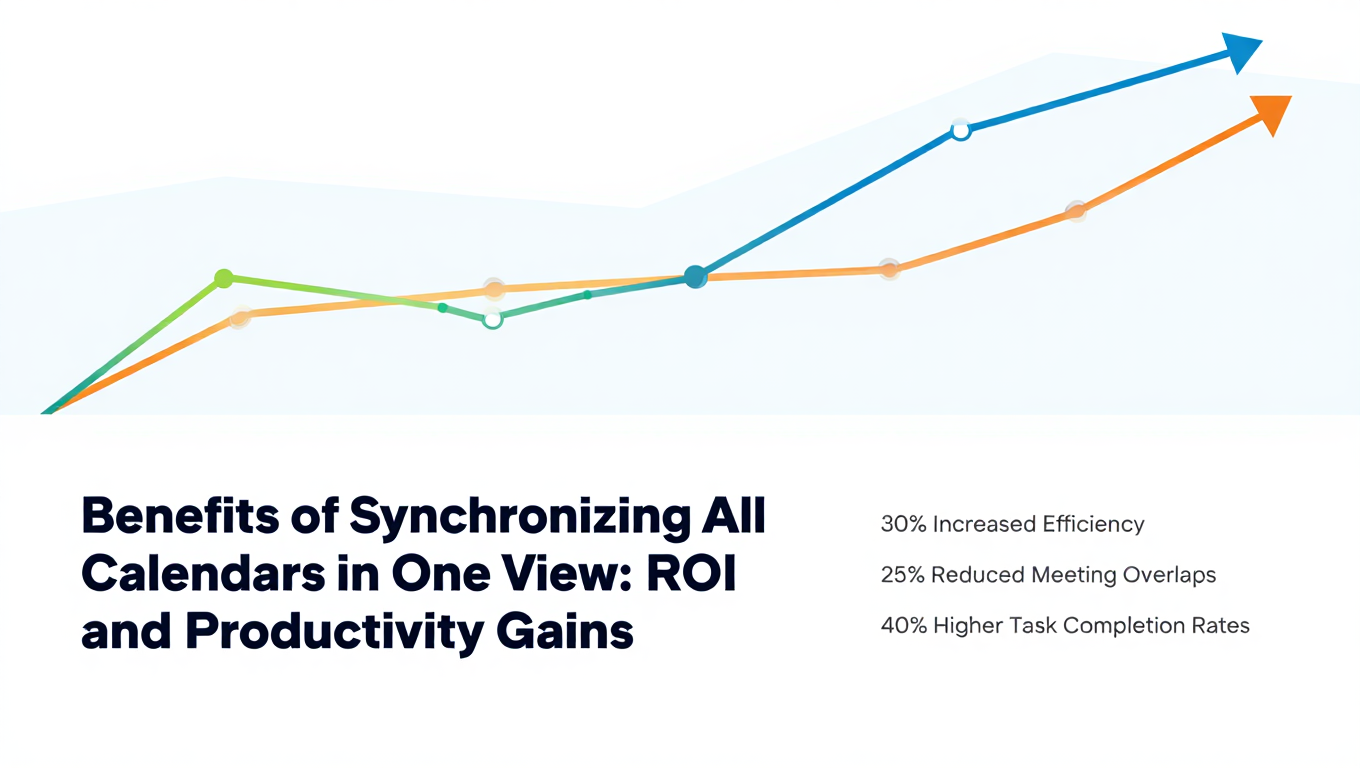
Benefits of Synchronizing All Calendars in One View: ROI and Productivity Gains
Discover the benefits of synchronizing all calendars in one view. See ROI data, productivity gains, reduced double bookings, and real-world business impact in 2025.

Best Bidirectional Calendar Sync Tools: 2025 Comparison Guide
Compare the best bidirectional calendar sync tools in 2025. Discover which platforms offer true two-way synchronization and which only provide one-way sync.
Best Two Way Calendar Sync Software: 2025 Expert Rankings & Comparison
Compare the top two-way calendar sync software tools. We tested 12 platforms for bidirectional sync speed, reliability, and field coverage to find which actually work.