
 Google Calendar
  Outlook Calendar
  Google Meet
  Microsoft Teams
  Zoom Meetings
 Startup Founder Calendar Management: Complete Guide for 2025
Master startup founder calendar management across investor meetings, team syncs, customer calls, and multiple venture calendars in one system.
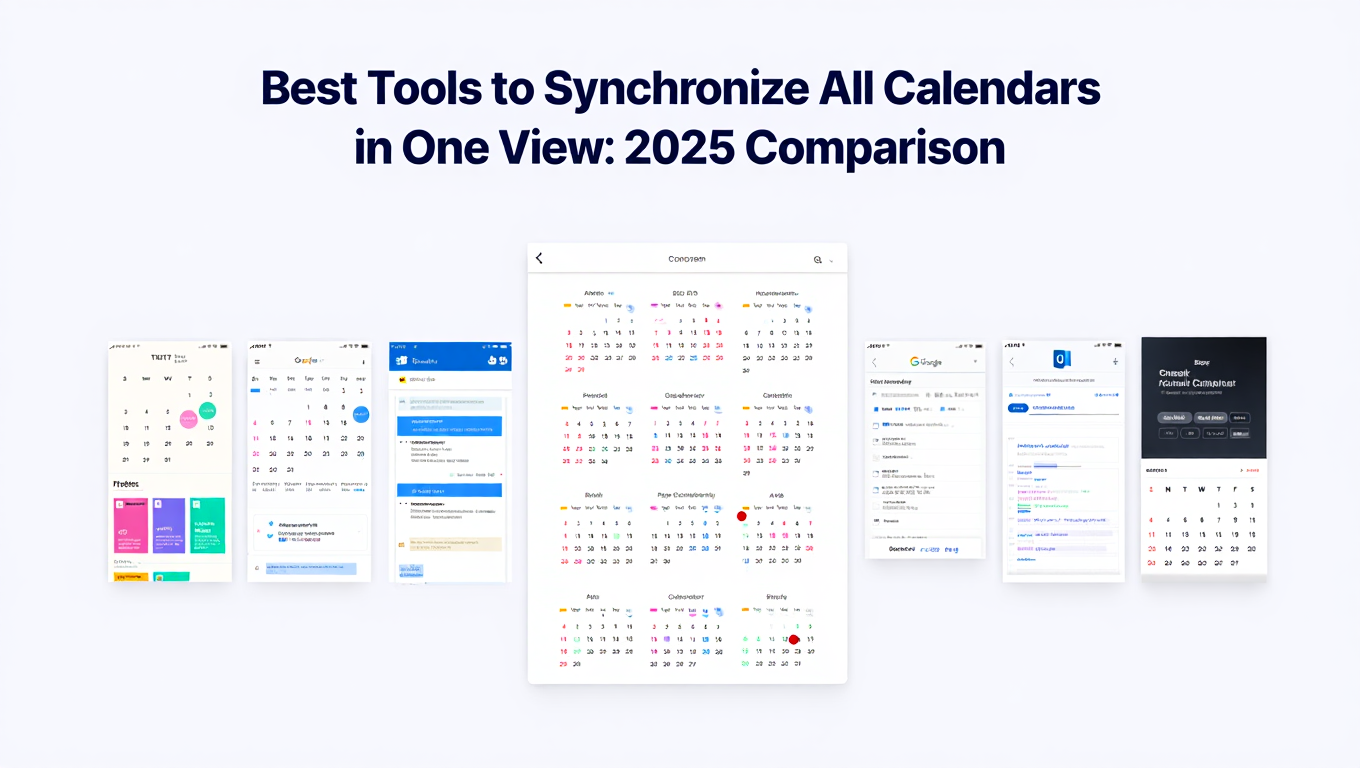
It's 8 AM and your day is already stacked. There's a pitch call with a Series A prospect at 9 that could determine your company's next 18 months. Your engineering team's sprint planning starts at 10, but your co-founder just messaged saying the enterprise client demo needs to move to 10:15 because their VP rescheduled. The product team's calendar shows a design review at 11 that you promised to join. Your advisor wants 30 minutes today to discuss the term sheet. And somewhere in there, you need to review the investor update deck that goes out tomorrow. It's not even lunchtime.
Startup founders operate in a world where every calendar slot carries weight. Investor meetings can unlock millions in funding. Customer calls can land or lose your biggest deal. Team syncs keep the product moving forward. Advisory sessions provide the strategic guidance you can't get anywhere else. Most founders are actively managing between 6 and 12 calendars spanning personal ventures, company operations, investor networks, board obligations, and advisory relationships. When those calendars don't talk to each other, the consequences aren't just inconvenient. They're potentially company-ending.
- Why startup founders face calendar complexity that scales with company growth
- How fragmented scheduling leads to missed investor opportunities and team misalignment
- Practical steps to unify investor, team, customer, and personal calendars
- How to protect deep work time while remaining available for critical meetings
- A calendar strategy that grows with your startup
Why Startup Founder Calendar Management Is Uniquely Challenging
Founder time is the most constrained resource in any startup. Unlike employees who can focus on one functional area, founders context-switch between fundraising, product strategy, sales, hiring, operations, and team management, sometimes within the same hour. Each of these functions has its own scheduling ecosystem, its own stakeholders, and its own urgency level.
The calendar complexity also evolves rapidly. In the early days, you might only manage a personal calendar and a simple company calendar. But once you start fundraising, each investor interaction adds scheduling overhead. When you bring on co-founders, advisors, and early employees, their calendars become part of your orbit. Land your first enterprise customer and you're now coordinating with their corporate scheduling systems too.
Most founders don't realize they're managing 6-12 calendars until they hit a scheduling crisis that forces them to count. By that point, they've likely already missed an investor follow-up, double-booked a customer demo with a board meeting, or burned out their team by scheduling conflicting priorities without realizing it.
The startup environment also introduces time zone complexity early. Your investors might be in San Francisco. Your engineering team might be distributed across three countries. Your enterprise prospects are on East Coast time. Without a time-zone-aware scheduling system, you're doing mental math every time you look at your calendar.
Common Calendar Problems Startup Founders Face
Investor Meeting Scheduling Friction
Fundraising is a numbers game, and the scheduling logistics alone can eat weeks of founder time. During an active raise, you might be scheduling 30-50 investor meetings across a few months. Each investor has their own scheduling preferences, their own calendar platform, and their own rescheduling tendencies.
When you're juggling meetings with angels, VCs, and strategic investors simultaneously, conflicts pile up fast. Investor A's partner meeting moved to Thursday at 2. But that's when Investor B's second meeting was already confirmed. Your existing investor wants a board update call that overlaps with a demo day rehearsal. Without one unified calendar view, these conflicts stay hidden until an embarrassing last-minute reschedule.
The reputational cost is real. Investors talk. If you reschedule twice or show up frazzled because you just sprinted from another meeting, it signals organizational dysfunction at the leadership level.
Team Sync Overload
As your startup grows from 2 to 10 to 25 people, the meeting load multiplies. Engineering standups. Product reviews. Sales pipeline meetings. One-on-ones with direct reports. Cross-functional syncs. All-hands updates. Each of these lives on someone's calendar, and they all need a piece of your time.
Without strong calendar management, founders end up in back-to-back meetings from 8 AM to 6 PM with zero time for the strategic thinking that actually moves the company forward. The team needs your input, but they also need a founder who's had time to think. When your calendar is so fragmented that you can't find a 90-minute block for focused work, something is fundamentally broken.
Need better calendar management? CalendHub unifies all your calendars with smart scheduling and video conferencing.
Multiple Venture Calendar Conflicts
Serial founders and those with side ventures face an additional layer of complexity. You might be CEO of your primary startup while also serving as an advisor to two other companies, sitting on a nonprofit board, and exploring a new venture idea on the side. Each of these roles has its own calendar, its own meeting expectations, and its own stakeholders who believe they deserve priority.
When these calendars don't sync automatically, you end up double-booked across ventures. Your advisory call for Company B gets scheduled during your Series A pitch for Company A. Your nonprofit board meeting lands on the same afternoon as your product launch prep session. The only way to manage this is with a system that shows all your commitments, across all your roles, in one place.
Customer Demo and Sales Call Scheduling
Early-stage startups live and die by their customer pipeline. When a Fortune 500 prospect says they can do a demo on Thursday at 3 PM, you say yes. But if your calendar doesn't show you that Thursday at 3 is your engineering team's architecture review, you've just created a conflict that disappoints either your biggest prospect or your technical team.
Sales calls and customer demos also involve coordination with other team members. Your sales lead might join. Your CTO might need to handle technical questions. Everyone's calendars need to align, and that alignment needs to happen across different platforms since early-stage teams often use a mix of Google Workspace, personal accounts, and whatever tools their previous company used.
How to Solve Startup Founder Calendar Chaos
Step 1. Audit Your Calendar Ecosystem
Before optimizing, you need to see the full picture. List every calendar that touches your week. This includes your personal Google or Outlook calendar, your company's shared calendar, any investor CRM scheduling tools, board meeting calendars, advisory calendars for other companies, customer-facing scheduling links, and any side venture calendars. Most founders are surprised to discover 6-12 separate sources competing for their time.
Step 2. Consolidate Everything Into a Single Dashboard
The single most impactful change is unifying all those calendars into one real-time view. CalendHub.com lets you connect unlimited calendars across Google, Outlook, and other platforms into one dashboard. Your pitch meetings, team syncs, customer demos, board commitments, and personal time all appear side by side. When an investor reschedules on one calendar, the change propagates everywhere instantly.
Step 3. Implement Time-Block Architecture
Structure your week with intentional blocks. Mornings for deep work and strategic thinking. Midday for team meetings. Afternoons for external calls and investor meetings. Evenings protected for personal time. This architecture only works when every calendar respects the same boundaries, which is exactly what a unified calendar system enforces.
Step 4. Set Scheduling Rules for Different Meeting Types
Not all meetings deserve the same access to your calendar. Investor meetings get priority during fundraising sprints. Customer demos take precedence during sales pushes. Team syncs are important but can flex around higher-priority external commitments. Build these rules into your scheduling approach so that conflicts get prevented rather than just managed after the fact.
Step 5. Give Your Team Appropriate Calendar Visibility
Your co-founder needs to see your full schedule. Your engineering lead needs to know when you're available for reviews. Your executive assistant, if you have one, needs everything. Set up graduated visibility levels so the right people see the right amount of your calendar without exposing investor conversations to the entire team.
Startup founders who implement unified calendar management report recovering 8-10 hours per week. That's an entire workday reclaimed from scheduling logistics and meeting conflicts, redirected toward fundraising, product development, and the strategic work that actually builds companies.
Why CalendHub Works for Startup Founders
Startup founders need a calendar tool that's as fast-moving and flexible as their company. CalendHub.com was built for professionals managing far more calendars than the typical office worker, and it handles the kind of rapid schedule changes that are daily life in startup world.
Unlimited calendar connections mean you can link every venture calendar, investor calendar, team calendar, and personal calendar without hitting a cap. Real-time bidirectional sync ensures that a schedule change anywhere propagates everywhere. When your Series A lead reschedules your Thursday pitch to Friday, that change automatically adjusts availability across all your connected calendars.
For founders working with distributed teams across time zones, CalendHub.com provides the cross-platform visibility that keeps everyone aligned regardless of geography or calendar provider. Your engineer in Berlin on Google Calendar and your sales lead in New York on Outlook both see accurate availability in real time.
CalendHub.com also scales with your startup. What works when you're a team of 3 still works when you're a team of 30. You won't need to rip out your scheduling infrastructure and start over at every growth stage.
Your Time Is Your Startup's Most Valuable Asset
Every founder knows that time is finite, but few treat their calendar with the strategic intentionality it deserves. The hours you lose to scheduling conflicts, missed connections, and context-switching between disconnected calendars are hours that competitors with better systems are using to ship products, close deals, and build momentum.
Audit your calendars. Unify them. Build structure into your week. Protect the deep work time that drives real progress. The founding teams that win aren't necessarily smarter or better funded. They're the ones who squeeze maximum value from every hour, and that starts with a calendar system that actually works.
Your startup deserves a founder who's operating at full capacity, not one who's buried in scheduling logistics. Fix the calendar, and everything else gets easier.
Ready to Simplify Your Schedule?
Join thousands of professionals who have unified their calendars and reclaimed their time with CalendHub's intelligent scheduling platform.
Related Articles

Accountant Calendar Management: Complete Guide for 2025
Master accountant calendar management to survive tax season, track client deadlines, and balance multiple engagements without burnout.
Agency Owner Calendar Management: Complete Guide for 2025
Juggle client meetings, team standups, biz dev, and project timelines as an agency owner. Your complete calendar management guide.
Business Coach Calendar Management: Complete Guide for 2025
Streamline executive client scheduling, mastermind groups, and speaker coordination. The business coach calendar management guide.