
 Google Calendar
  Outlook Calendar
  Google Meet
  Microsoft Teams
  Zoom Meetings
 How to Sync Work and Personal Calendar in 2025: Complete Guide
Learn how to sync work and personal calendar with step-by-step instructions, privacy controls, and best practices for work-life balance in 2025.
You're sitting at your desk when a colleague asks if you're free for a meeting Thursday afternoon. You check your work calendar and see an opening. Then it hits you. That's when you have your dentist appointment scheduled in your personal calendar. Another near miss, another potential double booking.
This scenario plays out thousands of times daily for professionals juggling work and personal commitments. The solution is straightforward. Sync your work and personal calendar to create a unified view of your entire schedule. This guide shows you exactly how to do it while maintaining privacy and preventing scheduling conflicts.
- Step-by-step methods to sync work and personal calendar across platforms
- Privacy controls to protect sensitive personal information
- Best practices for maintaining work-life boundaries
- How to prevent double bookings and scheduling conflicts
- Troubleshooting common sync issues
What Does It Mean to Sync Work and Personal Calendar?
Syncing work and personal calendar creates automatic connections between your separate calendars, allowing events from one to appear on the other. This synchronization ensures you have complete visibility into all your commitments without manually checking multiple calendars.
When you sync calendars, changes made in one calendar automatically reflect in the other. This bidirectional synchronization happens in real time with modern calendar tools, preventing the scheduling conflicts that occur when calendars exist in silos.
The key difference between syncing and simply viewing multiple calendars is automation. Viewing requires you to manually check each calendar separately. Syncing creates an integrated system where your availability updates automatically across all platforms.
Why You Need to Sync Work and Personal Calendar
The case for calendar synchronization is compelling. Research shows that 83% of employed Americans depend on a calendar to manage their daily workflow[^1], and over 78% of calendar users report feeling very productive at work[^1]. More importantly, two in three employed Americans schedule personal events on their work calendars, and 79% confirm this practice positively impacts their work-life balance[^1].
The shift to remote and hybrid work has made calendar integration even more critical. As work increasingly happens outside traditional 9-5 hours, keeping your various calendars in sync prevents the chaos of double bookings and missed commitments. With 71% of remote workers reporting that remote work helps them balance work and personal life[^2], proper calendar management has become essential infrastructure for modern professionals.
Context switching decreases productivity by 40% compared to focused work[^3]. When you're constantly jumping between different calendar systems trying to piece together your schedule, you're losing precious time and mental energy. A unified calendar view eliminates this friction.
[^1]: Doodle, "State of Meetings Report 2025," https://doodle.com/en/resources/research-and-reports/ [^2]: Atlassian, "Remote Work Statistics 2025," https://www.atlassian.com/blog/productivity/remote-work-statistics [^3]: Harvard Business Review, "The Cost of Context Switching," https://hbr.org/2022/08/how-to-do-hybrid-right
- Eliminate Double Bookings: Automatically block time across all calendars to prevent scheduling conflicts
- Reduce Context Switching: View all commitments in one place instead of checking multiple systems
- Improve Work-Life Balance: Protect personal time by making it visible to work scheduling systems
- Save Time: No more manual calendar checks or duplicate entries across systems
- Professional Availability: Colleagues see accurate availability without accessing personal details
Before You Sync: Privacy Considerations
Before connecting your calendars, understand the privacy implications. When you sync work and personal calendar, you control what information crosses the boundary between your professional and personal life.
Most calendar sync solutions offer three levels of information sharing. The first is busy/free status only, which shows blocked time without any event details. The second is title only, displaying the event name but no description, location, or attendees. The third is full details, sharing complete event information across calendars.
For most professionals, the busy/free option provides the best balance. Your work calendar shows that you're unavailable without revealing whether you have a doctor's appointment, parent-teacher conference, or personal matter to attend to. Learn more about protecting your privacy while syncing calendars.
Consider your employer's policies before syncing calendars. Some organizations have specific guidelines about personal calendar integration, especially in regulated industries. Additionally, if you work with confidential client information, check whether your employment agreement restricts calendar tool usage.
Under GDPR and similar privacy regulations, employers must have legitimate reasons to monitor employee calendars and must be transparent about monitoring practices[^4]. Using busy/free synchronization typically satisfies both employee privacy needs and employer scheduling requirements.
[^4]: McKinsey & Company, "GDPR compliance and employee monitoring," https://www.mckinsey.com/capabilities/risk-and-resilience/our-insights/gdpr
Method 1: Native Calendar Sync Features
Both Google Calendar and Microsoft Outlook offer built-in features to connect work and personal accounts. These native methods provide basic synchronization without third-party tools.
Google Calendar Native Sync
Google Calendar allows you to add multiple calendars to a single view. While this isn't true bidirectional syncing, it provides visibility across accounts.
- Open Google Calendar on your work account
- Click the plus icon next to "Other calendars" in the left sidebar
- Select "Add a friend's calendar" and enter your personal email address
- Accept the calendar sharing invitation sent to your personal account
- Configure visibility settings to show only free/busy information
This method displays your personal calendar events within your work calendar view. However, changes take several hours to reflect across calendars, making it unreliable for real-time scheduling decisions.
Microsoft Outlook Native Sync
Outlook allows you to connect one Outlook.com or Google account to your work account, letting you view and manage personal calendars while signed into your work account.
- Open Outlook and click the calendar icon
- Select "Add calendar" from the toolbar
- Choose "Add from directory or contact list"
- Enter your personal email address and configure sharing permissions
- Set the detail level to "Availability only" to protect privacy
Microsoft's native feature shows your personal calendar availability when others schedule meetings with you, but like Google's solution, it lacks true real-time bidirectional synchronization.
Limitations of Native Solutions
Native calendar sharing methods experience significant delays. Changes can take hours or even days before appearing across platforms. This lag creates the exact double-booking problems you're trying to solve.
Additionally, native solutions don't offer true bidirectional sync between multiple calendars. They either sync too slowly, don't sync at all in both directions, or restrict editing capabilities. For professionals who need reliable calendar integration, third-party tools provide superior functionality.
Method 2: Using Calendar Sync Tools
Third-party calendar synchronization tools offer real-time bidirectional syncing with advanced privacy controls. These specialized platforms solve the limitations of native calendar features.
Choosing the Right Sync Tool
When evaluating calendar sync solutions, consider these essential features. Real-time synchronization ensures changes appear immediately across all calendars. Bidirectional sync allows editing events in either calendar with changes reflecting everywhere. Privacy controls let you customize what information syncs across the boundary. Multi-calendar support handles more than just two calendars, which matters for professionals managing multiple work calendars, personal calendars, and family shared calendars.
CalendHub.com stands out by offering unlimited calendar connections without the arbitrary limits other platforms impose. While competitors like Calendly cap calendar connections at six calendars even on expensive plans, CalendHub eliminates these artificial constraints. For professionals managing work email calendars, personal calendars, shared team calendars, and family schedules, this unlimited approach provides genuine flexibility.
Step-by-Step Setup Guide
The process to sync work and personal calendar using a dedicated sync tool follows these steps.
Step 1: Connect Your Calendars
Sign up for your chosen calendar sync platform. Authorize access to your work calendar first, then add your personal calendar. Most tools use OAuth authentication, meaning you grant permission without sharing passwords.
When connecting calendars, you'll specify which calendar acts as the source and which is the destination. For bidirectional sync, you'll configure both directions.
Step 2: Configure Sync Settings
Choose your synchronization direction. One-way sync copies events from personal to work (or vice versa) but doesn't sync changes back. Bidirectional sync keeps both calendars in perfect alignment with changes flowing both ways.
Set your privacy level. Most professionals choose "busy" placeholders that block time without revealing event details. This creates calendar entries with generic titles like "Busy" or "Personal Commitment" on your work calendar.
Configure which calendar types sync. You might want all-day events from your personal calendar to sync (like vacations) but keep 30-minute personal appointments local.
Step 3: Set Update Frequency
Modern calendar sync tools offer real-time updates through push-based syncing. These systems continuously listen for calendar changes and sync immediately when detecting an update. This approach differs dramatically from older polling methods that check for changes every few hours.
CalendarBridge, OneCal, and similar platforms use push-based syncing that makes matching events appear almost instantly. This real-time capability ensures your availability stays accurate even when scheduling happens quickly.
Step 4: Test Your Setup
Create a test event in your personal calendar. Within seconds, verify it appears on your work calendar with your chosen privacy level. Then edit the event time and confirm the change syncs immediately. Delete the test event and ensure it disappears from both calendars.
This testing phase catches configuration issues before they cause actual scheduling conflicts.
Step 5: Establish Ongoing Maintenance
Set a monthly reminder to review your sync settings. Verify that both calendars continue syncing properly. Check for any error notifications from your sync tool. Update credentials if you've changed passwords.
- Review your employer's calendar and data policies
- Verify the sync tool has strong security credentials
- Start with busy/free sync rather than full detail sharing
- Test with non-sensitive events first
- Keep backup copies of important calendar data
Method 3: Google Apps Script Solution
Technical users can create a free DIY solution using Google Apps Script. This approach works well for syncing Google Calendar accounts without monthly subscription costs.
Need better calendar management? CalendHub unifies all your calendars with smart scheduling and video conferencing.
The script reads your personal Google Calendar and automatically creates busy blocks on your work calendar. You can customize exactly what information syncs and how often the script runs.
Setting Up Apps Script Sync
- Open Google Drive connected to your work account
- Create a new Google Apps Script project
- Copy a calendar sync script (available from various open-source repositories)
- Authorize the script to access both calendar accounts
- Customize the script to specify your personal calendar ID
- Set the privacy level (busy blocks vs. title vs. full details)
- Create a time-based trigger to run the script every 5-15 minutes
The Apps Script approach offers complete control and costs nothing. However, it requires basic coding knowledge to set up and troubleshoot. The sync also isn't truly real-time since it depends on the trigger schedule you configure.
For non-technical users, the complexity outweighs the cost savings of professional sync tools. But for developers comfortable with JavaScript, this method provides a flexible solution.
Best Practices for Calendar Synchronization
Implementing calendar sync correctly requires following proven strategies that prevent problems down the road.
Use Time Blocking Strategically
Time blocking reserves specific periods for focused work, meetings, or personal activities. When you sync work and personal calendar, mark personal time blocks as "busy" to inform colleagues of your true availability without revealing details.
Block your personal commitments on your work calendar first. Your morning workout, children's school pickup, or evening class should appear as busy blocks protecting that time from work encroachment. This proactive approach establishes boundaries rather than constantly defending personal time.
For focus time, create recurring blocks on both calendars. Deep work sessions marked as busy prevent both personal and professional interruptions during your most productive hours.
Maintain Consistent Naming Conventions
If you're syncing with title display rather than just busy/free, use consistent generic labels for personal events. Terms like "Personal Appointment," "Family Commitment," or simply "Busy" communicate unavailability without disclosing private information.
Avoid syncing event titles that reveal sensitive information. "Therapy appointment," "job interview," or "divorce attorney meeting" should appear as generic busy blocks instead.
Review and Clean Your Calendars Regularly
Set aside 15 minutes weekly to review your synced calendars. Check for outdated entries, confirm upcoming appointments, and delete irrelevant events. This regular maintenance keeps your calendar accurate and prevents old placeholder events from blocking legitimate scheduling opportunities.
Pay special attention to recurring events that may have ended. That weekly meeting that concluded three months ago shouldn't still block your calendar every Tuesday.
Update Entries Immediately
When personal plans change, update your calendar immediately rather than waiting until later. This habit ensures your work calendar reflects your true availability in real-time, preventing colleagues from booking meetings during time you're no longer available.
The same applies to work calendar changes. When a meeting gets canceled or rescheduled, update it immediately so your personal scheduling benefits from the freed time.
Verify Updates on Shared Calendars
If you share calendars with family members or team members, verify that your updates appear correctly for others. Calendar sharing settings sometimes change unexpectedly, causing sync issues that aren't immediately obvious.
A quick check after making significant changes catches problems before they cause conflicts.
Preventing Double Bookings and Conflicts
Even with calendar sync configured, certain practices help ensure you never face scheduling conflicts.
Enable Automatic Decline for Conflicts
Most calendar systems can automatically decline meeting invitations that conflict with existing events. Enable this feature so colleagues receive immediate feedback when they try to schedule during unavailable time.
Configure the auto-decline message to be professional and helpful. Something like "I have a conflict during this time. Please check my calendar and suggest an alternative time" communicates the issue without requiring manual intervention.
Set Buffer Time Between Events
Schedule 5-15 minute buffers between consecutive meetings. These gaps prevent back-to-back scheduling where a meeting running slightly long creates a domino effect of delays.
When you sync work and personal calendar, buffer time is especially important for events requiring travel. If you have a personal appointment across town followed by a work meeting, the buffer ensures realistic scheduling.
Use Calendar Color Coding
Assign distinct colors to different calendar types. Work meetings might be blue, personal appointments green, and focus time yellow. This visual distinction makes it instantly obvious when viewing your combined calendar whether time is allocated to work or personal commitments.
Color coding also helps identify balance issues. If your calendar is overwhelmingly one color, you're likely neglecting the other area of your life.
Implement a Weekly Planning Session
Every Sunday or Monday morning, review the upcoming week across both calendars. Identify potential conflicts, assess your time allocation, and make adjustments before the week begins.
This proactive approach catches issues when solutions are still easy rather than scrambling to fix conflicts as they arise.
Advanced Calendar Sync Strategies
Once you've mastered basic synchronization, these advanced techniques provide additional benefits.
Selective Event Syncing
Rather than syncing everything, configure rules for which events cross the calendar boundary. For example, you might sync all-day personal events like vacations while keeping shorter personal appointments local.
This selective approach reduces calendar clutter while ensuring colleagues see your extended absences well in advance.
Create Location-Based Sync Rules
Some calendar tools allow location-based syncing. Personal appointments at your home location might not sync to work calendars, while appointments requiring you to be away from your desk do sync as busy blocks.
This granular control balances privacy with practical availability information.
Sync Multiple Work Calendars
Modern professionals often manage multiple work calendars. You might have your primary work calendar, a shared team calendar, and project-specific calendars. Platforms like CalendHub.com sync unlimited calendars, creating a master view that includes all your professional calendars plus your personal calendar.
This multi-calendar sync provides comprehensive visibility that single-direction tools can't match. While Calendly and similar platforms limit you to six calendar connections regardless of pricing tier, CalendHub removes these arbitrary restrictions. Learn more about managing multiple work calendars effectively.
Implement Smart Availability Rules
Advanced sync tools let you set intelligent availability rules. You might configure settings like "don't sync events shorter than 30 minutes" or "only sync events during work hours" to fine-tune exactly what information flows between calendars.
These rules reduce sync noise while maintaining the core benefit of preventing double bookings.
Troubleshooting Common Sync Issues
Even properly configured calendar synchronization occasionally experiences problems. Here's how to resolve the most common issues.
Events Not Syncing
If events aren't appearing across calendars, first check your internet connection. Calendar sync requires stable connectivity to push updates. Then verify that calendar permissions haven't changed. Many sync issues occur when calendar access tokens expire and need reauthorization.
Check the sync tool's status page for service disruptions. Occasionally, calendar provider API changes temporarily break third-party sync tools until developers release updates.
Duplicate Events Appearing
Duplicate events typically result from configuring sync in both directions without proper deduplication. Modern sync tools detect and prevent duplicates, but older methods sometimes create multiple copies of the same event.
To fix duplicates, temporarily disable sync, manually delete duplicate entries, then re-enable sync with corrected settings. Ensure your sync tool has duplicate detection enabled.
Delayed Sync Updates
If changes take hours to appear across calendars, you're likely using a polling-based sync method rather than real-time push-based sync. Native calendar sharing features often have significant delays.
Switching to a dedicated calendar sync tool with push-based syncing eliminates these delays. Real-time sync tools like CalendHub.com, CalendarBridge, and OneCal update calendars immediately when changes occur.
Privacy Settings Changed Unexpectedly
Occasionally, calendar sync privacy settings revert to defaults after updates or configuration changes. Set a monthly reminder to verify your privacy settings remain configured correctly.
If colleagues suddenly see personal event details they shouldn't, immediately check your sync settings and revert to busy/free mode if needed.
Sync Tool Connection Errors
Authentication tokens expire periodically, breaking the connection between your calendar sync tool and your calendar accounts. When this happens, you'll receive error notifications.
Resolve these by logging into your sync tool and reauthorizing access to the affected calendar. This typically takes less than a minute and restores full functionality.
Maintaining Work-Life Boundaries
Successfully syncing work and personal calendar goes beyond technical setup. These boundaries ensure calendar integration enhances rather than erodes work-life balance.
Protect Personal Time Proactively
Block personal commitments on your calendar before work meetings get scheduled. This proactive approach treats personal time with the same respect as professional obligations.
Your morning workout, family dinner time, or evening course deserves the same calendar protection as a client meeting. When you sync work and personal calendar with these boundaries clearly marked, you're establishing that personal time is non-negotiable.
Establish "No Sync" Zones
Consider keeping certain personal calendar categories completely separate. Medical appointments, therapy sessions, or other sensitive personal matters might warrant a separate calendar that doesn't sync with work systems at all.
This approach requires slightly more manual management but provides absolute privacy for sensitive commitments.
Communicate Boundaries to Colleagues
Let your team know you've synced calendars to improve scheduling accuracy. Explain that busy blocks include both work and personal commitments, and that you appreciate them respecting calendar availability.
Most colleagues appreciate clear availability information rather than back-and-forth scheduling negotiations. Your synced calendar makes their job easier while protecting your time.
Review Work-Life Balance Monthly
Once monthly, analyze your calendar's work-personal split. If work consistently dominates, you're at risk of burnout regardless of how well your calendars sync.
Use this monthly review to course correct, blocking more personal time and protecting it as zealously as you protect work commitments.
The CalendHub Advantage for Calendar Synchronization
As you implement calendar synchronization, the tool you choose significantly impacts your experience. CalendHub.com offers calendar integration designed specifically for professionals managing complex scheduling across work and personal life.
Unlike scheduling-focused tools like Calendly that treat calendar sync as a secondary feature, CalendHub takes a calendar-first approach. The platform provides true bidirectional synchronization with unlimited calendar connections, eliminating the six-calendar limit that constrains other solutions even at enterprise pricing tiers.
For professionals managing multiple work calendars, personal calendars, and shared family calendars, this unlimited approach provides the flexibility modern work demands. Whether you're juggling three calendars or fifteen, CalendHub handles the complexity without artificial restrictions.
The platform's real-time sync ensures changes appear immediately across all connected calendars, preventing the scheduling conflicts that plague slower sync methods. Privacy controls let you customize exactly what information crosses the work-personal boundary, with options ranging from busy/free status to selective title sharing.
Taking Action: Your Next Steps
You now understand how to sync work and personal calendar effectively. The benefits are clear, from eliminating double bookings to improving work-life balance and saving time previously lost to manual calendar management.
Start with these immediate actions. First, evaluate your current calendar situation and identify which calendars need integration. Second, choose your sync method based on technical comfort and feature needs. Third, configure privacy settings to protect personal information. Fourth, test the sync thoroughly with non-sensitive events. Fifth, establish the maintenance habits that keep your system running smoothly.
Remember that two-thirds of employed Americans already schedule personal events on work calendars, and 79% report this improves their work-life balance. You're not doing anything unusual by syncing calendars. You're implementing a best practice that the majority of professionals already recognize as valuable.
The shift to remote and hybrid work makes calendar integration more critical than ever. With work happening across traditional boundaries and flexible schedules becoming the norm, unified calendar visibility is essential infrastructure for modern professional life.
Start simple with busy/free syncing between your primary work and personal calendars. As you gain confidence, expand to additional calendars and refine your privacy settings. The investment of 30 minutes to set up calendar sync saves hours every month in prevented conflicts and eliminated scheduling friction.
Your calendar is the operating system for your time. When you sync work and personal calendar effectively, you're taking control of that operating system rather than letting it control you. The result is fewer scheduling conflicts, better work-life balance, and the peace of mind that comes from knowing your availability is always accurate across all systems.
The question isn't whether to sync your calendars. It's how quickly you'll implement a system that professionals worldwide already depend on to manage their complex, multifaceted lives.
Ready to Simplify Your Schedule?
Join thousands of professionals who have unified their calendars and reclaimed their time with CalendHub's intelligent scheduling platform.
Related Articles
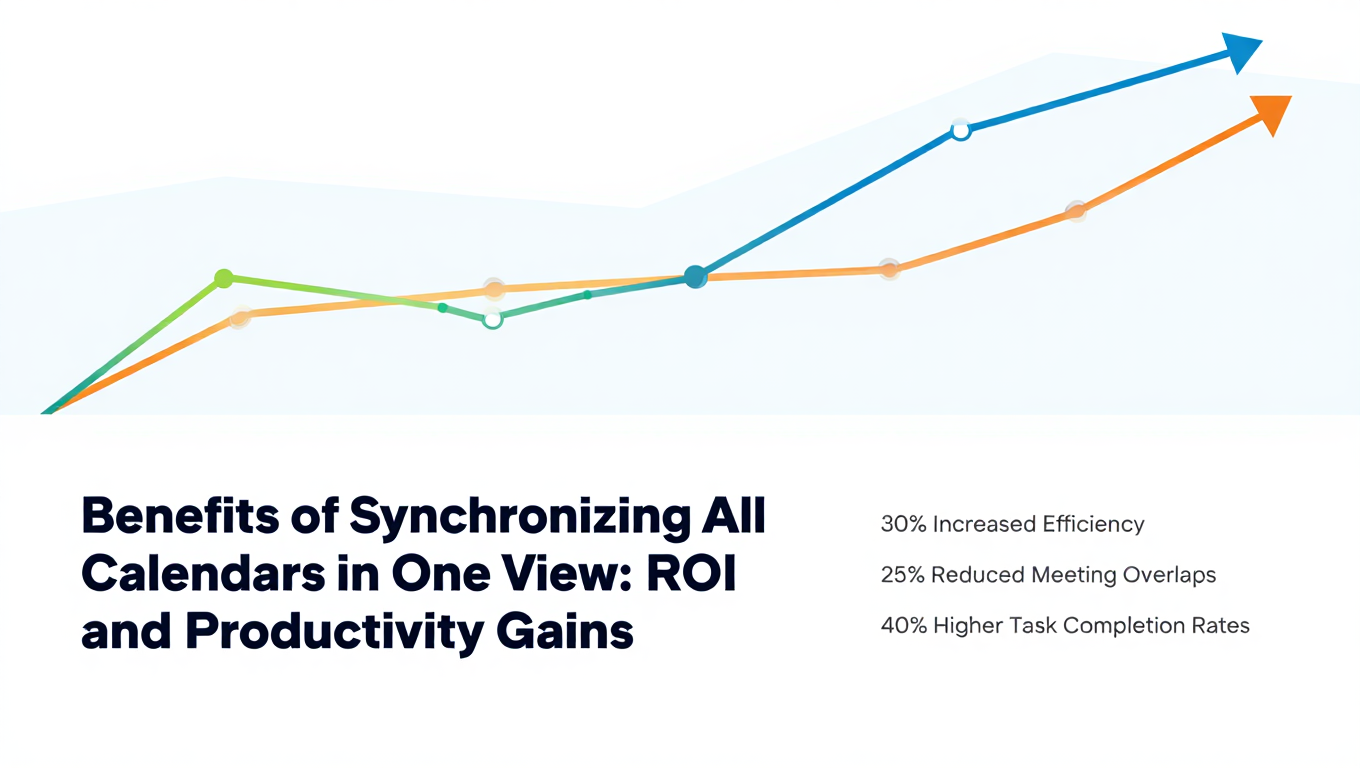
Benefits of Synchronizing All Calendars in One View: ROI and Productivity Gains
Discover the benefits of synchronizing all calendars in one view. See ROI data, productivity gains, reduced double bookings, and real-world business impact in 2025.
Best Bidirectional Calendar Sync Tools: 2025 Comparison Guide
Compare the best bidirectional calendar sync tools in 2025. Discover which platforms offer true two-way synchronization and which only provide one-way sync.
Best Two Way Calendar Sync Software: 2025 Expert Rankings & Comparison
Compare the top two-way calendar sync software tools. We tested 12 platforms for bidirectional sync speed, reliability, and field coverage to find which actually work.