
 Google Calendar
  Outlook Calendar
  Google Meet
  Microsoft Teams
  Zoom Meetings
 Benefits of Syncing Work and Personal Calendar for Productivity
Discover how syncing work and personal calendar boosts productivity, improves work-life balance, and saves time. Statistics and real-world benefits.
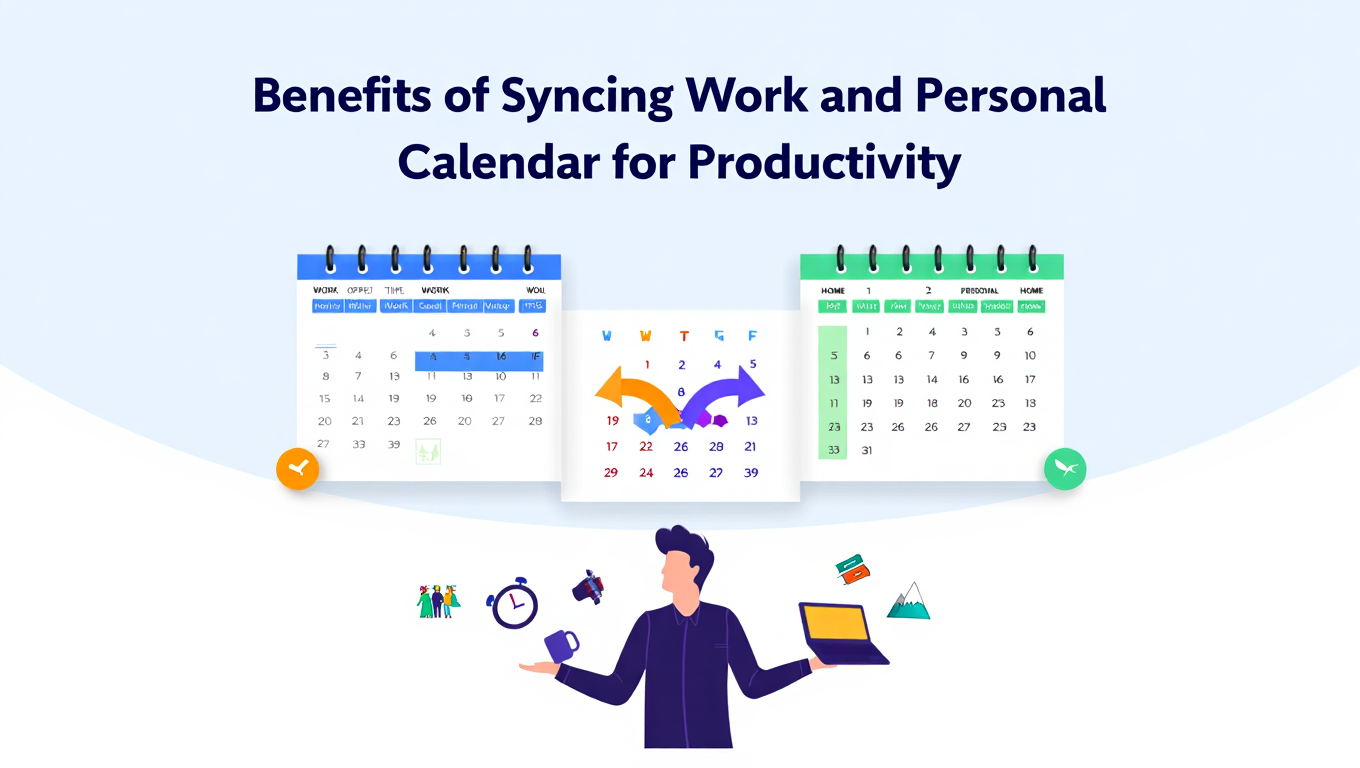
The average professional checks their calendar 18 times per day[^1], switching between work and personal calendars to piece together a complete picture of their schedule. Each switch takes 23 minutes to regain full focus on the previous task[^2]. That's over six hours of lost productivity weekly from calendar checking alone.
What if you could see all your commitments in one unified view, automatically prevent double bookings, and reclaim those lost hours? When you sync work and personal calendar, you eliminate this productivity drain while gaining benefits that extend far beyond simple time savings.
[^1]: Doodle, "State of Meetings Report 2025," https://doodle.com/en/resources/research-and-reports/ [^2]: Harvard Business Review, "The Cost of Context Switching," https://hbr.org/2022/08/how-to-do-hybrid-right
- 83% of employed Americans depend on calendars to manage daily workflow
- 78% of calendar users report feeling very productive at work
- 79% of professionals syncing calendars report improved work-life balance
- 40% productivity increase from eliminating context switching
- Up to $588 billion in annual productivity recovered from better time management
The Hidden Cost of Unsynchronized Calendars
Before exploring the benefits of calendar integration, understand what unsynchronized calendars cost you. These costs accumulate daily, creating significant productivity drains you might not even recognize.
Time Lost to Manual Calendar Checking
Every time you receive a meeting invitation or someone asks about your availability, you check multiple calendars. First your work calendar to verify no professional conflicts exist. Then your personal calendar to confirm you're not already committed to appointments, family events, or personal matters.
This dual-check process takes an average of 3-5 minutes per instance. For professionals receiving 10-15 scheduling requests daily, that's 30-75 minutes spent just checking availability across calendars.
Multiply that across a year and you're losing 125-312 hours annually to redundant calendar checking. That's 3-8 full work weeks of productivity evaporating into calendar management overhead.
Mental Load of Schedule Fragmentation
Beyond measurable time costs, fragmented calendars create significant mental burden. You maintain a constant background process in your mind tracking both calendars, anticipating conflicts, and remembering commitments that exist in separate systems.
This cognitive load occupies mental resources that could apply to productive work. Research on context switching shows it decreases productivity by 40% compared to focused work. Every calendar check represents a context switch that diminishes your effectiveness.
Double Booking Costs
The most obvious cost of unsynchronized calendars is double booking. You accept a work meeting during time already committed to a personal appointment. Or you schedule a personal commitment that conflicts with a work obligation you forgot to check.
Double bookings force difficult choices. Cancel the work meeting and appear unprofessional? Skip the personal commitment and disappoint family? Reschedule both and waste everyone's time?
Beyond the immediate scheduling chaos, double bookings damage your reputation and relationships. Colleagues learn they can't rely on your calendar accuracy. Family members feel deprioritized when work obligations repeatedly conflict with personal commitments.
Missed Opportunities
Unsynchronized calendars also create missed opportunities. A networking event conflicts with what you thought was free time but was actually allocated to personal matters. A spontaneous team dinner invitation arrives when you can't quickly verify availability, forcing you to decline opportunities that might have advanced your career.
The opportunity cost of calendar fragmentation extends beyond lost networking. It includes declined collaboration opportunities, missed learning experiences, and foregone relationship building because you couldn't quickly confirm availability.
- 125-312 hours lost to redundant calendar checking
- 40% productivity decrease from context switching
- 15-20 double bookings requiring schedule reconstruction
- Unmeasured reputation damage from scheduling unreliability
- Mental exhaustion from maintaining dual schedule awareness
Benefit 1: Eliminate Double Bookings Completely
The most immediate benefit when you sync work and personal calendar is the complete elimination of double booking. Automated synchronization creates a single source of truth for your availability.
When your personal dentist appointment automatically blocks your work calendar, colleagues see you're unavailable even though they can't see the appointment details. When your work conference blocks your personal calendar, you won't accidentally schedule a family commitment during that time.
This automatic conflict prevention works bidirectionally. Events created in either calendar immediately update the other, ensuring your availability stays accurate across all systems regardless of where scheduling happens.
Modern calendar sync tools provide real-time updates through push-based synchronization. When you add an event to your personal calendar, it appears on your work calendar within seconds. This immediacy ensures colleagues checking your availability right now see current information rather than outdated data from hours ago.
The elimination of double bookings saves time previously spent resolving scheduling conflicts. More importantly, it preserves your professional reputation and personal relationships by demonstrating reliability and respect for others' time.
Benefit 2: Dramatic Time Savings
Time saved by syncing work and personal calendar extends far beyond eliminating double bookings. The efficiency gains compound throughout your day.
Faster Meeting Scheduling
When colleagues check your calendar to schedule meetings, they see accurate availability immediately. This eliminates the back-and-forth email chains asking "Are you free Tuesday at 2 PM? What about Wednesday at 10 AM?" that waste everyone's time.
Scheduling assistants and automated scheduling tools work dramatically better with synchronized calendars. These systems can instantly identify mutual availability without requiring you to manually verify personal commitments.
For professionals who schedule 10-20 meetings weekly, eliminating just two rounds of scheduling email per meeting saves 40-80 email exchanges weekly. That's 2-4 hours of communication overhead recovered every week.
Reduced Calendar Maintenance
With synchronized calendars, you update your schedule once rather than maintaining duplicate entries across systems. When your dentist reschedules, you update your personal calendar and the change automatically propagates to your work calendar's busy block.
This single-point-of-update approach eliminates redundant data entry and the errors that occur when you update one calendar but forget to update the other.
Streamlined Availability Checks
Instead of checking two separate calendar systems before committing to new obligations, you check one unified view. This seemingly small change saves minutes per day that accumulate to hours monthly.
More significantly, it reduces the mental effort required for scheduling decisions. You can confidently accept or decline invitations based on complete schedule visibility rather than tentatively agreeing pending verification of the other calendar.
Quantified Time Recovery
Research shows that better time management increases productivity by 94% according to worker self-reports[^3]. While not all this gain comes from calendar sync specifically, unified calendar visibility is fundamental infrastructure enabling effective time management.
For professionals earning $75,000 annually, recovering just 2 hours weekly through calendar efficiency equals approximately $3,750 in annual productivity value. Over a career, effective calendar management delivers six-figure productivity returns.
[^3]: Atlassian, "Productivity Statistics 2025," https://www.atlassian.com/blog/productivity/time-management-statistics
- 2-4 hours weekly from eliminated scheduling negotiations
- 1-2 hours weekly from reduced redundant calendar checking
- 30-60 minutes weekly from single-point calendar updates
- Unmeasured time from prevented double booking resolution
- Total: 3.5-7.5 hours weekly productivity recovery
Benefit 3: Improved Work-Life Balance
Perhaps the most valuable benefit of calendar synchronization is improved work-life balance. The statistics are compelling. Among professionals who schedule personal events on work calendars, 79% report positive impacts on work-life balance[^4].
Protecting Personal Time Proactively
When you sync work and personal calendar, your personal commitments create visible boundaries preventing work encroachment. Your child's soccer game appears as a busy block on your work calendar, protecting that time from meeting requests.
[^4]: Doodle, "Work-Life Balance and Calendar Usage Report," https://doodle.com/en/resources/research-and-reports/
This proactive protection is more effective than reactive defense. Instead of explaining why you can't attend a late meeting scheduled during personal time, the meeting simply never gets scheduled during that window because your calendar shows unavailability.
The psychological benefit is significant. You're not constantly defending personal time against work demands. You've established clear boundaries that both systems respect automatically.
Honoring Personal Commitments Equally
Unsynchronized calendars create a subtle but damaging hierarchy where work commitments feel more "real" than personal ones because they appear in the professional scheduling system that colleagues see.
When you sync calendars, personal commitments gain equal standing. Your anniversary dinner blocks your work calendar just as effectively as a client meeting. This equality helps you honor personal commitments rather than treating them as flexible and work obligations as fixed.
This balanced approach improves not just work-life balance but overall life satisfaction. You're living according to your values rather than allowing calendar fragmentation to prioritize work by default.
Enabling True Flexibility
Remote and hybrid work arrangements promise flexibility to handle personal matters during traditional work hours. But that flexibility only works if personal commitments are visible in work scheduling systems.
When you sync work and personal calendar, you can schedule that mid-morning doctor appointment without it creating scheduling conflicts. Your team sees you're unavailable and works around it, while you can still be productive during other work hours.
This flexibility is why 91% of remote workers cite work-life balance as their primary motivation for remote work, and 71% report remote work actually delivers on that promise. Calendar synchronization is essential infrastructure making this flexibility operational rather than theoretical.
Reducing Work-Life Conflict Stress
The stress of constantly negotiating the boundary between work and personal life diminishes significantly when that boundary is clearly marked in shared calendars. You're not making constant judgment calls about which obligation takes priority or feeling guilty about honoring personal commitments.
For Gen Z and Millennial workers, 34% and 30% respectively report that poor work-life balance causes serious stress and anxiety. Calendar synchronization provides a practical tool addressing this widespread challenge.
Benefit 4: Enhanced Professional Productivity
Syncing work and personal calendar doesn't just help your personal life. It significantly enhances professional productivity through multiple mechanisms.
More Effective Time Blocking
Time blocking is among the most effective productivity techniques, involving reserving specific time periods for focused work, meetings, or specific projects. When you sync calendars, your time blocks span both professional and personal domains.
You can protect deep work time by blocking it as busy on both calendars, preventing both work meeting intrusions and personal scheduling during your most productive hours. This comprehensive blocking is more effective than protecting only work calendar time.
Professionals who implement time blocking report dramatic productivity increases. The technique only works when you have complete visibility into all demands on your time, which requires synchronized calendars.
Reduced Decision Fatigue
Every scheduling decision requires mental energy. Should you accept this meeting invitation? Can you commit to this deadline given other obligations? Is this time actually available or are you forgetting something?
When you sync work and personal calendar, scheduling decisions become simpler. You see complete availability instantly, eliminating the mental effort of trying to remember what exists in the other calendar system.
This reduced decision fatigue preserves cognitive resources for work requiring actual thought rather than wasting them on scheduling overhead.
Better Meeting Acceptance Decisions
With unified calendar visibility, you make more informed decisions about which meetings to accept. You can see that accepting a 4 PM meeting means rushing to make your 5:30 personal commitment, helping you decline appropriately or suggest alternative times.
This informed decision-making reduces the overcommitment that plagues many professionals. You can realistically assess time availability rather than optimistically accepting obligations without full context.
Improved Focus and Flow
The psychological benefit of knowing your schedule is coherent and conflict-free enables better focus on current work. You're not carrying background anxiety about potential calendar conflicts or forgotten commitments.
This mental peace enables the deep focus states where your most valuable work happens. While hard to quantify precisely, the cognitive benefits of schedule confidence significantly impact work quality and output.
Benefit 5: More Accurate Availability for Colleagues
Calendar synchronization benefits not just you but everyone who schedules with you. Colleagues gain immediate, accurate visibility into your availability.
Faster Scheduling for Everyone
When colleagues can see your true availability including both work and personal commitments, they schedule meetings efficiently the first time. This eliminates the frustrating experience of proposing times that seem available but actually conflict with commitments in your other calendar.
This efficiency compounds across teams. If everyone synchronizes calendars, scheduling becomes dramatically simpler for the entire organization. Tools like CalendHub.com enable this team-wide synchronization without the calendar number limits that constrain other platforms.
Reduced Scheduling-Related Email
Email volume decreases significantly when calendars accurately reflect availability. Colleagues can identify open time slots visually rather than sending "When are you free next week?" emails that generate multiple reply rounds.
For professionals already drowning in email, reducing scheduling-related messages creates valuable mental space. Your inbox becomes a tool for substantive communication rather than calendar negotiation.
Better Resource Utilization
Organizational productivity improves when calendar availability is accurate across all staff. Conference rooms don't sit unused because someone's personal commitment prevented attendance at a meeting scheduled during time that appeared available.
Project timelines become more realistic when planning accounts for everyone's complete availability rather than just work calendar commitments. This comprehensive visibility improves deadline accuracy and reduces the scrambling that occurs when hidden personal commitments surface.
Need better calendar management? CalendHub unifies all your calendars with smart scheduling and video conferencing.
Professional Reputation Enhancement
Consistently accurate calendar availability enhances your professional reputation. Colleagues learn they can trust your calendar rather than needing to confirm availability through additional channels.
This reliability positions you as organized and respectful of others' time, contributing to professional credibility that supports career advancement.
- Scheduling Efficiency: 60-80% reduction in scheduling coordination time
- Email Reduction: 30-40% fewer scheduling-related messages
- Meeting Effectiveness: Higher attendance rates from accurate availability
- Resource Optimization: Better utilization of shared resources and meeting spaces
- Team Morale: Reduced frustration from scheduling complications
Benefit 6: Data-Driven Time Awareness
When you sync work and personal calendar into a unified view, you gain visibility into how you actually spend time. This awareness enables data-driven decisions about time allocation.
Identifying Time Allocation Patterns
A unified calendar view reveals patterns invisible when viewing calendars separately. You might discover that medical appointments consistently cluster on Tuesday afternoons, suggesting you could batch them to minimize work disruption.
Or you notice that accepting evening work events prevents you from attending children's activities, highlighting a work-life balance issue requiring adjustment.
Recognizing Overcommitment Early
Unified calendar visibility makes overcommitment obvious before it becomes crisis. When you see three consecutive 12-hour days with no personal time, you can proactively decline additional commitments or reschedule less critical items.
This early warning system prevents the burnout that results from gradually accumulating commitments across fragmented calendars until suddenly you're overwhelmed.
Optimizing Schedule Composition
Analysis of your synchronized calendar might reveal you're most productive during morning hours that you've been allowing meetings to consume. This insight enables restructuring your schedule to protect peak productivity time.
Similarly, you might notice personal commitments are consistently scheduled during times you'd prefer to reserve for focused work, enabling discussions with family about shifting those commitments to less productive hours.
Quarterly Calendar Reviews
With synchronized calendars, quarterly reviews of how you spent time become practical and valuable. You can assess whether time allocation aligned with your priorities and make adjustments for the coming quarter.
Did you spend adequate time on professional development? Did personal relationships get sufficient attention? Are you over-committed to meetings relative to focused work time?
These reviews transform calendar management from reactive scheduling to strategic time investment aligned with your goals.
Benefit 7: Reduced Stress and Mental Load
The psychological benefits of calendar synchronization often exceed the measurable productivity gains. Reduced stress and mental burden significantly impact quality of life and work.
Eliminating Schedule Anxiety
The nagging worry that you're forgetting a commitment or have unknowingly double booked disappears when calendars sync automatically. Your unified calendar represents complete reality rather than a partial view requiring mental supplementation.
This reduced anxiety improves both work performance and personal well-being. You're not carrying constant background stress about potential scheduling disasters.
Better Sleep Quality
Schedule anxiety often manifests as nighttime worry. You wake at 3 AM wondering if you have a conflict tomorrow or remembering a commitment you forgot to add to one calendar.
Synchronized calendars reduce these sleep disruptions. Your schedule is coherent and complete, eliminating the middle-of-the-night schedule review your anxious brain wants to perform.
For the 82% of remote workers who report lower stress levels, calendar synchronization is part of the infrastructure enabling that stress reduction.
Improved Presence and Focus
When you're not mentally juggling two calendar systems, you can be more present in current activities. You're not half-listening to your child because you're trying to remember if tomorrow's meeting conflicts with a personal commitment.
This improved presence strengthens both work effectiveness and personal relationships. You bring your full attention to whatever you're currently doing rather than reserving mental capacity for schedule tracking.
Professional Confidence
Knowing your schedule is reliable and coherent improves professional confidence. You can commit to deadlines and meetings with certainty rather than tentatively agreeing pending verification across multiple systems.
This confidence influences how colleagues perceive you. Decisiveness and reliability in scheduling signals broader competence and professionalism.
Real-World Success Stories
The benefits of syncing work and personal calendar translate to measurable improvements in real professional lives.
Case Study: Marketing Director with Family Commitments
Sarah manages marketing for a mid-size technology company while raising two school-age children. Before synchronizing calendars, she experienced 2-3 double bookings monthly, typically work meetings scheduled during children's activities or medical appointments.
After implementing calendar sync with busy/free settings, her double bookings dropped to zero. More significantly, her stress levels decreased markedly. She no longer carried constant anxiety about schedule conflicts.
Sarah reports saving approximately 5 hours weekly in reduced scheduling coordination and calendar checking. She redirected that time to strategic planning work that contributed to a promotion within eight months of implementing calendar synchronization.
Case Study: Consultant Managing Multiple Clients
Michael works as an independent consultant serving six clients simultaneously, each with separate calendar systems. He also maintains an active personal life with fitness classes, volunteer commitments, and social engagements.
Unsynchronized calendars created chaos. He missed billable client meetings due to personal commitment conflicts, damaging client relationships. He also frequently canceled personal commitments when unexpected work demands arose, straining personal relationships.
After implementing comprehensive calendar synchronization through CalendHub.com, which unlike Calendly handles unlimited calendar connections, Michael achieved complete schedule visibility. His client meeting attendance reached 100%, improving client satisfaction scores. His personal commitment consistency improved equally, strengthening relationships.
Most surprisingly, Michael's billable hours increased by 12% despite no increase in total work time. The efficiency gains from eliminating scheduling overhead and double booking resolution created additional billable capacity.
Case Study: Executive Assistant Managing Executive Calendars
Jennifer manages calendars for three senior executives plus her own schedule. Before calendar synchronization, she manually coordinated across systems, constantly checking multiple calendars before confirming any meeting.
This manual coordination consumed 15-20 hours weekly, limiting her capacity for higher-value executive support work. After implementing synchronized calendar systems, her calendar management time dropped to 5-8 hours weekly.
The recovered 10-15 hours weekly enabled Jennifer to take on strategic project coordination responsibilities that led to a significant salary increase and career advancement.
Industry-Specific Benefits
Calendar synchronization benefits vary by industry and role, with specific advantages emerging in different professional contexts.
Healthcare Professionals
Medical professionals juggling patient appointments, administrative duties, continuing education, and personal commitments particularly benefit from calendar sync. The ability to prevent double bookings across clinical and personal schedules reduces stress in already demanding roles.
Synchronized calendars also help healthcare workers maintain work-life boundaries that prevent burnout, which affects over 50% of physicians and nurses according to recent studies.
Sales Professionals
Sales roles require managing client meetings, internal coordination, travel schedules, and personal life. Calendar sync enables accurate availability communication with prospects while preventing the double bookings that would damage sales credibility.
For sales professionals, the ability to quickly identify available time slots during client conversations can make the difference between closing a meeting and losing momentum. Unified calendar visibility enables this responsiveness.
Remote and Hybrid Workers
The 36.2 million Americans projected to work remotely by 2025 especially benefit from calendar synchronization. When work and personal life share physical space, calendar boundaries become even more important for maintaining separation.
Calendar sync provides the structure remote workers need to establish clear work hours while also protecting personal time from work encroachment. This boundary maintenance is essential for sustainable remote work.
Working Parents
Parents managing childcare, school schedules, activities, and work obligations face particularly complex scheduling challenges. Calendar synchronization transforms this complexity from overwhelming to manageable.
The ability to automatically prevent work meetings during school pickup times or children's medical appointments helps working parents maintain the balance essential for family well-being while meeting professional obligations.
- Healthcare workers preventing clinical and personal schedule conflicts
- Sales professionals optimizing client availability communication
- Remote workers establishing work-life boundaries
- Working parents coordinating family and professional obligations
- Executives managing complex multi-calendar environments
- Consultants juggling multiple client calendar systems
Measuring Your Personal ROI
To fully appreciate the benefits when you sync work and personal calendar, measure the impact quantitatively.
Time Savings Calculation
Track how many hours you currently spend on calendar-related activities weekly. Include time checking calendars before accepting invitations, resolving double bookings, coordinating scheduling via email, and managing calendar updates across systems.
After implementing synchronization, measure these same activities for a month. Most professionals discover 3-8 hours weekly time savings, equivalent to 150-400 hours annually.
At your hourly earnings rate, calculate the dollar value of this recovered time. For professionals earning $50,000-$150,000 annually, calendar efficiency typically delivers $3,000-$10,000 in annual productivity value.
Double Booking Reduction
Count double bookings you experience in a typical month before synchronization. Track the same metric for three months after implementing sync. Most professionals see 90-100% reduction in double bookings.
Beyond the time saved resolving conflicts, consider the relationship and reputation value of increased scheduling reliability.
Work-Life Balance Assessment
Rate your work-life balance on a 1-10 scale before implementing calendar sync. Reassess after three months of synchronized calendars. Research shows 79% of professionals experience improvement.
Also track specific metrics like missed personal commitments due to work conflicts or work obligations you couldn't fulfill due to personal scheduling issues. These concrete measures often show dramatic improvement.
Stress Level Tracking
Use a simple daily stress rating to track anxiety levels related to scheduling and time management. After implementing calendar sync, most professionals report measurable stress reduction within 2-4 weeks.
While calendar synchronization isn't a complete stress solution, the specific stress of schedule fragmentation diminishes significantly.
Common Concerns and Solutions
Despite clear benefits, professionals often hesitate to sync work and personal calendar due to specific concerns. Understanding solutions to these worries facilitates implementation.
Privacy Concerns
The most common hesitation involves privacy. Professionals worry that syncing calendars will expose personal information to employers or colleagues.
The solution is configuring busy/free synchronization that blocks time without revealing any event details. Your dentist appointment appears as a generic busy block, protecting complete privacy while preventing double bookings.
Modern sync tools offer granular privacy controls. Platforms like CalendHub.com provide multiple privacy levels, letting you choose exactly what information crosses the work-personal boundary.
Technical Complexity Worries
Some professionals assume calendar synchronization requires technical expertise they don't possess. In reality, modern sync tools are designed for non-technical users.
Most calendar synchronization platforms offer setup processes taking 5-10 minutes with step-by-step guidance. No coding or advanced technical knowledge is required.
If you can use Google Calendar or Outlook, you can configure calendar sync. The tools handle all technical complexity behind user-friendly interfaces.
Employer Policy Questions
Concerns about whether employers allow third-party calendar tools are valid. The solution is reviewing your organization's technology policies before implementing sync.
Most employers permit calendar synchronization that doesn't share confidential business information with unauthorized parties. Busy/free sync typically satisfies policy requirements since it doesn't expose meeting details, client names, or proprietary information.
When in doubt, ask your IT department or manager. Frame it as a productivity improvement that benefits your work performance.
Cost Considerations
While some calendar sync tools require subscriptions, the productivity value typically far exceeds cost. If calendar sync saves 5 hours weekly, the time value alone justifies significant investment.
Additionally, some excellent sync solutions offer free tiers for individual users. The cost barrier is often lower than professionals expect.
Consider that ineffective calendar management costs U.S. businesses an estimated $588 billion annually in wasted time. The small individual cost of sync tools delivers disproportionate return on investment.
Implementation Best Practices
To maximize benefits when you sync work and personal calendar, follow these proven practices.
Start with Privacy-First Settings
Configure the most restrictive privacy settings initially. Begin with busy/free sync rather than title sharing. You can always relax settings later if needed, but you can't retroactively protect information that's already been exposed.
This cautious approach lets you experience the benefits while maintaining maximum privacy protection.
Test Thoroughly Before Relying on Sync
Create test events in both calendars and verify sync works bidirectionally with appropriate privacy levels. Ensure changes propagate in real-time and deletions sync correctly.
This testing catches configuration issues before they cause actual scheduling problems.
Communicate Changes to Stakeholders
Inform colleagues, assistants, and family members that you've synchronized calendars. Explain that busy blocks now include both work and personal commitments, so they should respect calendar availability.
This communication prevents confusion and ensures others understand how to interpret your unified calendar.
Establish Regular Maintenance Routines
Set monthly reminders to verify sync continues functioning correctly and settings remain configured appropriately. Software updates occasionally change configurations.
This proactive maintenance prevents sync failures from going unnoticed until they cause scheduling problems.
Integrate with Broader Time Management
Calendar synchronization is most effective as part of comprehensive time management practices. Combine sync with time blocking, regular calendar reviews, and strategic schedule planning.
This integration multiplies benefits beyond what calendar sync alone delivers.
The CalendHub Advantage for Maximum Benefits
While multiple calendar sync solutions exist, the tool you choose significantly impacts the benefits you realize. CalendHub.com offers advantages specifically designed for professionals seeking maximum productivity from calendar integration.
Unlike scheduling-focused platforms like Calendly that limit calendar connections to six even on expensive plans, CalendHub provides unlimited calendar integration. For professionals managing multiple work calendars, personal calendars, and shared family calendars, this unlimited approach eliminates artificial constraints.
CalendHub's calendar-first design philosophy prioritizes complete schedule visibility over just booking convenience. The platform offers true bidirectional synchronization with real-time updates, ensuring availability stays accurate across all connected systems.
Privacy controls let you customize information sharing at granular levels. Choose busy/free sync for sensitive calendars while allowing title sharing for others. This flexibility enables privacy protection matching your specific needs.
The platform also delivers superior support compared to competitors. Calendar synchronization is CalendHub's core focus rather than a secondary feature, meaning the development team prioritizes sync reliability and functionality.
For professionals serious about extracting maximum productivity benefit from calendar integration, CalendHub provides the comprehensive feature set, unlimited capacity, and specialized focus that scheduling-first tools can't match.
Taking Action on Calendar Synchronization
You now understand the substantial benefits of syncing work and personal calendar. The question shifts from whether to synchronize calendars to how quickly you'll implement a system that professionals worldwide depend on for productivity and work-life balance.
The statistics are compelling. Most employed Americans already schedule personal events on work calendars, and 79% report this practice improves work-life balance. Calendar synchronization simply automates and improves what effective professionals already do manually.
Start by evaluating your current calendar situation. How much time do you spend checking multiple calendars? How often do double bookings occur? What's your current work-life balance state? These baseline measurements help you appreciate improvements after implementing sync.
Choose a calendar sync tool matching your privacy requirements and technical comfort level. Configure it with privacy-first settings and test thoroughly before relying on it for actual scheduling.
Measure results after three months. Track time savings, double booking reduction, work-life balance improvement, and stress level changes. Most professionals discover benefits exceeding their expectations.
Remember that recovering just 5 hours weekly equals 260 hours annually, equivalent to over six full work weeks. The productivity value of effective calendar management compounds throughout your career.
Calendar synchronization isn't a luxury for obsessively organized people. It's essential infrastructure for modern professional life where work and personal commitments interweave constantly and scheduling complexity increases continuously.
The choice isn't whether to sync work and personal calendar. It's whether you'll continue losing hours weekly to calendar fragmentation or implement the solution that professionals worldwide already recognize as fundamental to productivity and work-life balance.
Your calendar is too important to manage inefficiently. When you sync work and personal calendar effectively, you transform it from a source of stress and confusion into a tool that protects your time, enhances your productivity, and supports the balanced life you're working to achieve.
Ready to Simplify Your Schedule?
Join thousands of professionals who have unified their calendars and reclaimed their time with CalendHub's intelligent scheduling platform.
Related Articles
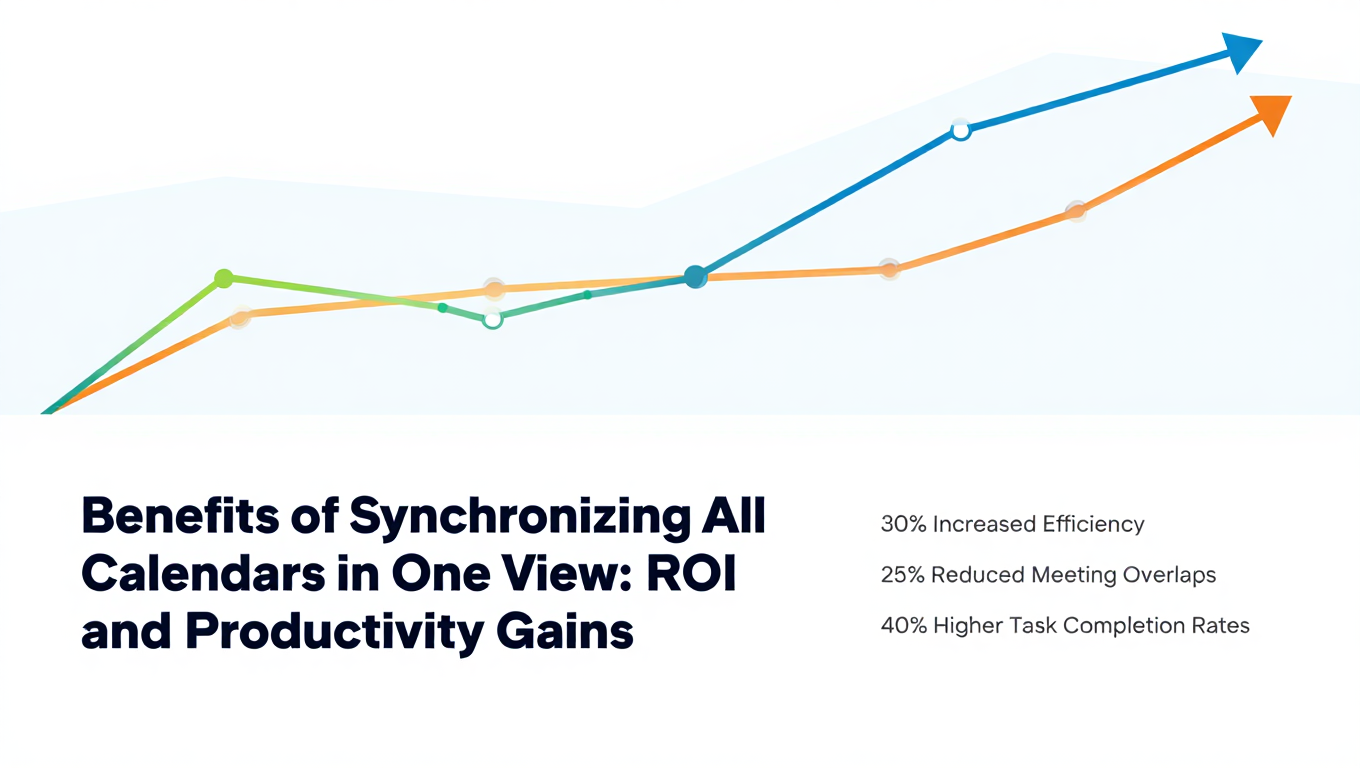
Benefits of Synchronizing All Calendars in One View: ROI and Productivity Gains
Discover the benefits of synchronizing all calendars in one view. See ROI data, productivity gains, reduced double bookings, and real-world business impact in 2025.
Best Bidirectional Calendar Sync Tools: 2025 Comparison Guide
Compare the best bidirectional calendar sync tools in 2025. Discover which platforms offer true two-way synchronization and which only provide one-way sync.
Best Two Way Calendar Sync Software: 2025 Expert Rankings & Comparison
Compare the top two-way calendar sync software tools. We tested 12 platforms for bidirectional sync speed, reliability, and field coverage to find which actually work.